

EU opens talks to grant Canada associate‑member status
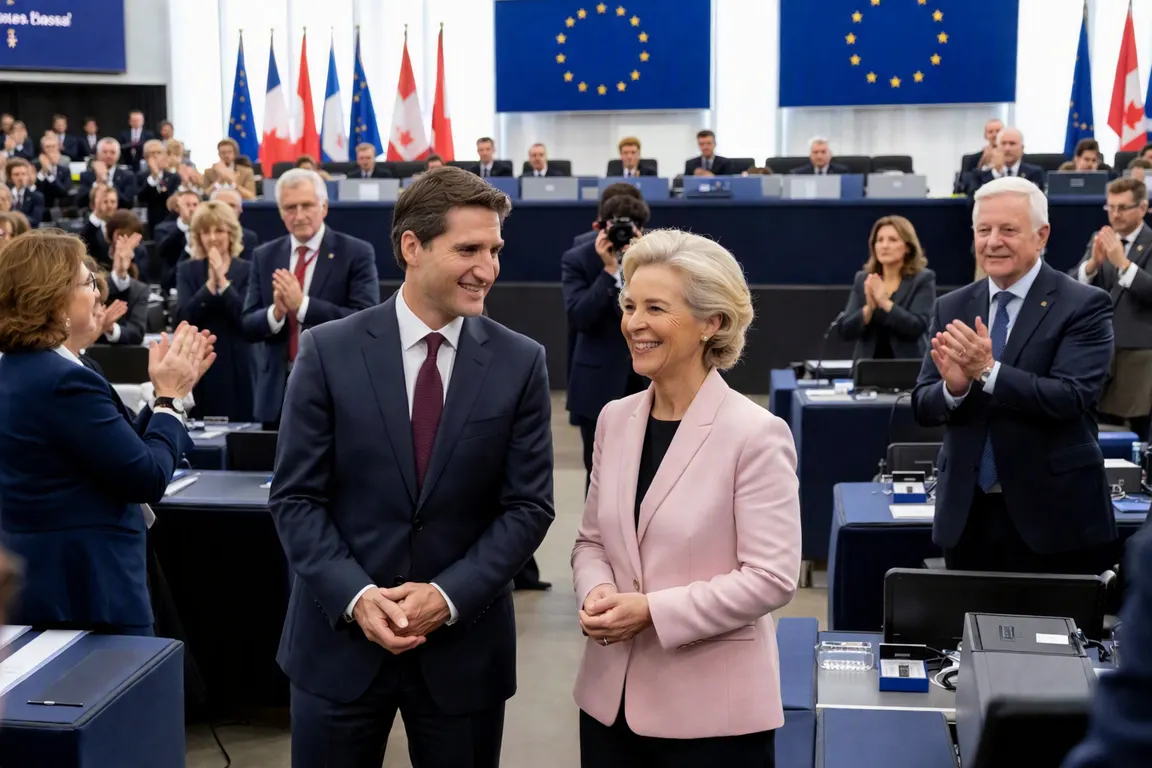
The European Commission announced on March 18 that it will begin negotiations to give Canada an EU Canada associate member status – the first such partnership the bloc has offered. The proposal was presented during a European Parliament session in Strasbourg and received a standing ovation from legislators.
Commission President Ursula von der Leyen framed the move as part of a broader push to deepen cooperation on artificial intelligence, climate action, defence and Arctic projects amid what she called a "hostile world." Canadian officials, including Prime Minister Justin Trudeau and former Bank of Canada governor Mark Carney, were present for the announcement.
If formalised, associate status could give Canadian exporters preferential treatment in sectors where the EU currently applies high tariffs, such as dairy and telecommunications. EU officials, however, have indicated that Canada is unlikely to open those markets, so any benefits may be limited to high‑tech and green‑technology fields. For European firms, the arrangement promises a trusted partner for research, procurement and supply‑chain diversification away from China and Russia.
The legal path is uncertain. Associate status must be ratified by all EU member states, a step that stalled a similar proposal for Ukraine and has drawn mixed reactions from diplomats who admit the term lacks a clear definition. The partnership could end up as a symbolic alliance or evolve into a concrete trade and security framework, depending on how negotiations are shaped.
The timing reflects shifting geopolitics. Canada has pledged to double its non‑U.S. trade over the next decade after recent tensions with its southern neighbour, while the EU seeks to reinforce Western alignment against a rising U.S.–China rivalry and the ongoing war in Ukraine. An associate‑member label could signal a new model of trans‑Atlantic cooperation, but it also risks complicating existing disputes, especially in agriculture and telecoms, where protectionist pressures remain strong on both sides.
A Canada‑EU summit is scheduled for late October 2024 in Montreal, where leaders will discuss the proposal in detail. The agenda is expected to cover the legal steps required for ratification, the scope of market access and mechanisms for defence and climate collaboration.
The next milestone will be the release of a formal negotiation mandate by the Commission, followed by an assessment from the European Council. Whether the associate‑member status becomes a functional trade and security pact or remains a diplomatic gesture will depend on the willingness of EU member states to endorse a model with no precedent. The outcome will shape not only Canada’s economic ties with Europe but also the broader architecture of Western cooperation in an increasingly contested global order.