

EU invites Canada to explore associate membership
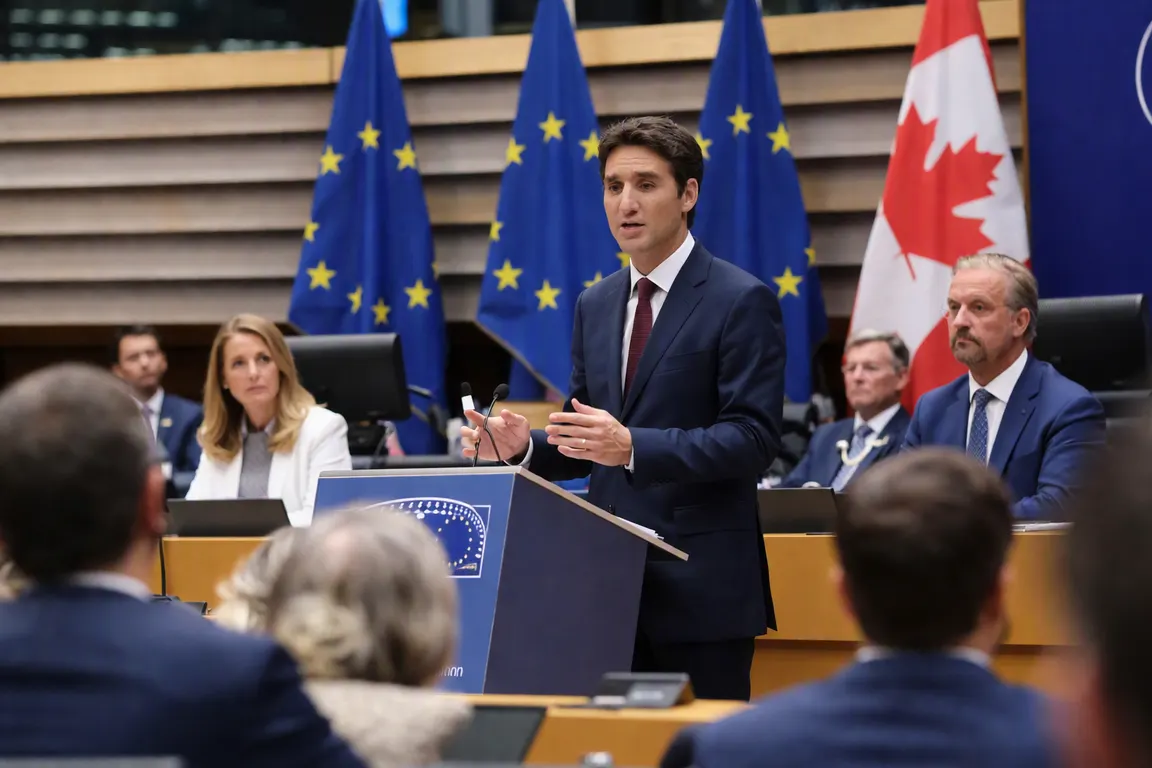
Canada’s prime minister, Justin Trudeau, said on Thursday that the European Union had informally invited Canada to become its first associate member, marking the first EU proposal of an EU associate membership Canada relationship. The invitation was delivered during a speech to the European Parliament in Strasbourg and has no precedent in EU treaties.
The proposal arrives as President Donald Trump dismissed the idea as “laughable,” underscoring the United States’ concern that deeper Canada‑EU ties could erode Washington’s economic and strategic influence in North America.
Trudeau outlined four areas where an associate relationship could add value: expanding trade, coordinating climate policy, strengthening security cooperation, and aligning regulations. German Green MEP Terry Reintke praised the speech, noting Trudeau’s Canadian‑hockey‑shirt attire as a symbolic gesture of goodwill.
EU officials have said they are willing to explore the concept, but they have not yet drafted a legal framework. Without a treaty or timeline, the rights and obligations of an associate member remain undefined, leaving businesses and policymakers uncertain about the practical impact.
For Canadian exporters, regulatory convergence could lower non‑tariff barriers and improve market access for sectors such as aerospace, agri‑food and clean‑technology. EU firms, particularly those in climate tech and defence, could benefit from joint ventures if the partnership moves beyond rhetoric. However, investors on both sides caution that the lack of a clear legal basis makes risk assessment difficult.
The United States, Canada’s largest trading partner, has signaled open hostility to the idea. Trump’s remarks suggest a broader American worry that a closer Canada‑EU alignment might diminish U.S. primacy in the continent’s trade and security architecture. Canadian officials will need to balance the diplomatic upside of an EU partnership against the potential for friction with Washington, which could affect ongoing trade negotiations and security cooperation.
No formal decision has been made by either the EU or Canada. The next likely step is the creation of a bilateral working group to outline the scope of associate membership, followed by an EU council vote on whether to draft a treaty text. Until those mechanisms are defined, Canadian businesses and citizens will continue to receive mixed signals about the proposal’s concrete benefits.
The invitation represents a rare diplomatic experiment: an offer that exists only on paper, a U.S. critique that raises the political stakes, and a waiting period in which Canada must decide how far to pursue an undefined relationship while protecting its existing trade and security commitments.