

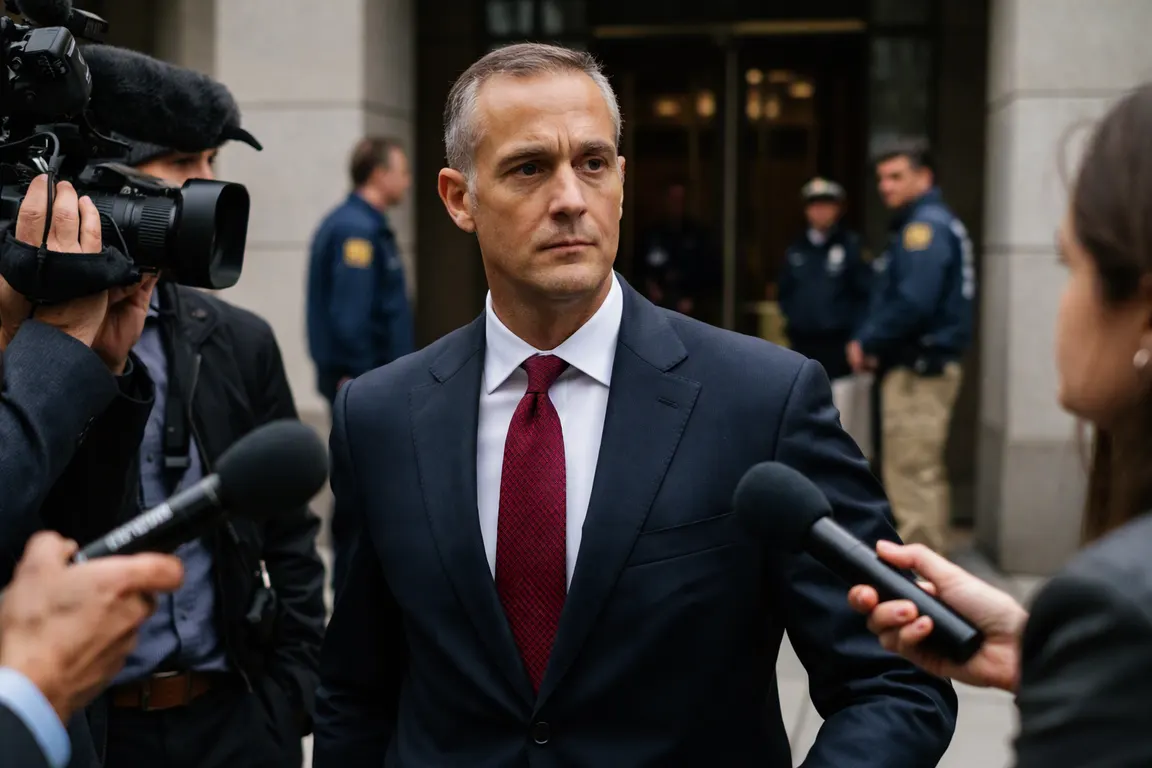
The Justice Department announced in March that it is conducting a criminal investigation into a DHS contract investigation involving former Department of Homeland Security aide Corey Lewandowski, following a referral from the agency’s Office of Inspector General.
The probe examines whether Lewandowski used his position in the Noem‑led DHS to steer contract awards for personal benefit. The inspector general’s referral, issued in early 2024 after a review of several procurement actions, was confirmed by three current DHS officials and one other source familiar with the matter.
Lewandowski, a longtime Trump campaign operative, was appointed senior aide to Secretary Kristi Noem in 2023 and oversaw aspects of the department’s procurement and contracting functions. The IG report alleges that he may have influenced the award of contracts, creating a potential conflict of interest. The specific contracts and any monetary gains have not been disclosed.
Federal procurement rules are intended to ensure competition, fairness and value for taxpayers. If a senior aide can manipulate those rules, the integrity of contracts that support critical security functions could be compromised. The investigation also underscores the IG’s statutory authority to refer possible criminal violations to the Justice Department, providing an independent check on agency actions.
Noem’s tenure at DHS ended later in 2024, a development reported by NBC News. While her departure was not linked to the investigation, the timing highlights ongoing turbulence within the department. Lewandowski has not been charged, and the DOJ has issued only a brief statement confirming the opening of the inquiry.
Stakeholders—including competing contractors and taxpayers—have a vested interest in the outcome. If wrongdoing is proven, prosecutors could pursue charges such as fraud, bribery or violations of procurement statutes. The case could also prompt tighter rules for political appointees involved in procurement, including stricter conflict‑of‑interest disclosures and enhanced monitoring of contract decisions.
Members of Congress are watching closely. Some lawmakers have called for a review of procurement safeguards, arguing the investigation reveals gaps in current oversight. Others caution against drawing conclusions before the inquiry is complete.
As the DOJ continues its inquiry, the central question remains: what concrete actions, if any, did Lewandowski take to influence contract outcomes, and how extensive were those actions? The investigation’s findings are likely to shape future discussions about the balance between political appointments and the need for impartial, transparent procurement processes within critical federal agencies.