

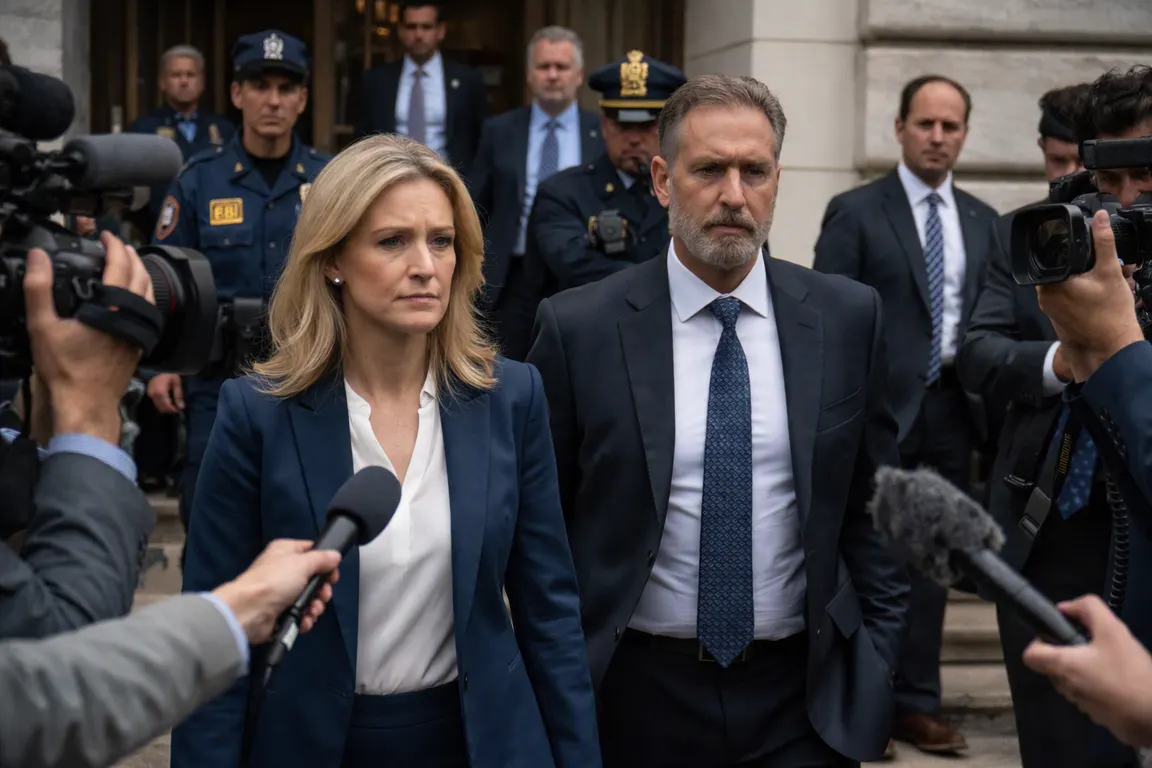
The Justice Department filed a criminal complaint on Oct. 23, 2026, accusing former FBI Foreign Influence Task Force (FITF) leaders Nikki Cole Floris, 46, and Bradley Benavides, 56, of making false statements to Congress about the bureau’s 2020 investigation of a laptop allegedly belonging to Hunter Biden. The complaint centers on alleged FBI task force false statements.
The filing says both officials testified in 2023 that the FITF was not involved in the 2020 laptop probe. Internal emails, contemporaneous logs and witness statements, according to the complaint, show the task force was briefed on the laptop and exchanged information with other FBI units. Those records form the basis of the false‑statement charge.
Floris served as deputy assistant director of the FITF from 2019 to 2022; Benavides was a section chief during the 2020 election cycle. The task force, created in 2017 to counter foreign election interference, was disbanded in February 2025 by Attorney General Pam Bondi. Both men left the bureau after the unit’s dissolution, and Floris was removed from the FBI in May 2025.
FBI Director Kash Patel told reporters the evidence “clearly contradicts” the testimony and cited documentary records and witness accounts. Patel’s comments were amplified on social media, though a claim that Floris described herself as running a “shadow government” appears only in a ZeroHedge report and has not been verified by other outlets.
U.S. Magistrate Judge Zia Faruqui set a preliminary hearing for the Tuesday after the filing. Prosecutors chose a criminal complaint rather than a grand‑jury indictment to move quickly and avoid a prolonged process that could become politicized.
The timing—less than two weeks before the Nov. 3 midterm elections—adds a political dimension. Voters who view the FBI and DOJ as partisan may see the charges as overreach, while others may view them as a necessary step to enforce honesty in congressional testimony. The case is likely to become a talking point in upcoming campaigns.
Beyond the election, the filing raises broader questions about oversight of intelligence‑community investigations. If senior officials can be held criminally liable for misstating a task force’s scope, future witnesses may be more cautious, potentially limiting the flow of information to lawmakers.
Congressional committees are expected to request briefings on the DOJ’s evidentiary basis, and some legislators have expressed interest in tightening reporting requirements for intelligence units.
The next procedural milestone is the preliminary hearing before Judge Faruqui. After that hearing, prosecutors will decide whether to seek a trial. The outcome could shape how aggressively the Justice Department pursues false‑statement allegations in politically sensitive cases and set a precedent for future elections.