

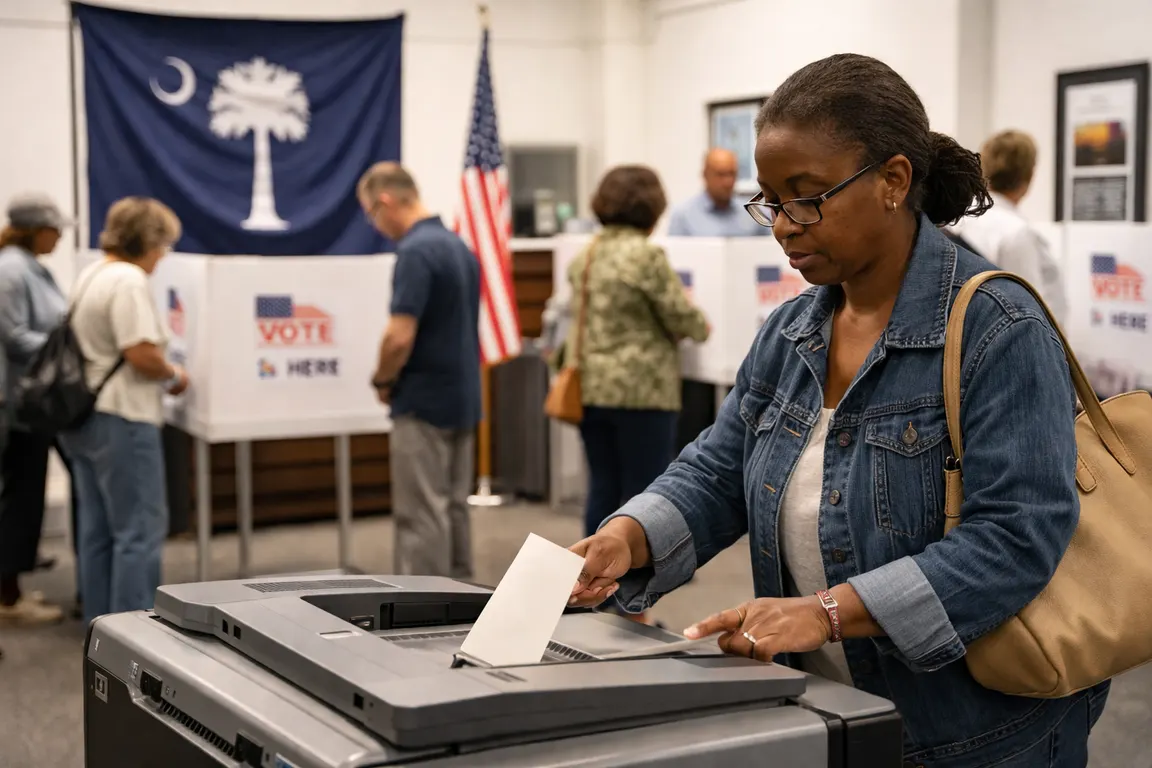
The Democratic National Committee's rules committee has voted to keep South Carolina as the first state to vote in the 2028 Democratic presidential primary. This decision comes after a debate about potentially replacing it with Nevada, a move that reflects a broader struggle within the party to balance the needs and interests of different minority groups.
The decision has significant implications for minority voters and the party's strategy to court their support. South Carolina, with a 25% black population, was given the first primary spot in 2024, while Nevada, with a 31% Hispanic population, is seen as a key state to court Latino voters. The demographics of these states influence the party's strategy, with South Carolina's large black population and Nevada's large Hispanic population making them key states to court.
South Carolina Democratic Party Chair Christale Spain and Nevada Democratic Party Chair Daniele Monroe-Moreno have differing views on the decision. Spain opposes changing the primary schedule, citing the importance of black voters, while Monroe-Moreno supports the potential change, citing Nevada's swing status and diverse population. The decision may be delayed until after the midterms to avoid affecting voter enthusiasm.
The implications of the DNC's decision on the primary schedule for minority voters are significant. Some argue that replacing South Carolina with Nevada would be disrespectful to black voters, while others see it as a strategic move to court Latino voters. The potential consequences of delaying the decision until after the midterms are unclear, but it may impact the party's ability to court minority voters in the 2028 election.
As the DNC moves forward with its decision, the party will need to balance the needs and interests of different minority groups in order to build a winning coalition in 2028. The decision to keep South Carolina as the first primary state reflects the party's efforts to navigate these complex issues and prioritize the needs of its diverse voter base.