

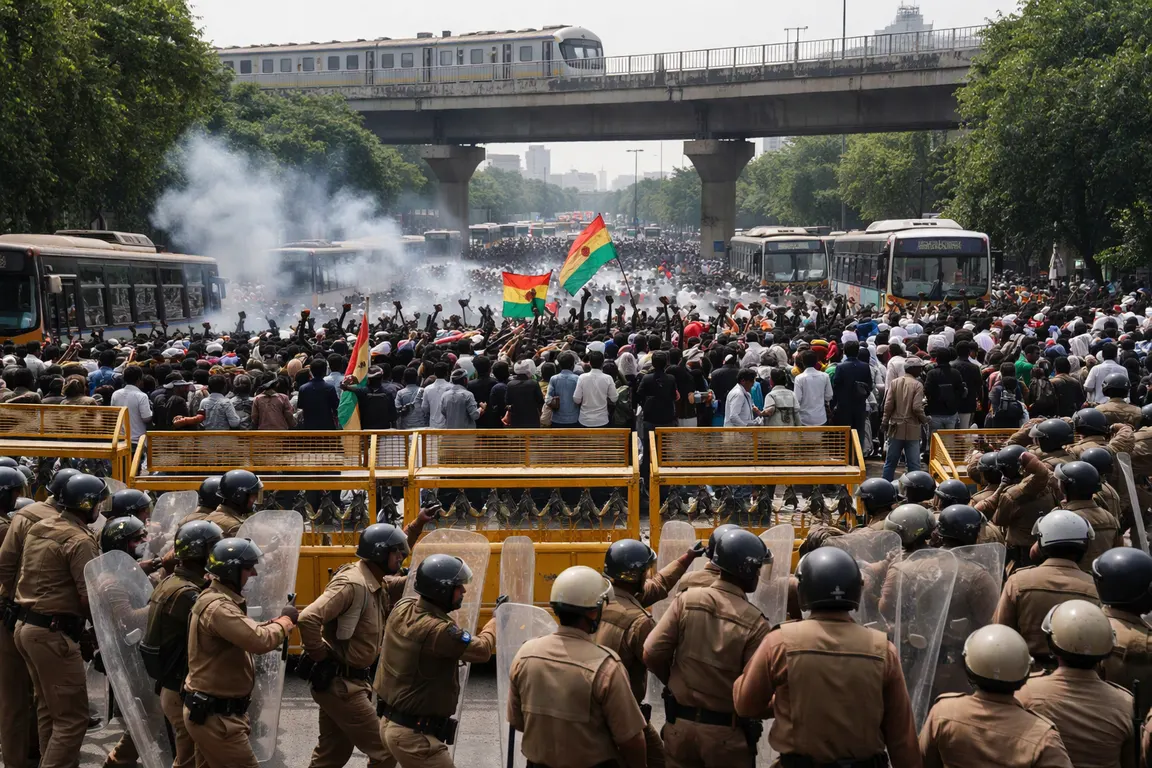
The Election Commission of India's latest voter‑roll cleanup, known as the Delhi voter list purge, removed more than 133 million entries flagged as duplicates, deceased or potentially fraudulent, sparking mass protests in the capital over the weekend and prompting an unprecedented police response.
Opposition parties, including the Congress and the Communist Party of India (Marxist), organized rallies that coincided with a police deployment that sealed major arteries with steel barricades, shut six central metro stations for three days and led to the detention of at least 16 journalists, according to Reporters Without Borders.
The Commission announced the purge without releasing a detailed breakdown of the 133 million names removed. Critics argue the sweep disproportionately affects Muslim voters, though independent verification of that claim is lacking. The Commission maintains the exercise is routine maintenance to eliminate duplicate and dead entries.
On Saturday and Sunday, protesters marched along Delhi’s central avenues, chanting slogans and displaying banners demanding transparency. Police responded by replacing traffic cones with heavy‑duty steel barriers, turning the city’s main thoroughfares into fortified zones. Six metro stations – on the Red and Yellow lines – were closed, disrupting commutes for thousands and prompting complaints from business owners about lost revenue.
Detentions were swift. CPI‑M parliamentarian John Brittas reported being man‑handled and dragged by officers during the Sunday rally. The youth‑led Cockroach Janta Party saw three of its leaders briefly held before release. Reporters Without Borders confirmed that 16 journalists, many bearing press credentials, were arrested despite no apparent legal basis. Police have not commented on the legality of the arrests, and the Election Commission declined to address police conduct.
Congress leader Rahul Gandhi called for a march to the Supreme Court on Monday, urging supporters to join a legal challenge to the voter‑list revision. The court is expected to hear arguments in the coming weeks, a hearing that could determine whether the Commission’s methodology stands or whether corrective measures are required before the next national election.
For ordinary Delhi residents, the lockdown has meant rerouted traffic, longer travel times and crowded alternative transport options. Small traders near the closed stations reported a sharp dip in footfall, while commuters expressed frustration over the lack of clear communication about the duration of the closures.
The episode underscores a clash between administrative actions intended to streamline the electoral process and civil liberties protected by law. While the Election Commission frames the purge as a technical exercise, the scale of the police operation and the detention of journalists suggest a broader tension over how dissent is managed in a democracy.
As the Supreme Court prepares to consider the challenge, the key unanswered question is whether the judiciary will compel the Commission to provide a transparent audit of the removed entries and address allegations of bias. Until then, Delhi’s barricaded streets remain a stark visual reminder of the contest over who gets to vote and how far state power will extend to enforce that contest.