

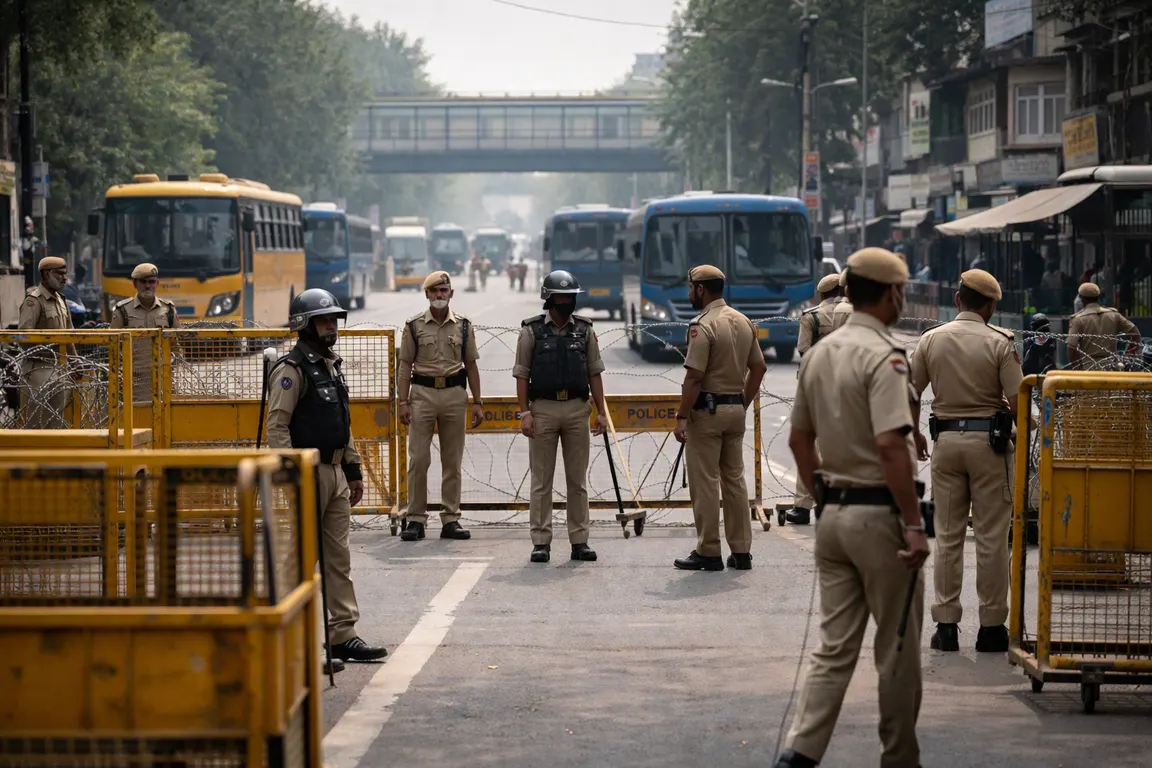
Delhi police announced a citywide lockdown early Saturday, ordering residents to stay indoors and sealing off routes to a planned rally by the youth‑run Cockroach Janata Party (CJP). Officials said the measure was intended to prevent a mass gathering that could threaten public order.
The police deployed thousands of personnel, according to local and international news outlets, and began detaining demonstrators as they assembled. Reports on the number of arrests differ: the BBC and The Guardian cite "hundreds" of detainees, while Al Jazeera and other sources suggest the figure could be in the thousands. Among those taken into custody were several CJP leaders, including at least one identified figure.
The CJP had announced the protest weeks earlier, demanding a halt to the Election Commission’s removal of roughly 130 million names from India’s voter list. The party argues the purge disproportionately affects marginalized communities and could undermine the legitimacy of upcoming elections. Government officials maintain the deletions are part of a routine clean‑up to eliminate outdated or duplicate entries.
For Delhi residents, the lockdown has immediate economic and logistical consequences. Shops, markets and small businesses report a sharp drop in foot traffic, and daily‑wage earners are unable to reach workplaces outside their neighborhoods. Public transport, including the metro and bus services, has been suspended, limiting access to hospitals, grocery stores and other essential services.
Human‑rights observers warn that mass detentions without clear charges risk eroding legal safeguards, especially as the exact number of those held remains unclear. Legal experts note that Indian law permits preventive detention in certain circumstances, but such actions must be subject to judicial review within a prescribed timeframe.
Police officials have not provided a timeline for lifting the lockdown or details on the legal process for the detainees, leaving residents in a state of uncertainty. The next steps will depend on whether authorities ease restrictions and how courts respond to challenges against the arrests.
The detained protesters are expected to seek bail and contest the legality of their detention, a case that could set a precedent for how future electoral‑reform protests are handled. Meanwhile, Delhi’s citizens continue to navigate limited mobility and economic strain, underscoring the broader social cost of a security response that has turned the capital into a police‑run fortress.