

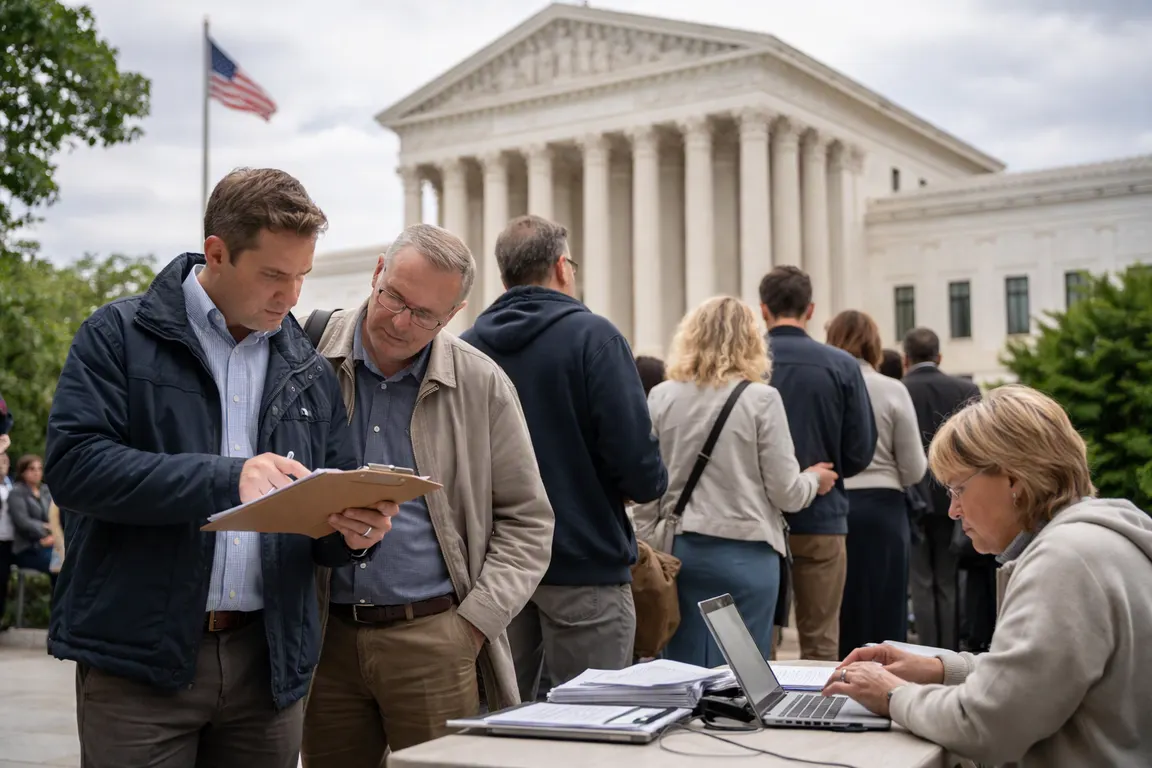
The U.S. Supreme Court issued a per curiam order on Sept. 25 that stayed a district‑court injunction blocking the Trump administration’s updated Systematic Alien Verification for Entitlements (SAVE) database. The stay clears the way for states to use SAVE voter verification to check citizenship ahead of the 2026 midterm elections.
The stay, granted by six justices, effectively authorizes a federal system that can flag non‑citizen voters in real time. The administration says the tool helps protect election integrity, but civil‑rights groups warn that SAVE’s accuracy has not been independently verified and that false flags could disenfranchise lawful citizens.
Justices Ketanji Brown Jackson, Sonia Sotomayor and Elena Kagan filed a dissent, arguing that the 1996 Illegal Immigration Reform and Immigrant Responsibility Act does not override the Privacy Act’s safeguards. The SAVE program, created in 1996, was recently linked to Social Security Administration records—a change the district court deemed a violation of the Privacy Act. U.S. District Judge Sparkle Sooknanan had vacated the 2025 update that connected Social Security numbers to SAVE, and a federal appeals court upheld her decision before the Supreme Court intervened.
In an emergency brief filed on Sept. 8, the administration asserted that the injunction “threatens the integrity of upcoming elections” by preventing federal use of Social Security data for state verification requests. Texas Secretary of State Robert Howden confirmed that in fall 2025 the state ran 18 million voter names through SAVE, identifying 2,724 possible non‑citizens. Voting‑rights organizations cited by Al Jazeera and The Independent World warned that false positives could disenfranchise millions, especially in minority and immigrant communities, without any public audit of SAVE’s error rate.
Legal scholars note two competing arguments. The majority view relies on congressional authority under the 1996 statute to permit data sharing between the Department of Homeland Security and the Social Security Administration. The dissent stresses that the Privacy Act imposes strict limits on the use of personal data and that the statutory amendment does not waive those limits. Neither side has presented independent testing of SAVE’s matching algorithms, leaving the false‑positive risk largely speculative.
States that have already integrated SAVE into voter‑verification workflows, such as Texas, must now reconcile the system’s technical requirements with existing registration processes. Implementation involves cross‑checking voter rolls against the federal database, training staff and preparing for legal challenges if individuals are incorrectly flagged. Election officials are also weighing operational costs and potential liability for wrongful disenfranchisement.
The immediate impact on voters remains uncertain. While the Supreme Court decision expands the tools available to state officials, it does not provide a clear remedy for citizens mistakenly identified as non‑citizens. Affected individuals could seek relief through state courts or federal habeas‑style challenges, but such actions may not be resolved before the 2026 election cycle.
The ruling is expected to spur further litigation. Civil‑rights groups have signaled plans to file new suits challenging the stay’s constitutionality and the underlying data‑sharing arrangement. The administration is also expected to issue guidance to states on how to submit verification requests, a step that could shape the rollout in the months leading up to the midterms.