

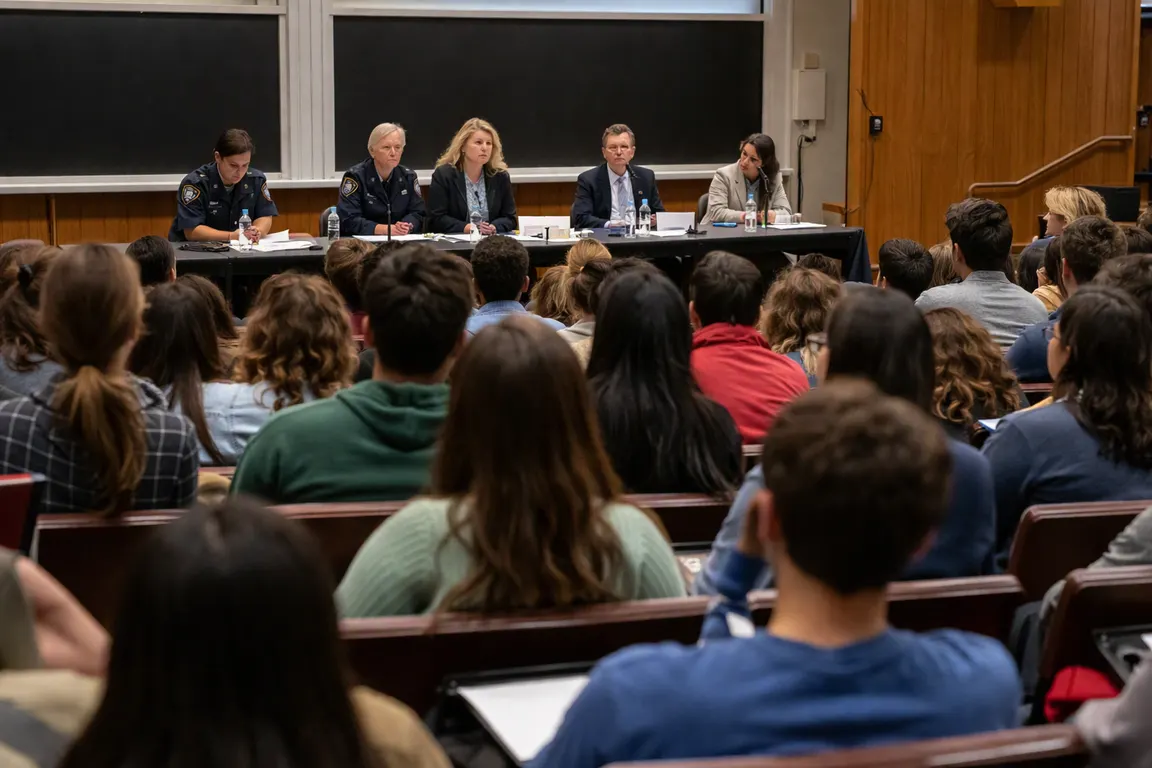
The Ithaca district attorney announced Wednesday that the criminal investigation into a 2024 gang‑rape allegation involving members of a Cornell University fraternity will be reopened. The decision coincides with a public hearing convened by the Cornell Student Assembly on campus safety.
The hearing, one of the few forums where students can directly address administrators, follows a university‑conducted survey released this spring that shows an increase in reports of non‑consensual sexual contact among female undergraduates. The data, cited by NBC News, indicate a measurable rise compared with previous years, though it is unclear whether the uptick reflects more assaults or a greater willingness to report.
Last month a lawsuit named seven fraternity brothers as defendants. The complaint alleges the victim was heavily intoxicated on multiple substances when the assault occurred. One of the accused testified that he did not see the accuser in distress during his brief presence in the room, a claim that conflicts with the victim’s account and underscores the factual dispute at the heart of the case.
Student leaders used the assembly hearing to press administrators for concrete changes. They called for clearer reporting mechanisms, stronger preventive education, and transparent disciplinary processes, warning that the campus climate could deteriorate further without swift action.
Cornell’s administration has not yet issued a final policy revision or disclosed disciplinary outcomes for the fraternity members. Officials said the hearing will inform a review of existing Title IX protocols and confirmed that the university is cooperating with law‑enforcement. The reopened investigation gives the district attorney’s office the option to pursue additional charges or expand the scope of inquiry based on new evidence uncovered during the survey and hearing.
Stakeholders across campus and in the surrounding community are watching closely. Victims and advocacy groups argue that the university’s response must go beyond procedural tweaks to address systemic gaps in prevention and support services. Law‑enforcement officials, meanwhile, must balance the demands of a high‑profile case with limited resources, a challenge that could affect the speed and depth of the renewed probe.
The convergence of a student‑driven public hearing, a documented rise in assault reports, and a reopened criminal investigation creates a critical moment for Cornell. The university’s next steps—whether it adopts stricter reporting guidelines, revises disciplinary procedures, or implements new education programs—will likely set a precedent for peer institutions confronting similar spikes in sexual‑assault complaints.
As the district attorney’s office prepares to re‑examine evidence and the Student Assembly schedules follow‑up sessions, the unanswered question remains: how quickly can Cornell translate heightened scrutiny into tangible safety reforms that protect current and future students while ensuring due process for the accused?