

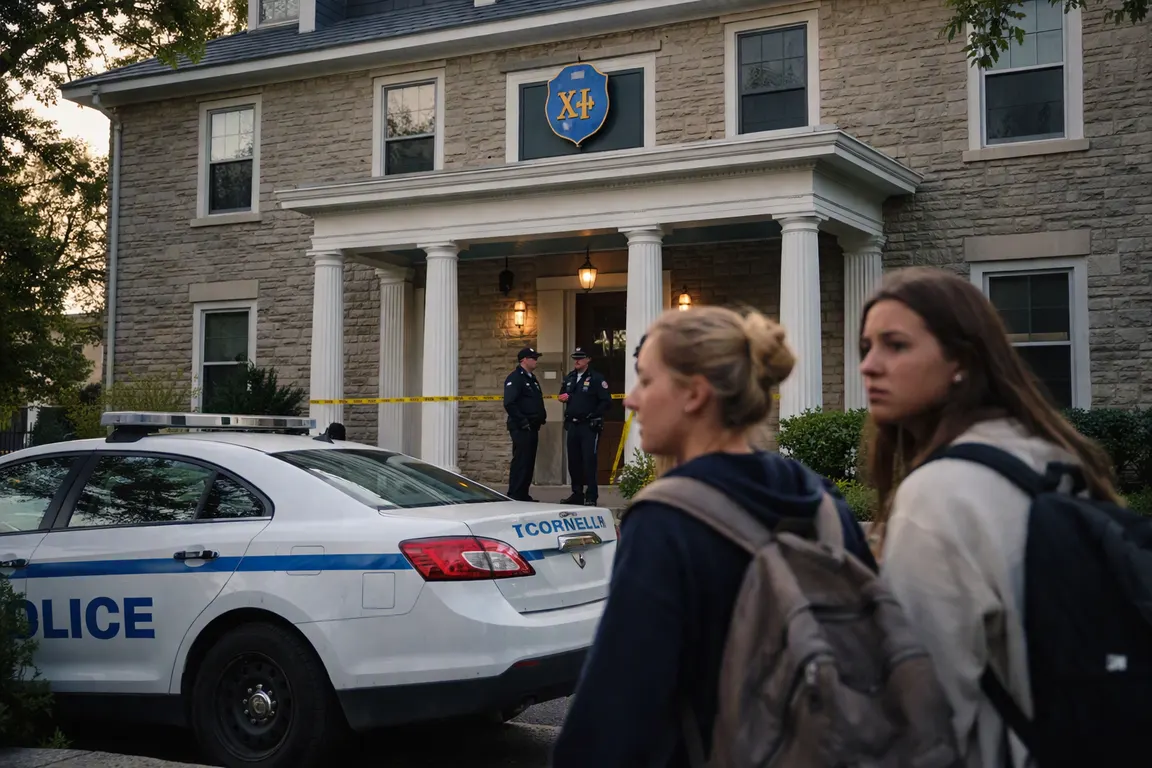
Cornell University announced Thursday that it will hire an outside firm for an independent review of how the school handled the alleged gang‑rape that occurred in the fall of 2024 at the Chi Phi fraternity house.
The university’s internal probe, completed earlier this year, collected the victim’s text messages and other evidence but found its own procedures at odds with the survivor’s account. No criminal charges have been filed against the students named in the police investigation, a point repeatedly noted in media reports.
The independent review will assess whether Cornell’s Title IX policies, housing rules and fraternity oversight adequately protect survivors and deter future assaults. The school said the contractor has expertise in campus safety and Title IX compliance, but it did not disclose the firm’s name, the review’s timeline or the scope of its authority.
The move comes amid a national reckoning over sexual‑assault claims involving Greek life. Advocacy groups argue that elite schools have allowed fraternities to operate with minimal oversight, leaving victims without effective recourse. Others caution that intense media focus can undermine due‑process protections for the accused.
Governor Kathy Hochul referenced the case in a recent statement, prompting Cornell to confirm the independent review. Alumni donors and prospective students are watching closely, as the outcome could affect future funding and enrollment at institutions with large Greek systems.
Cornell’s Title IX office reiterated its commitment to supporting any survivor who comes forward. The administration said it will examine housing policies, reporting mechanisms and disciplinary procedures, and faculty members have called for clearer guidelines on handling allegations that arise in private residence halls.
The university’s history includes several high‑profile fraternity incidents, a pattern noted in recent coverage. Critics see the Chi Phi case as evidence of systemic failure, while some commentators warn against a “lynch‑mob” mentality that could compromise fairness.
The next step is the selection of the independent review team, followed by a public release of its findings and recommendations. Until that report is issued, any policy changes remain speculative. Stakeholders—including students, faculty, alumni and state officials—will be watching to see whether the review leads to substantive reforms in Greek‑life supervision and the processing of sexual‑assault claims on campus.