

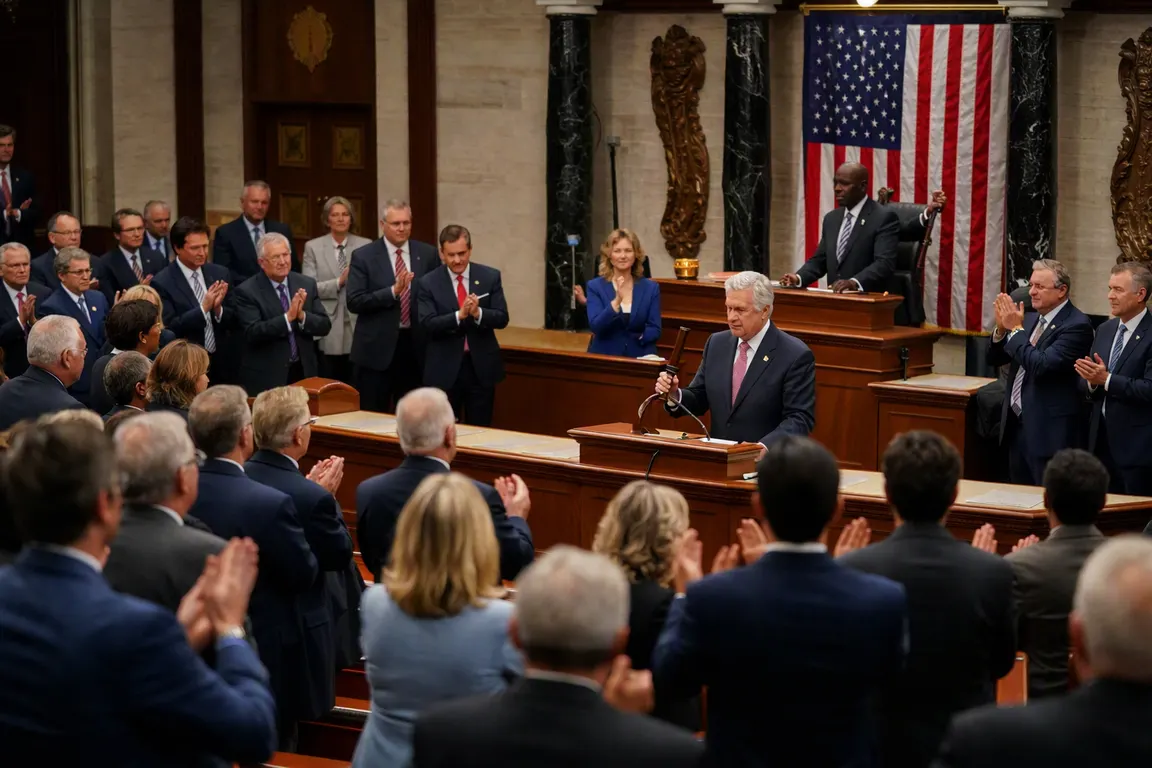
The U.S. House approved the Ratepayer Protection Act on Sept. 17, 2026, mandating that AI‑related and other data centers pay the full incremental cost of any generation, transmission or distribution upgrades needed to meet their electricity demand. The bipartisan bill, backed by the Problem Solvers Caucus, aims to keep the surge in household utility bills from spilling over as high‑performance computing facilities expand.
Under the law, data‑center operators must first calculate the additional load they place on the grid and then reimburse utilities for any upgrades—new generation capacity, transmission lines or distribution transformers—directly attributable to that load. Utilities will submit cost estimates, and operators are required to pay them in full; the act does not set a uniform rate. The measure passed 417‑3 and is expected to be signed within weeks.
Data centers already consume about 4 % of U.S. electricity—roughly 176 TWh a year, enough to power 16 million homes, according to Electric Choice. Analysts project that demand could rise to 12 % of the national grid within a few years as AI models grow larger and more compute‑intensive. By shifting upgrade costs to the facilities that create the demand, the act seeks to prevent utilities from passing those expenses onto ratepayers.
The impact on residential bills will vary by location. In areas where a new data center triggers a transformer replacement, the utility can no longer spread the cost across all customers; the data‑center operator must cover it. That could slow bill spikes for households, though the overall effect may be modest if upgrades are shared among multiple projects.
For AI firms such as OpenAI, Anthropic, Claude.ai and others, the added expense could tighten margins. Operators may respond by negotiating lower‑cost power contracts, investing in on‑site renewable generation, or passing a portion of the cost to enterprise customers. A slowdown in data‑center construction could also affect Asian manufacturers that supply servers, chips and advanced cooling systems.
The legislation arrives amid speculation that AI‑driven earnings growth could become a flash point in the 2026 midterm elections. UBS chief economist Arend Kapteyn noted that AI‑related technology accounts for 64 % of the recent rise in U.S. forward earnings estimates and 96 % of the increase in emerging‑market forecasts. Some Democrats have floated a moratorium on new data‑center construction after the elections, a move that could erase the earnings boost and reverberate through tech stocks and semiconductor suppliers. No formal moratorium bill has been introduced yet.
Separately, a ZeroHedge commentary published the same day linked the AI‑safety narrative to past climate‑change fear campaigns, suggesting a coordinated information effort. The piece offers no independent evidence, and other sources describe the METR safety board appointed by Anthropic’s CEO Dario Amodei without the loaded language used by the commentary. Readers should treat that claim as unverified opinion.
The next steps are clear: utilities will begin cost‑recovery calculations, and data‑center operators must adjust financial models to accommodate the new obligations. Lawmakers will monitor the act’s effect on utility rates and on the pace of AI‑related construction. As the midterms approach, the balance between encouraging technological growth and protecting ratepayers will shape future policy proposals, keeping investors and communities on alert.