

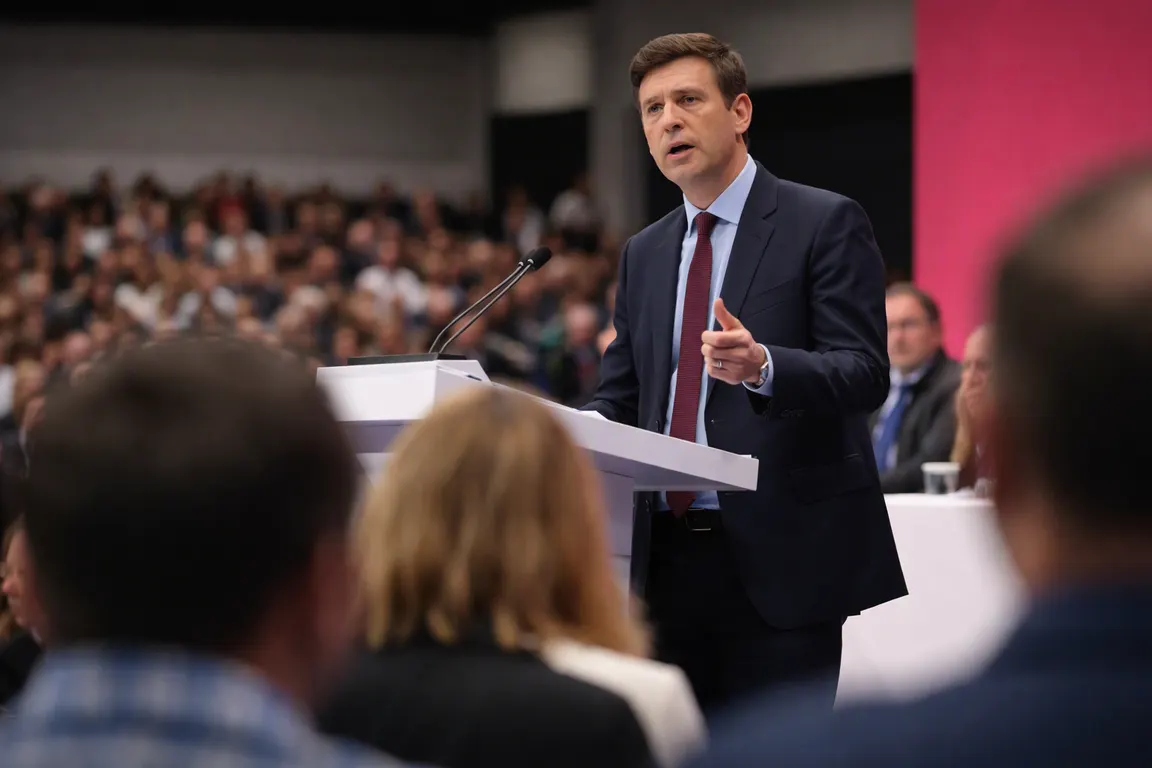
Prime Minister Andy Burnham used his first speech at Labour’s national conference to outline the Burnham health care plan, a sweeping agenda that includes a major expansion of health and social‑care services, a pledge to reform the electoral system and a shift toward closer ties with Europe. The proposals, presented to a packed hall of delegates, mark the government’s first public articulation of its post‑election priorities.
Burnham announced plans to increase NHS capacity, extend free home‑care for the elderly and launch a "public‑service renaissance" that would add staff across health, education and local government. No budget figures were disclosed, and the finance ministry has not yet explained how the expansion will be funded. Analysts warn that without a clear fiscal roadmap the proposals could strain an already tight public purse.
On electoral reform, Burnham called for a move from first‑past‑the‑post to a proportional voting system, describing it as essential for "renewing democracy." He offered no timetable for a parliamentary vote, and any change will require support from opposition parties in a parliament where Labour lacks a majority.
The Europe component of the speech signalled a "new path" toward closer alignment with the continent, hinting at re‑engagement on trade and regulatory issues. The language suggests a departure from the hard‑line Brexit stance of previous years, but concrete details on policy changes were absent, leaving businesses and cross‑border workers without clear guidance.
Delegates responded enthusiastically, with the conference slogan "Hope Again" echoing the optimistic tone. However, journalists from the BBC and Al Jazeera cautioned that the announcements demand a "fundamental rethink" of fiscal priorities. The Guardian noted that the scale of the proposals could be difficult to deliver and might cost Burnham politically if funding does not materialise.
For citizens who rely on health and social‑care services, the promise of expanded provision offers hope, but the lack of financing details means short‑term improvements are unlikely. Electoral‑system changes could reshape voting mechanics for all parties, yet the path to legislation remains uncertain. Businesses watching the Europe policy will need clarification before adjusting supply chains or compliance strategies.
Burnham’s political capital is now tied to the delivery of these promises. If the government cannot secure financing or parliamentary backing, public confidence could erode, affecting market stability and fiscal planning.
The next concrete step will be the upcoming budget statement, where finance ministers are expected to outline funding for the announced public‑service expansions. Until that detail emerges, timelines for electoral reform or Europe policy remain open, leaving observers to watch closely for the first substantive moves beyond conference rhetoric.