

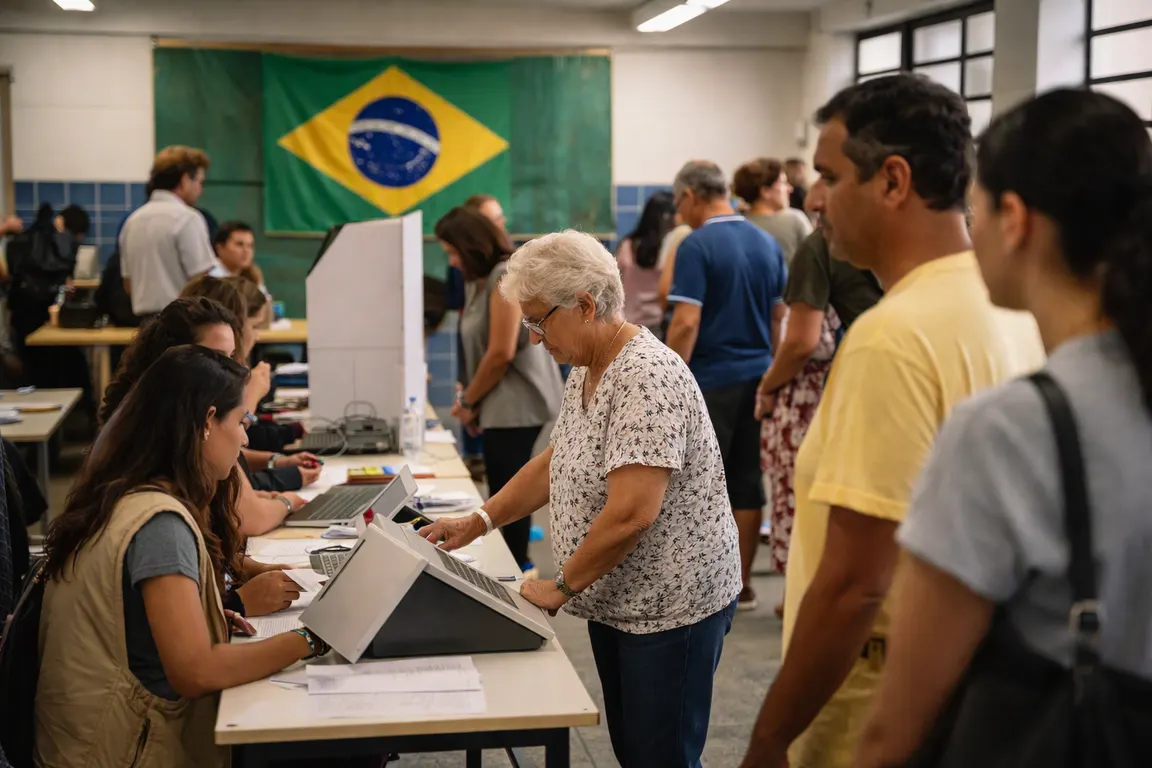
Brazil’s electronic voting opened early Sunday and will close at 5 p.m. local time (4 p.m. NY). The electoral court expects to certify the first‑round result between 7 p.m. and 8 p.m., a timeline that will determine whether Brazil election fiscal policy stays on President Luiz Inácio Lula da Silva’s left‑leaning course or moves toward a right‑wing administration.
The stakes are high for Brazil’s fiscal stance, foreign‑investment climate and social‑program funding. A Lula win would likely preserve recent expansions of social benefits and keep a more accommodative fiscal policy. A Bolsonaro victory could bring tighter public‑spending rules, pension and labor reforms, and a shift toward market‑friendly trade agreements. Investors, multinational firms and neighboring governments are already adjusting positions, reflecting the election’s regional significance as Colombia, Peru and Chile have recently moved rightward.
Three leading polls show a razor‑thin margin. AtlasIntel puts Lula at 47.6 % and Bolsonaro at 47.4 %; Datafolha shows 47 % to 46 %; and Quaest records 42 % to 44 %. All are within typical error ranges, underscoring methodological differences rather than a decisive lead. By contrast, betting markets on Polymarket assign Bolsonaro a 63.3 % chance of winning versus 37 % for Lula, indicating that traders are weighing factors beyond public sentiment, such as anticipated policy shifts and currency risk.
Financial markets have already reacted. One‑week implied volatility on the Brazilian real has risen above 31 %, the highest level since late 2022, signaling heightened uncertainty. Analysts at Citi and JPMorgan have recommended options strategies that benefit from a stronger real, while hedge funds Ibiuna and Verde have positioned for a potential rally in Brazilian equities. If Bolsonaro secures a first‑round majority, tighter fiscal discipline could boost bond yields and attract foreign capital, but it could also trigger cuts to social programs that affect low‑income households.
If neither candidate reaches the 50 % threshold, a runoff will be scheduled for later in October, extending the campaign and potentially increasing voter fatigue. A second round would compress the policy‑making window ahead of the 2027 fiscal plan, forcing both camps to clarify priorities on public‑security spending, infrastructure projects and Brazil’s role in regional trade blocs.
The election sits within a broader South‑American right‑wing surge. Recent shifts in Colombia, Peru and Chile have altered trade dynamics and migration patterns, and Brazil’s direction will either reinforce or counter that trend. Regional leaders are watching closely, as Brazil’s size and market weight make its policy stance a reference point for neighboring economies.
As the electronic tally proceeds, markets will parse the official numbers for clues about future fiscal and monetary policy. The court’s announcement between 7 p.m. and 8 p.m. will set the tone for Brazil’s economic outlook in the coming months and determine whether the country continues the reforms of the past two years or pivots toward a market‑oriented reset. Investors, policymakers and citizens alike await that decisive moment, aware that the result will shape Brazil’s domestic agenda and its influence across a shifting Latin‑American landscape.