

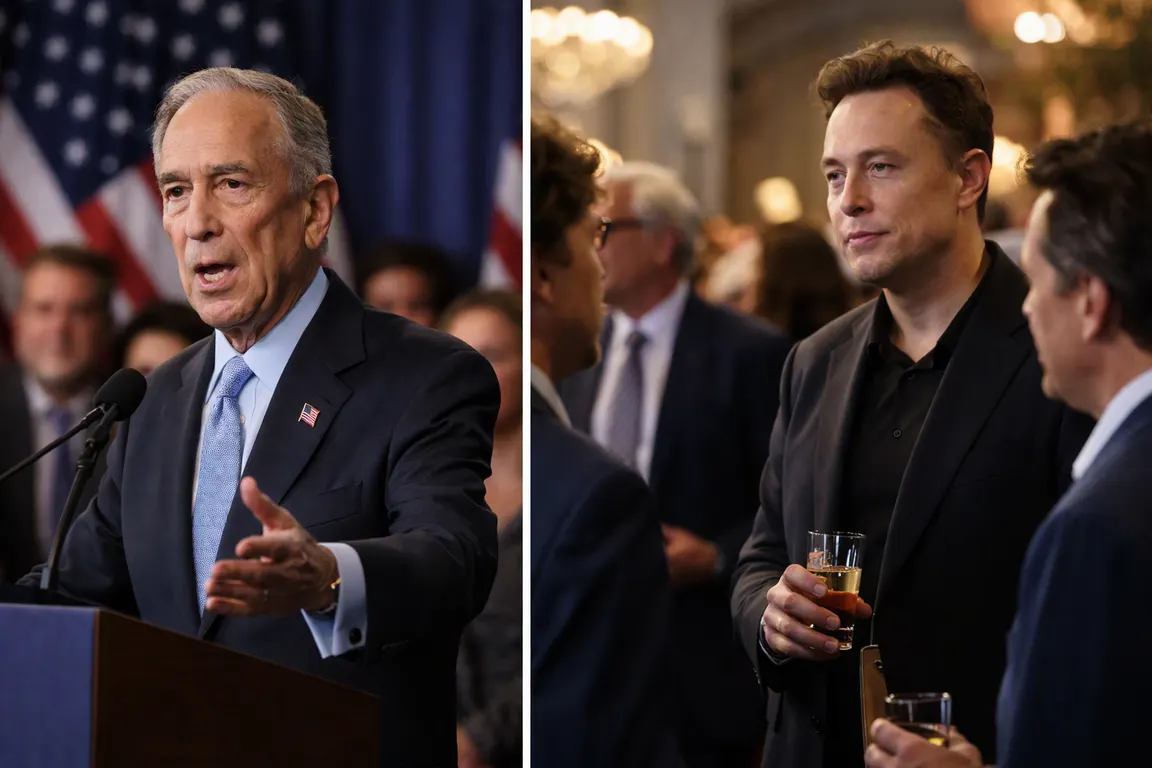
Billionaire political donations are reshaping the 2026 midterm contests as Michael Bloomberg and Elon Musk each pledge unprecedented sums to influence congressional outcomes.
Bloomberg announced an $80 million commitment to Democratic causes in September. The money is earmarked for vulnerable Democratic House seats, several governor races and a handful of state contests, including a $2.5 million contribution to a Texas PAC backing Democrat James Talarico for state Senate.
Musk’s “Senate Leadership Fund” contributed $158 million to a Texas political action committee that supports Republican Attorney General Ken Paxton’s bid for the U.S. Senate. The same vehicle also spent $500,000 on Republican incumbent Mike Lawler’s campaign in New York’s 17th congressional district.
The timing of these outlays could influence whether Democrats capture a House majority and whether Republicans retain a razor‑thin Senate edge. Bloomberg’s disbursements include $24 million to Everytown for Gun Safety, $16 million to the House Majority PAC, $5 million to the League of Conservation Voters’ super PAC, $3.5 million to a scientists‑and‑doctors PAC, $8 million across six governor races and $2.5 million to a New York PAC aligned with Gov. Kathy Hochul.
Outside groups aligned with Paxton have poured about $239 million into the Texas Senate race—more than five times the $45 million raised by the largest Democratic‑aligned groups. Combined advertising in the contest exceeds $500 million.
Early October polling by the University of Houston Hobby School and CBS/YouGov shows Talarico leading Paxton by two to five points, a margin within typical error ranges. The race remains statistically close, and the influx of billionaire money has amplified campaign messaging on issues ranging from gun safety to climate policy.
Bloomberg’s filing details have not been made public; the figures rely on statements to the New York Times and reporting by ZeroHedge, leaving a verification gap. Similarly, Musk’s total contribution is reported by Reuters and ZeroHedge, but the precise split between the Texas PAC and other national efforts is not fully disclosed.
The surge of billionaire money arrives as national party coffers shrink. The Republican National Committee’s cash on hand fell from $126 million to $76 million between early September and Oct. 14, while the Democratic National Committee reported a negative cash balance for the 2025‑26 cycle.
Smaller donors are feeling the pressure. Talarico’s campaign raised $64 million between July and September, with 97 percent of contributions under $100, underscoring the continued importance of grassroots funding even as mega‑donors dominate headline figures.
Early voting ends on Oct. 30, and Election Day is set for Nov. 3. As the final tally approaches, observers will watch whether the surge of private wealth crowds out local voices and reshapes the competitive landscape for future contests. The outcome of the Texas Senate race and the balance of power in the House will provide the first concrete test of how far billionaire dollars can tilt the balance of power in Congress.