

Arctic security pact signed by U.S. and Denmark
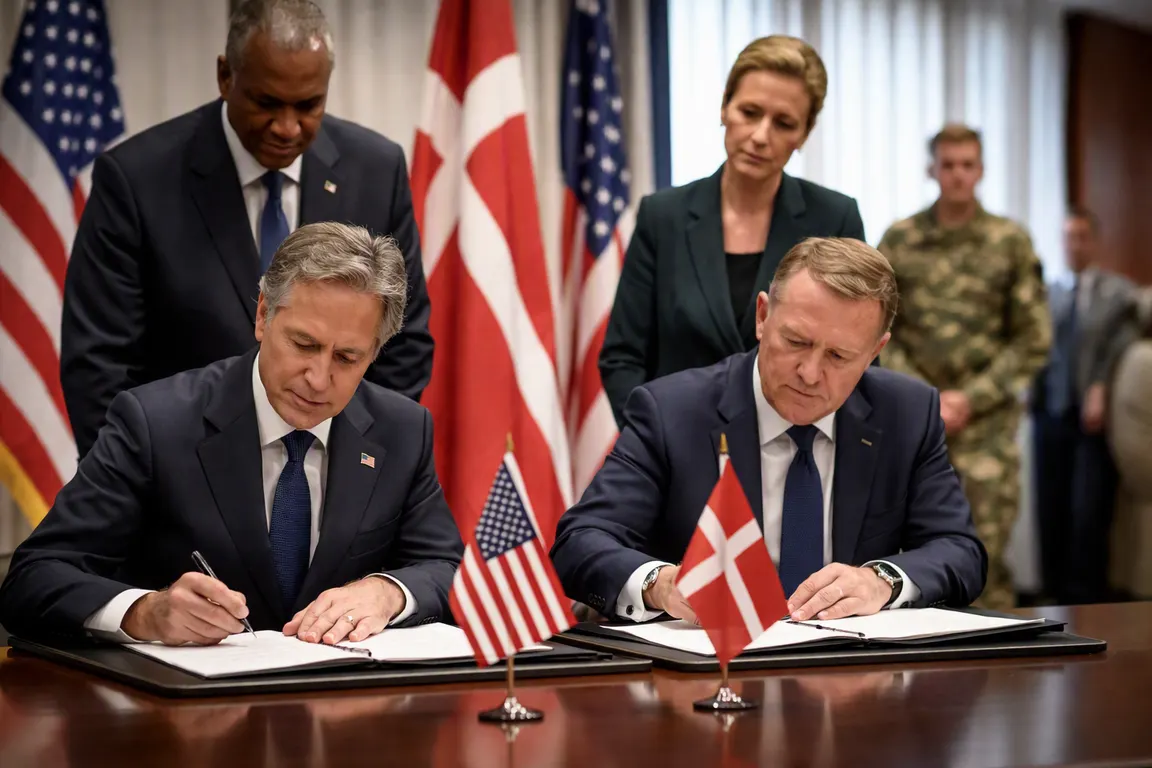
Washington and Copenhagen will sign a new Arctic security pact on the margins of next week’s United Nations General Assembly, giving the United States a permanent role in defending Greenland’s infrastructure. The deal, announced on former President Donald Trump’s Truth Social account, is framed as a response to growing Russian and Chinese activity in the Arctic.
The timing coincides with NATO’s first dedicated Arctic security mission. For Greenland’s 57,000 residents, the pact could bring an expanded U.S. military presence, new construction on the island’s fragile terrain and tighter land‑use controls.
Trump’s post, which did not include a treaty text, said the United States will have “permanent control” of Greenland’s security. Danish Prime Minister Mette Frederiksen said the arrangement respects Greenland’s sovereignty and its right to self‑determination. Greenland Premier Jens‑Frederik Nielsen called the pact a “strengthening” of the territory’s security. No details have been released on how the promised control will be exercised, and analysts note that the 1951 U.S.–Denmark defense pact, updated in 2004, already allows U.S. troop deployments and installations with Danish notification.
Media reports from the Manila Times claim the United States plans three new bases in southern Greenland, beyond the long‑standing Thule Air Base at Pituffik. Those reports have not been confirmed by either government. Al Jazeera’s coverage stresses that the agreement remains binding without compromising Danish sovereignty, while The Independent quoted a national‑security expert who called the deal largely rhetorical, adding little beyond the 2004 framework.
If new bases are built, construction would require land allocations that could limit traditional hunting grounds and raise pollution concerns in a region already stressed by climate change. U.S. defense contractors stand to win contracts worth hundreds of millions of dollars, and the Danish government must balance domestic pressure from parties that view the pact as eroding Greenland’s autonomy.
Strategically, the agreement sharpens NATO’s focus on the Arctic. By formalizing U.S. operational authority, the alliance hopes to deter Russian ice‑breaker deployments and Chinese research vessels that have increased activity near the North Pole. However, the lack of a transparent treaty text leaves open questions about command responsibilities and whether the arrangement could strain NATO cohesion if member states perceive Denmark’s sovereignty as compromised.
The signing ceremony in New York will be the first public step, but the pact’s effective date and any construction timeline remain undefined. Observers will watch for follow‑up statements from the U.S. Department of Defense and the Danish Ministry of Foreign Affairs to clarify the scope of “permanent control” and outline concrete actions. Until those details emerge, Greenland’s residents, policymakers and NATO allies must weigh a security framework that promises stability while introducing new layers of uncertainty.