

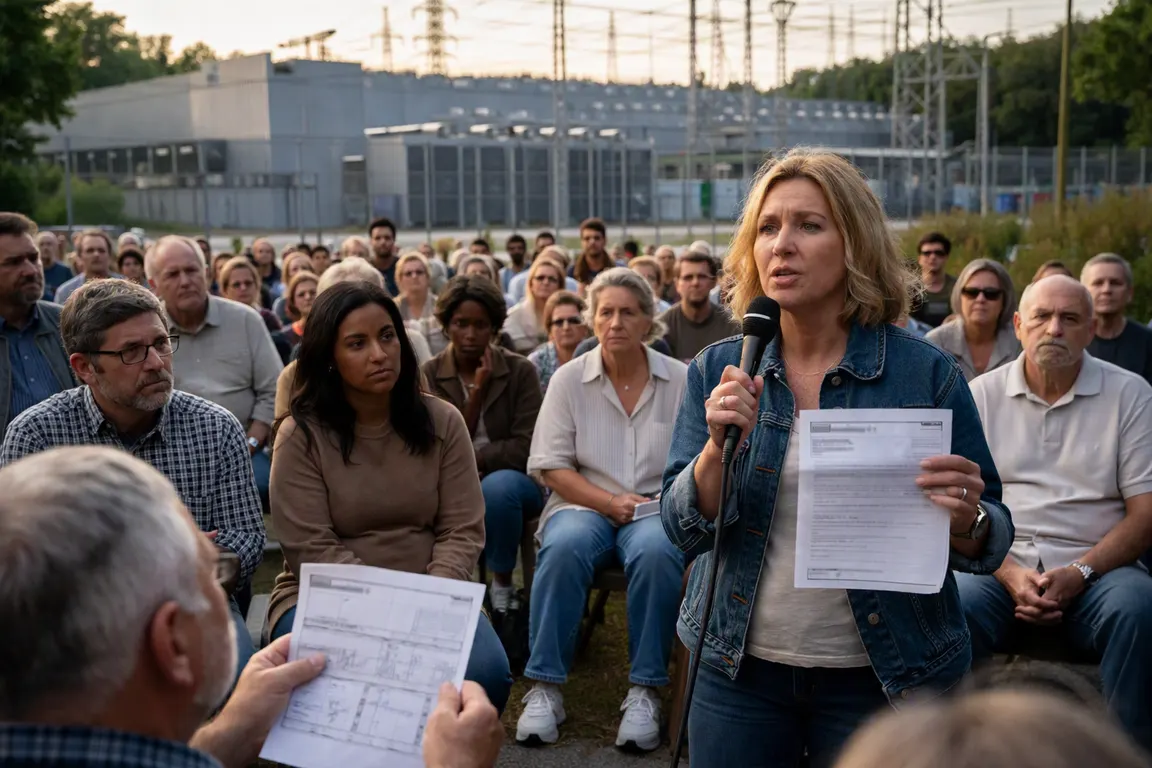
Communities across the United States are seeing electricity bills climb as new AI data center siting projects come online, sparking a bipartisan effort to tighten placement rules weeks before the 2026 midterm elections.
A July Fox News poll found that 70 % of respondents oppose an AI‑focused data center in their area, with 60 % of Republicans and 76 % of Democrats voicing resistance. A May Gallup poll reported a similar 71 % nationwide opposition. The backlash centers on higher utility costs, noise, and water usage, turning a local zoning issue into a national policy debate.
Utility regulators say the impact is measurable. PJM Interconnection’s market monitor attributed 63 % of a recent capacity‑auction price spike to data‑center demand, adding about $9.3 billion in costs for ratepayers. Residents in Maryland, Ohio and the District of Columbia have seen monthly electric bills rise $16 to $21.
Ratepayer groups are pressing the industry to absorb those incremental costs. The White House’s “Ratepayer Protection Pledge,” signed by Meta, Amazon, Google and other firms, commits signatories to cover any extra energy expenses incurred by consumers.
State leaders are responding in kind. Texas Governor Greg Abbott has placed a hold on new data‑center permits, citing grid‑reliability concerns. The National Renewable Energy Standards Council warned that opposition could spread beyond Ohio, while Michigan’s vice‑presidential candidate JD Vance toured a $7 billion hyperscale campus announced by OpenAI, Oracle and Related Digital, signaling federal support despite local pushback.
Washington frames the dispute as part of the strategic competition with China. A partner at Andreessen Horowitz estimates that China could double its data‑center capacity within five years and already processes roughly 45 % of weekly AI token volume as of April 2026. Some politicians, including former President Donald Trump, have suggested that community resistance could hand an advantage to Chinese competitors. Those claims remain unverified; Kevin O’Leary’s allegation that China is behind U.S. protests is the subject of a defamation lawsuit and lacks supporting evidence.
The economic stakes are tangible. Residents in PJM‑served regions face higher bills, while local governments risk losing tax revenue if projects are blocked. Conversely, the Michigan campus promises hundreds of construction jobs and a long‑term tax base, illustrating the trade‑off between immediate utility costs and prospective economic development. Industry leaders warn that a slowdown in U.S. AI‑compute capacity could push firms to shift workloads to cheaper Chinese models, potentially eroding the country’s competitive edge.
As the midterms near, lawmakers from both parties are introducing bills that would tighten environmental reviews and require explicit cost‑benefit analyses before approving new AI data centers. The outcome of those proposals will likely determine whether the United States can expand its AI infrastructure without imposing additional financial burdens on households.
The next major test will come at the upcoming PJM rate‑case hearing, where regulators will decide how to allocate the $9.3 billion cost surge. Combined with congressional action this fall, the decision will shape the balance between national AI ambitions and the everyday electricity bills of millions of Americans.