

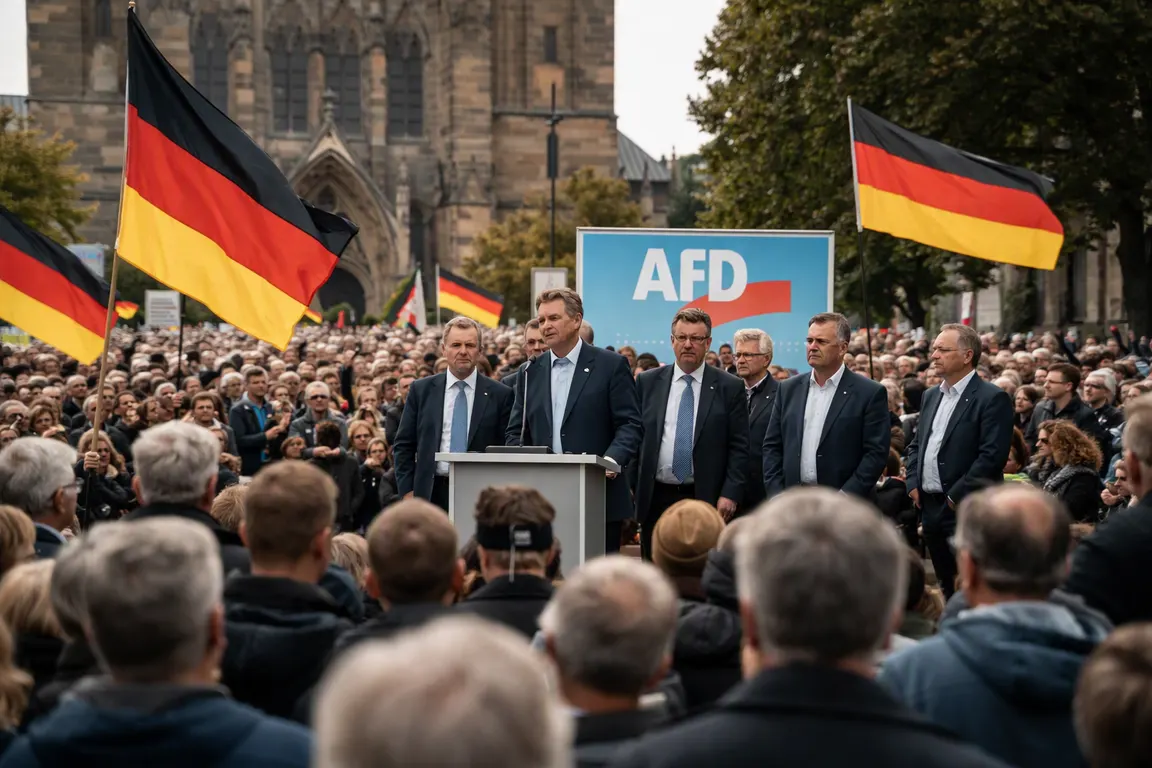
The AfD near-majority in Saxony-Anhalt election saw the Alternative für Deutschland win 43.8% of the vote on March 14, just three seats short of a majority in the 97‑member Landtag. The result makes the AfD the largest party in the former East German state and positions it to influence coalition negotiations.
Germany’s domestic intelligence agency classifies the AfD as a “far‑right extremist” party. While the label does not bar the party from government participation, it subjects the AfD to heightened surveillance and limits access to certain public funds.
The surge came as the centre‑right CDU fell to 17.2% and the centre‑left SPD to 9.3%, both well below historic levels. AfD national leader Tino Chrupalla called the result a “democracy demand” and urged other parties to work with the AfD to form a government.
Analysts caution against reading the result as a nationwide swing. The Guardian notes regional dynamics differ and warns that the party’s nationalist rhetoric and controversial imagery remain a concern. Al Jazeera adds that the outcome could signal a step toward greater far‑right influence if the trend continues, but stresses a single state election is not a reliable predictor of federal outcomes.
If the AfD secures a governing role in Saxony‑Anhalt, policy shifts are likely. The party’s platform calls for stricter immigration controls, revisions to school curricula to reflect its cultural agenda, and a reallocation of EU‑linked funding toward projects it favours. Business groups have expressed uncertainty about regulatory stability, especially in sectors reliant on EU subsidies.
The next phase will be coalition talks. The AfD needs three additional seats for a majority, so it may seek a formal coalition, a confidence‑and‑supply agreement, or a looser partnership with smaller parties. The negotiations will be watched closely as two other state elections are scheduled for later in March, which could either reinforce the AfD’s momentum or curb it.
At the federal level, Germany’s EU and NATO partners are monitoring whether a stronger AfD presence will affect Berlin’s commitment to collective fiscal rules and foreign‑policy positions. The country’s constitutional safeguards allow for the exclusion of parties deemed a threat to the democratic order, but no such step has been taken against the AfD.
In the coming weeks, the composition of Saxony‑Anhalt’s government and the results of the upcoming state polls will indicate whether the AfD’s breakthrough is an isolated surge or the start of a broader realignment in German politics.