

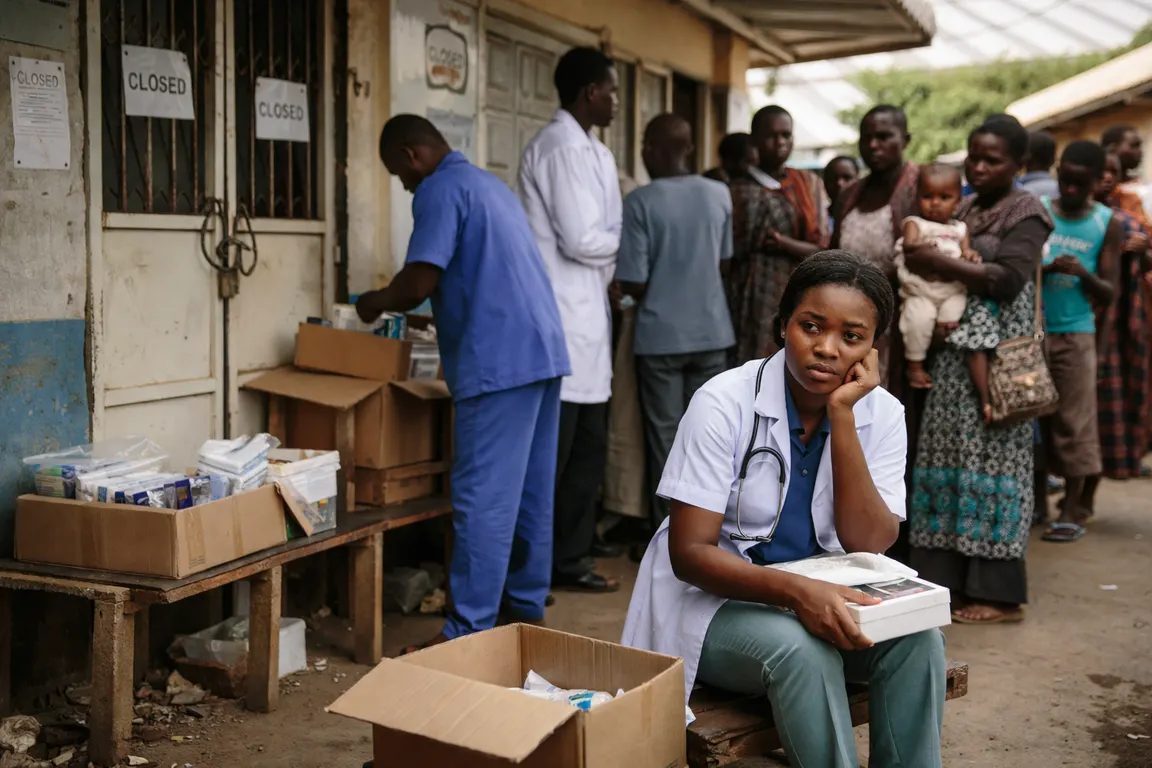
The Trump administration's funding cuts to global HIV relief programs have led to the closure of over 1,700 clinics and the loss of over 16,000 full-time staff members, according to a recent report. These disruptions have significant implications for global public health, as they may lead to increased HIV transmission and decreased access to life-saving treatment, ultimately affecting millions of people worldwide.
The President's Emergency Plan for AIDS Relief (PEPFAR) has saved at least 26 million lives since its inception in 2003, but the current funding cuts have forced organizations to scale back their services. HIV prevention spending has fallen by 51% from fiscal years 2024 to 2025, according to PEPFAR expenditure data. Researchers found that nearly two million fewer people living with HIV were receiving PEPFAR-supported antiretroviral treatment in fiscal year 2025 compared to the previous fiscal year.
The Trump administration has presented a more positive picture of the situation, citing stable treatment numbers and increased PrEP coverage, but researchers from amfAR and the International AIDS Society have found substantial disruptions to PEPFAR services. The closures of clinics and layoffs of staff have led to decreased access to life-saving treatment and prevention services, particularly for vulnerable populations such as sex workers, men who have sex with men, transgender people, and people who inject drugs.
The majority of responses to the survey came from African countries, where the impact is particularly severe. As the world struggles to control the HIV epidemic, the US funding cuts have created a perfect storm of decreased access to treatment and prevention services, putting millions of lives at risk. The question now is what steps can be taken to restore funding and services to these critical programs, and what are the long-term implications of these disruptions for global public health and the fight against HIV/AIDS.
The impact of these funding cuts is a pressing concern for global health officials, who warn that decreased access to treatment and prevention services could lead to a resurgence of the HIV epidemic. The US has historically played a leading role in the global response to HIV/AIDS, and the current funding cuts have significant implications for the ability of other countries to respond to the epidemic. As the international community works to achieve the goal of ending the HIV epidemic by 2030, the US funding cuts pose a significant challenge that must be addressed.