

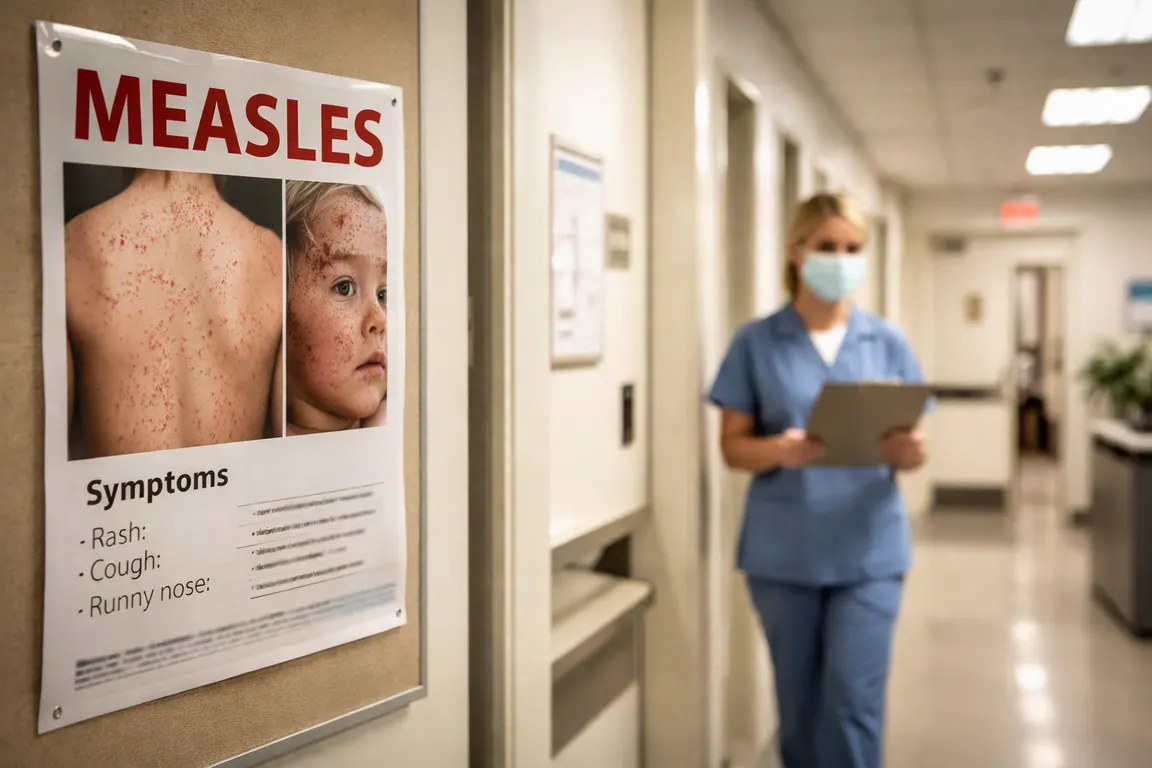
A 40‑year‑old woman from Jefferson County died Saturday from complications of measles, the third measles‑related death in Pennsylvania this year and a stark reminder of the Pennsylvania measles outbreak.
State health officials say the surge is the worst measles outbreak in the United States in 35 years, raising fresh doubts about the nation’s 2000 claim of measles elimination and highlighting gaps in vaccine coverage.
In August, two infants in the state died after contracting measles. One infant had a genetic disorder that made severe infection more likely; the other suffered a ruptured spleen, a complication reported by The Guardian. Weeks later, cases spread to multiple counties, prompting state alerts and a renewed push for vaccination.
The latest fatality was confirmed by the Pennsylvania Department of Health and reported by several outlets, including Al Jazeera, The Independent, NBC News and The Guardian. State officials have not released a precise case count, but the pattern of severe outcomes has spurred urgent public‑health action.
Measles is highly contagious; one infected person can transmit the virus to 12‑18 susceptible individuals. The August infant deaths showed that even children with underlying conditions are at risk, while the recent adult death demonstrates that the threat extends beyond the youngest patients. Public‑health experts warn that pockets of under‑vaccinated communities create the conditions for such outbreaks, and Pennsylvania mirrors a broader national trend of declining childhood vaccine uptake in some areas.
State health authorities have issued alerts urging residents to verify their vaccination status and to receive the measles‑containing MMR (measles, mumps, rubella) vaccine. Mobile clinics have been deployed in affected counties, and contact‑tracing teams are working to identify and isolate potential exposures. Schools and childcare centers are being asked to review immunization records and to exclude unvaccinated children during the outbreak.
The Pennsylvania Department of Health has also called on local health departments to coordinate outreach, especially in communities where vaccine hesitancy has been documented. Families of the deceased face profound grief and potential medical expenses, while local residents confront anxiety about further spread.
State legislators are discussing stricter enforcement of school‑entry vaccination requirements, but officials caution that policy changes alone will not stop transmission. Public education and accessible vaccination services are essential to closing immunity gaps.
The designation of this surge as the worst in three and a half decades rests on the combination of case numbers, geographic spread across multiple counties, and three deaths in a single year—an outcome not seen since the early 1990s. While the United States retains its 2000 elimination status on paper, the Pennsylvania experience shows how fragile that designation can be.
Health officials plan to expand vaccination clinics, complete contact tracing for recent cases and provide clear guidance on symptoms and when to seek care. The lingering question is how quickly vaccination gaps can be closed to prevent further loss of life and restore confidence in the nation’s measles‑elimination claim.