

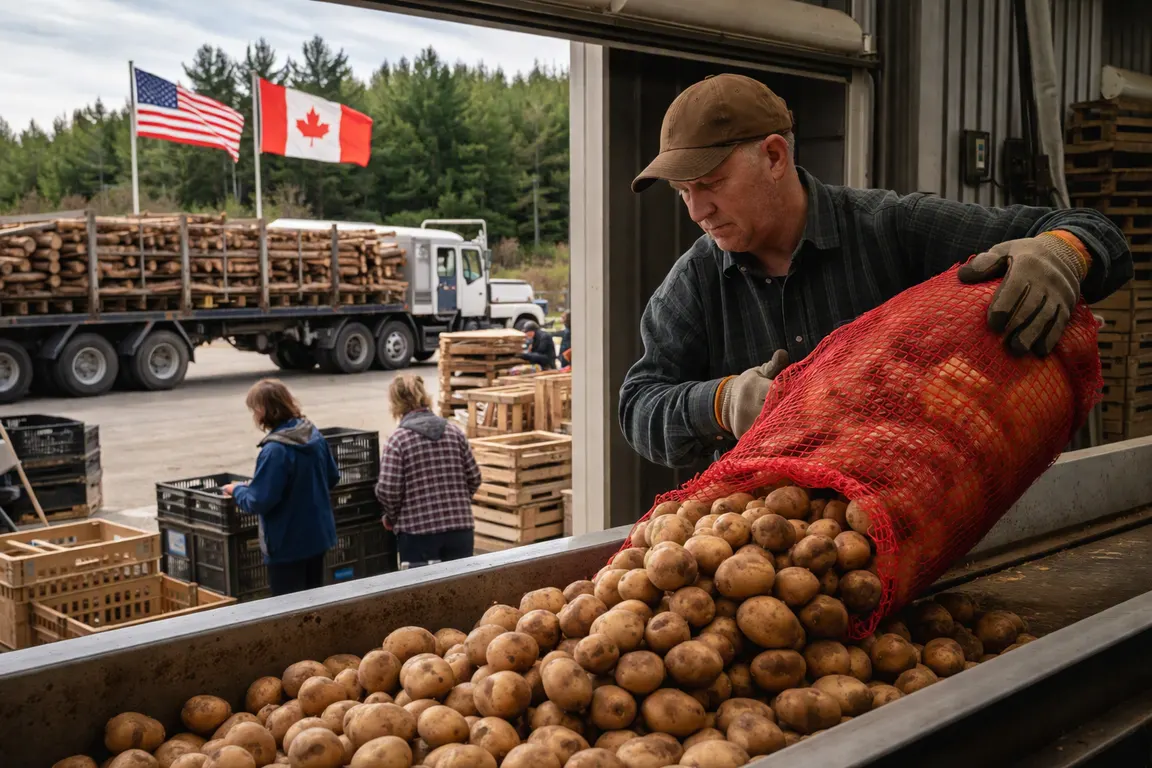
The White House announced on Oct. 4 that duties on nine Canadian agricultural products and several forestry items will be eliminated, ending the 50% tariff that has affected Maine producers since the summer of 2023. The move removes the tariff on roughly $20 billion of Canadian imports that had raised costs for Maine farms and sawmills.
The exemptions cover blueberries, potatoes, apples, seaweed and other farm goods, as well as plywood sheets, packing crates and certain wood‑processing machines. President Donald Trump framed the decision as a “public‑interest” measure to help U.S. producers that rely on cross‑border equipment and supplies unavailable domestically. He did not link the change to any upcoming election, but the timing—weeks before the November midterms—has drawn political attention.
Sen. Susan Collins, whose re‑election campaign in Maine’s lone Senate seat is expected to be competitive, announced the relief on the same day and said she had been working with the White House on the issue. A White House statement added that the removed duties are being replaced by tariffs on other product categories, though the replacement list was not disclosed.
Maine farmers stand to benefit immediately. Blueberry growers, who account for a large share of the state’s fruit exports, may see tighter margins improve as the duty on Canadian inputs disappears. Potato and apple producers, which depend on Canadian seed and processing equipment, will also see lower input costs. In the timber sector, duty‑free plywood and related materials reduce expenses for sawmills and prefab builders, helping to preserve jobs in a region where forestry remains a major employer.
Canadian exporters of the exempted goods are likely to regain market share in the U.S. Northeast, but the overall impact on bilateral trade volumes is still uncertain. Analysts note that without quantitative estimates from the administration, the precise economic benefit to Maine’s producers cannot be measured at this stage. The undisclosed replacement tariffs add further uncertainty, and some industry groups warn that new duties could offset the relief.
The announcement arrives as both parties court swing voters in the Senate. Collins’s campaign has highlighted the exemption as evidence of her ability to deliver tangible benefits to constituents. While the administration has not explicitly tied the policy change to the election, the proximity of the announcement to the midterms invites scrutiny of trade policy as a campaign tool.
Looking ahead, the White House has not said whether additional Canadian products will be reviewed for exemption or when the replacement tariff list will be released. Maine’s agricultural and forestry associations are urging the administration to provide clarity on the new duties and to assess the net economic impact. As the November ballot approaches, the intersection of trade policy and electoral strategy is likely to remain a focal point for voters and policymakers alike.