

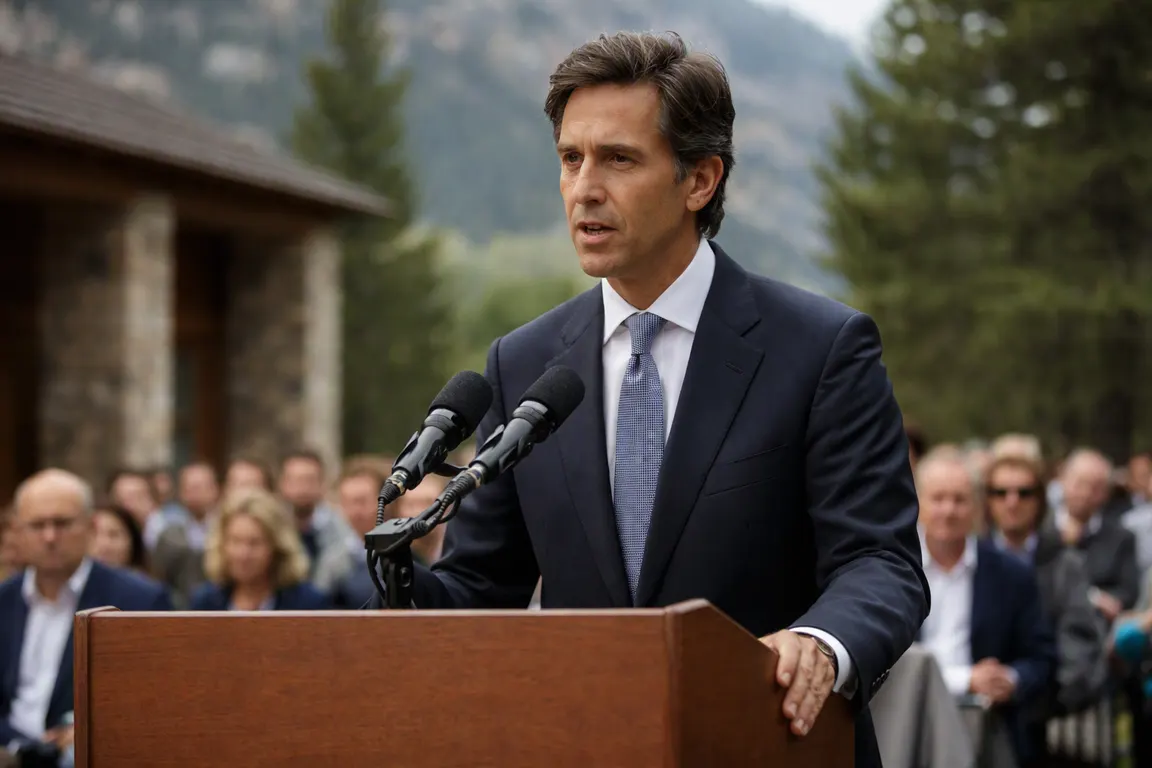
Federal Reserve Governor Kevin Warsh concluded the Jackson Hole symposium without offering forward guidance, prompting traders to price in a higher chance of a September rate hike. Within minutes of his 10 a.m. ET remarks, betting platforms lifted the probability of a hike and Treasury yields edged higher.
Warsh opened by noting that inflation remains above the Fed’s 2% target, citing a 12‑month personal‑consumption‑expenditures index of 3.7% and a six‑month reading of 4.1%. He described the current financial environment as “not restrictive” and pointed to strong real‑output data: capital‑expenditure growth of roughly 9% year‑over‑year, S&P 500 corporate profits up 20% YoY, and an unemployment rate of 4.1%.
In a departure from recent practice, Warsh dismissed regular forward guidance as a “crisis‑era tool that has overstayed its welcome.” By refusing to signal a policy path, he left markets to interpret his data points, a move analysts say keeps the option of a hike on the table while avoiding the market‑fixing pitfalls of explicit guidance.
A notable thread in his remarks was the emphasis on artificial intelligence as a “hinge point” for future productivity. Warsh highlighted more than $100 billion in recent token sales and described AI development as a “hyper‑Moore’s law” that could reshape growth dynamics. He indicated the Fed will monitor AI‑related investment flows as part of its broader assessment of economic momentum.
Market reaction was immediate. Pre‑speech data at 8 a.m. ET showed the 10‑year Treasury yield at 4.69% and the two‑year at 4.23%, with equity futures flat. Within an hour of Warsh’s address, betting platforms reported a rise in the probability of a September hike, while the 10‑year slipped to 4.71% and the two‑year nudged to 4.25%. Bond traders cited a “hawkish undertone” in Warsh’s language, even though he avoided outright rate‑rise rhetoric.
Warsh’s stance contrasted with comments from other Fed officials. Cleveland Fed President Sandra Hammack urged restraint, Kansas City Fed President Jeffrey Schmid leaned hawkish, and Boston Fed President Susan Collins described rates as “mildly restrictive.” The divergent signals underscore an internal debate over how aggressively the Fed should respond to lingering price pressures while supporting emerging sectors like AI.
Analysts remain split. Goldman Sachs expects the Fed to reaffirm its 2% inflation target but warns of a possible “left‑tail” hawkish surprise. JPMorgan and Berenberg view the speech as a cue to temper expectations, noting the lack of explicit guidance. Bloomberg’s editorial board doubts any clear roadmap will emerge, emphasizing the Fed’s reliance on incoming data.
For borrowers, the key question is whether mortgage and auto‑loan rates will climb if the market’s hike odds materialize. Companies planning AI‑focused capital expenditures may face tighter financing conditions, potentially slowing the sector’s rapid expansion. Households watch the Fed’s credibility closely; persistent inflation above target erodes real wages and could reshape inflation expectations.
The next test will come at the Federal Open Market Committee meeting slated for early September. With Warsh’s speech resetting market expectations, policymakers will need to balance the inflation data he highlighted against the growing economic momentum tied to AI investments. Whether the Fed will signal a concrete path forward—or continue to rely on quiet, data‑driven decisions—remains the central uncertainty for markets and borrowers alike.