

Venezuelan heavy crude upgrade hurdles stall Trump oil deal
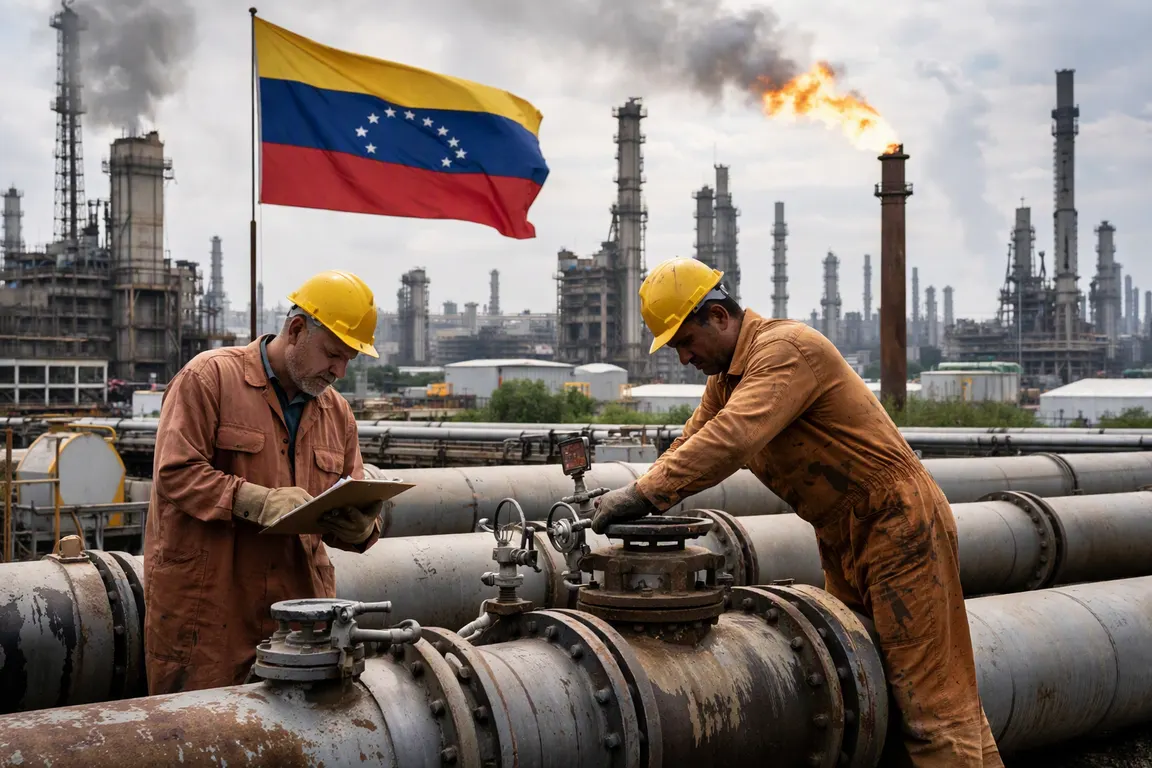
President Donald Trump announced on Aug. 27, 2026 that the United States would assume majority control of more than 65 billion barrels of Venezuelan oil reserves, pitching the agreement as a solution to soaring gasoline and diesel prices. Industry analysts say the plan overlooks a fundamental problem: the extra‑heavy crude from Venezuela’s Orinoco Belt cannot be refined into gasoline, diesel or jet fuel without costly Venezuelan heavy crude upgrade facilities that are not expected to be operational for years. The gap between the administration’s claim and the technical reality could limit any near‑term relief for consumers, refineries and the Strategic Petroleum Reserve.
Venezuela produced roughly 1.1 million barrels per day in July, about one‑third of its 1998 peak, with roughly three‑quarters of that output classified as heavy or extra‑heavy crude. The benchmark Meréy 16, which reflects much of the Orinoco Belt’s output, traded at $67.36 a barrel in July, about $12 below the OPEC basket, a discount that reflects the conversion costs required to turn the oil into transport fuels.
In a Jan. 9, 2026 White House meeting, ExxonMobil CEO Darren Woods told President Trump that Venezuela is “uninvestable” without sweeping legal and commercial reforms. Both ExxonMobil and Chevron later confirmed they would not finance the reconstruction of Venezuelan oil infrastructure this year. Chevron’s ongoing talks to expand operations in the Carabobo region are separate from any direct U.S. government participation and do not guarantee the capital needed for a full‑scale upgrade.
Turning extra‑heavy crude into marketable fuels demands large‑scale coking units, hydrogen production and desulfurization capacity—facilities that most U.S. refineries lack in sufficient quantity. The Strategic Petroleum Reserve, which the administration cited as a strategic benefit of the deal, cannot be replenished with Venezuelan heavy oil, a point noted by energy analyst Paul Saladino on Aug. 31, 2026, who referenced a failed 1980s experiment with Mexican heavy crude.
The White House and the State Department argue the agreement backs Venezuela’s democratic transition and adds a strategic source of crude for the United States. The Guardian reports officials frame the pact as a diplomatic win that diversifies U.S. supply and reduces reliance on other geopolitically sensitive producers. However, without a multi‑billion‑dollar investment—estimated at $8‑$10 billion for pipeline upgrades and more than $150 billion for comprehensive field redevelopment—the promised “majority control” will not translate into additional barrels of gasoline at the pump.
For motorists and airlines, the timing is stark. Gasoline and diesel prices have hovered near record highs throughout August, and the market impact of the deal appears negligible. Refineries cannot quickly retrofit the necessary upgrading infrastructure, and the SPR cannot absorb the heavy crude without significant processing. As a result, any price relief remains speculative.
The next critical step will be the outcome of ongoing negotiations between U.S. firms, the Venezuelan government and potential financiers. Until a clear pathway for upgrading and transporting the heavy crude materializes, the pact is likely to remain a political statement rather than a practical solution to America’s fuel‑price pressures.