

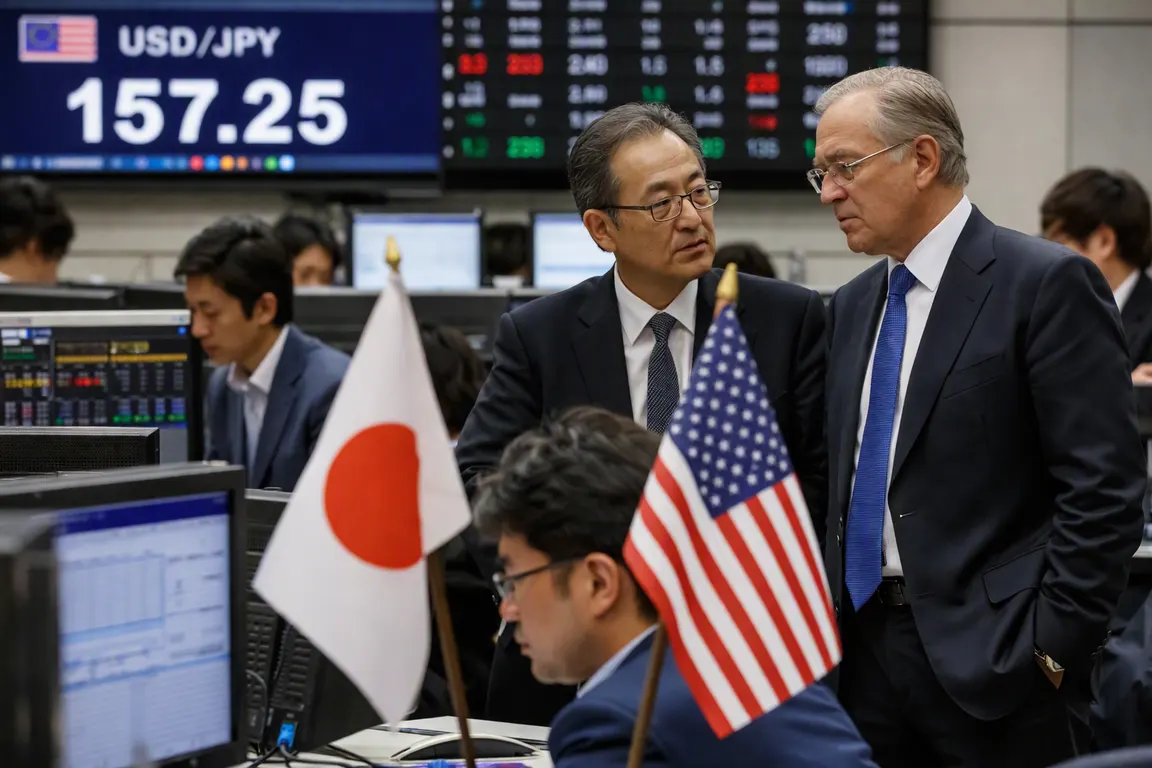
The US and Japan have conducted a rare joint intervention to support the yen, aiming to counter excessive volatility and disorderly movements in the Japanese currency. This joint action, the first since 1998, highlights concerns about the potential implications for the global economy. The yen had slid to 163.24 per dollar last month, its weakest level since 1986.
The US Treasury and Japan's Finance Ministry have confirmed the joint intervention, with the Federal Reserve Bank of New York selling euros to buy yen on behalf of the US Treasury. The exact amount of the intervention is uncertain, with estimates ranging from 6 trillion to 8.45 trillion yen. Japan's Finance Minister stated that the ministry will not hesitate to conduct further joint intervention if necessary.
The joint intervention aims to stabilize the yen and potentially benefit the global economy, particularly in terms of trade and investment. The move raises questions about what prompted the US and Japan to conduct this intervention and what are the potential risks and benefits of such an action. As the global economy continues to navigate volatility, the impact of this joint intervention will be closely watched.
The US and Japan, major economic players, have taken this step to stabilize the yen. The next step will be to monitor the effects of this intervention on the yen and the global economy, and to see if further action will be taken to maintain stability. The intervention is a significant development, and its effects will be closely monitored by economists, investors, and policymakers around the world.
The joint intervention by the US and Japan is a rare move, and it underscores the concerns of both countries about the potential implications of a weak yen for the global economy. The move is also a signal of the close economic relationship between the two countries and their commitment to maintaining stability in the global economy.