

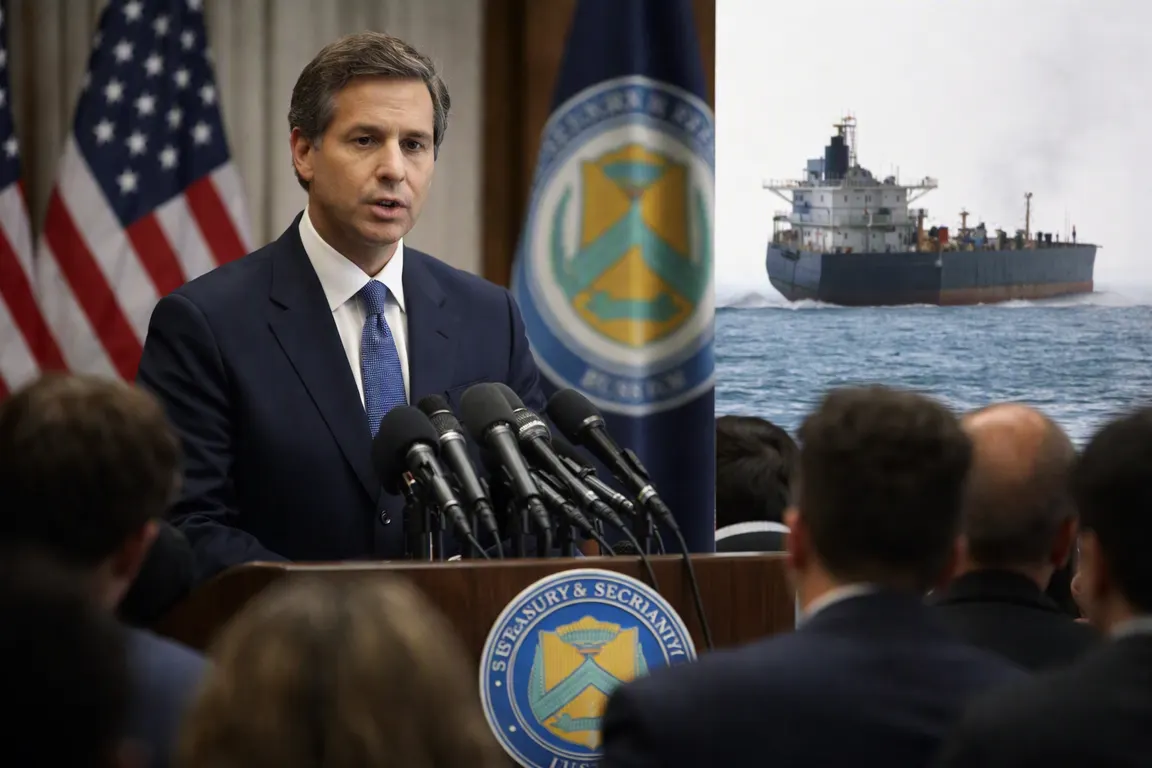
Treasury Secretary Scott Bessent announced a new sanctions package on Monday that adds 60 individuals, entities and vessels to the U.S. blacklist, a move the administration says is intended to "financially strangle" Iran’s economy. The list includes shipping firms that move Iranian crude, financiers tied to the Islamic Revolutionary Guard Corps and vessels suspected of facilitating illicit oil sales. The Treasury did not name any Chinese banks, despite China being Iran’s largest oil buyer. The expanded Iran sanctions oil price impact was evident as Brent crude fell more than $2 a barrel on the day of the announcement.
The sanctions come as the United States seeks to revive an economic campaign that stalled after a series of U.S.-Israeli strikes on Iranian facilities six months ago. Policymakers, investors and regional actors are watching how the expanded restrictions will be enforced, which sectors they will hit and whether they can overcome Iran’s long‑standing ability to evade sanctions.
Bessent said the measures aim to cut off revenue streams, but he did not detail how secondary penalties will be applied to firms in China, the United Arab Emirates, Turkey or Iraq that continue to trade with the newly listed parties. Analysts cited by Al Jazeera and RealClearPolitics argue that incremental sanctions are unlikely to force a policy shift in Tehran. Iran’s economy minister, Ali Madanizadeh, said the country is "fully prepared" for the new restrictions, and IRGC spokesperson Brig. Gen. Hossein Mohebbi warned that attacks on Iranian energy infrastructure could provoke retaliatory strikes on U.S. energy chokepoints in the Gulf.
Markets reacted instantly. The price dip highlights how tightly global oil markets are linked to geopolitical risk, a factor that could reverberate through regional economies that depend on oil revenue.
Beyond the price charts, the sanctions could tighten the squeeze on Iranian civilians already bearing the brunt of a collapsing economy. Restrictions on financial channels and oil sales are expected to deepen shortages of hard currency, potentially curbing imports of essential goods. Companies in China, the UAE, Turkey and Iraq also face the prospect of secondary sanctions or loss of access to the U.S. dollar system if they are deemed to be facilitating prohibited transactions.
Diplomatic fallout may be equally consequential. The United States has not identified which foreign trade partners will be singled out for enforcement, creating uncertainty for firms navigating the sanctions regime. Chinese officials have signaled resistance to measures that would hamper their trade with Iran, a stance that could strain U.S.-China relations ahead of a scheduled summit next month.
The broader geopolitical context remains fragile. Pakistan’s army chief is slated to visit Tehran for a peace mission, and U.S.-China talks are scheduled for the coming weeks, suggesting that diplomatic channels remain open even as economic pressure intensifies.
The next test will be how aggressively the United States enforces the new list. If secondary actors are targeted, the sanctions could become a tangible constraint on Iran’s economy; if not, they risk becoming another layer of symbolic pressure while the region watches for any escalation.