

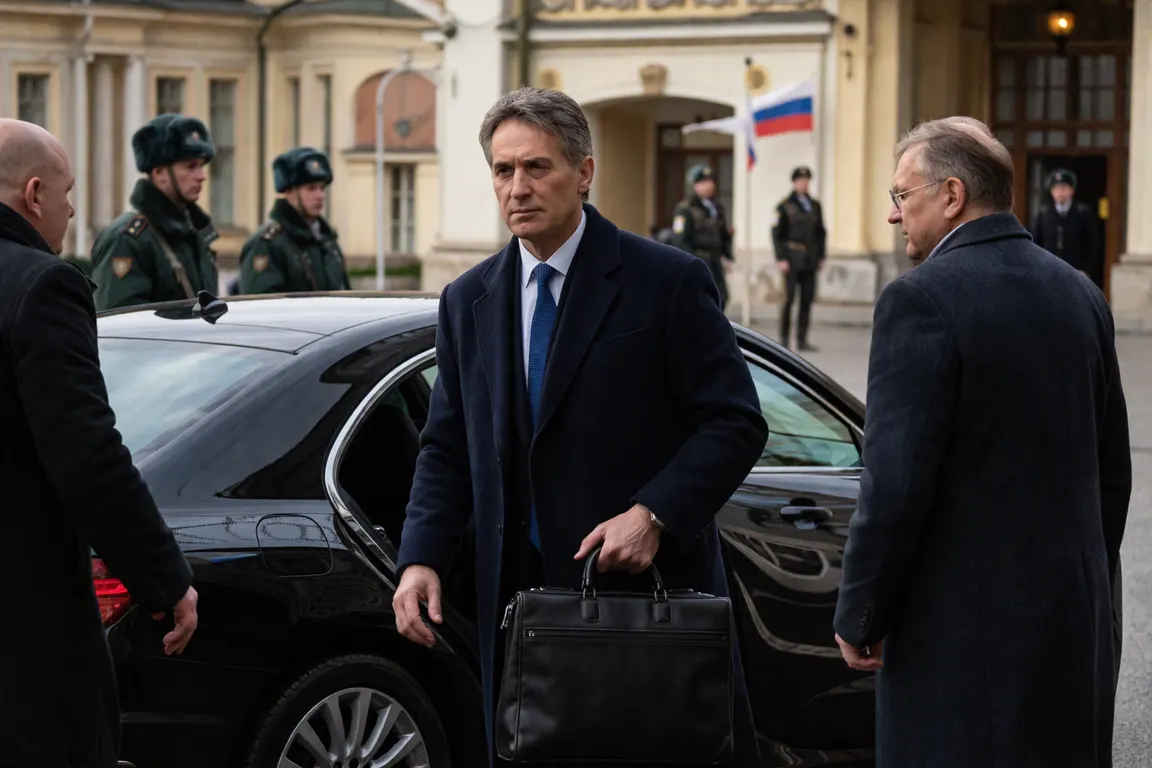
When Special Envoy Steve Witkoff arrived at the Constantine Palace in St. Petersburg on Oct. 21, crude prices fell modestly. The dip followed a statement from Kremlin aide Yury Ushakov that Russia was "in principle" ready to restart a three‑way peace framework with the United States and Ukraine around Nov. 10. The market reaction underscored how even a symbolic willingness to negotiate can move global oil markets.
The talks matter because a revived trilateral channel could affect the war’s trajectory, European energy security and U.S. agricultural logistics. If the negotiations lead to a cease‑fire or sanctions relief, Russian energy flows might resume, lowering fuel costs for European consumers and American farmers who depend on diesel for planting and transport. Any concession on NATO involvement would also shift the strategic balance on the battlefield.
The diplomatic sequence began with a high‑level meeting in Oslo on Oct. 20, where President Volodymyr Zelensky, EU leaders and Witkoff discussed a possible framework. The next day Witkoff met President Vladimir Putin at the Constantine Palace, coinciding with a separate encounter between Putin and Chinese Premier Li Qiang, according to the Manila Times. After the talks, the Kremlin announced Russia’s "principle" readiness to resume trilateral negotiations, and Finnish President Alexander Stubb called the Oslo session "genuine progress." Norwegian Prime Minister Jonas Gahr Støre echoed that sentiment, suggesting a new diplomatic phase may be emerging.
The United States has already taken a step that could affect both farmers and truckers: it lifted a ban on Russian diesel exports. The Manila Times reported that Putin praised the move as beneficial for U.S. agricultural logistics, and analysts expect lower diesel costs for American farms. On the same day, an American citizen, Stephen Hubbard, was released from Russian custody, a development some observers view as a goodwill gesture linked to the talks.
Separately, the administration is reportedly weighing a package that would allow limited European NATO forces to operate in Ukraine without invoking NATO’s Article 5 collective‑defense clause. Analysts describe the proposal as an "energy‑for‑peace" trade‑off, suggesting limited NATO presence could be exchanged for sanctions relief and the reopening of Russian energy pipelines. The Manila Times cautioned that no concrete cease‑fire or settlement terms have been announced, and key issues such as territorial control and reconstruction remain unresolved.
Market reaction has been swift. After Russia signaled willingness to talk, oil prices slipped, reflecting investor optimism that de‑escalation could ease supply concerns. European consumers are watching closely, as a resumption of Russian gas or oil shipments would influence price stability across the continent.
The path forward remains uncertain. Witkoff indicated plans to return to Oslo for further discussions, but the lack of detailed agreements leaves the risk that talks could stall, potentially reigniting fighting and keeping fuel prices volatile. Observers will monitor any formal outline of the energy‑for‑peace package, the scope of NATO involvement, and whether sanctions relief materializes.
The next critical step is the scheduled Nov. 10 meeting, which will test whether principle‑level willingness can translate into actionable concessions. Until then, the diplomatic overture continues to ripple through markets, farms and households, showing how a single diplomatic gesture can affect a wide array of public interests.