

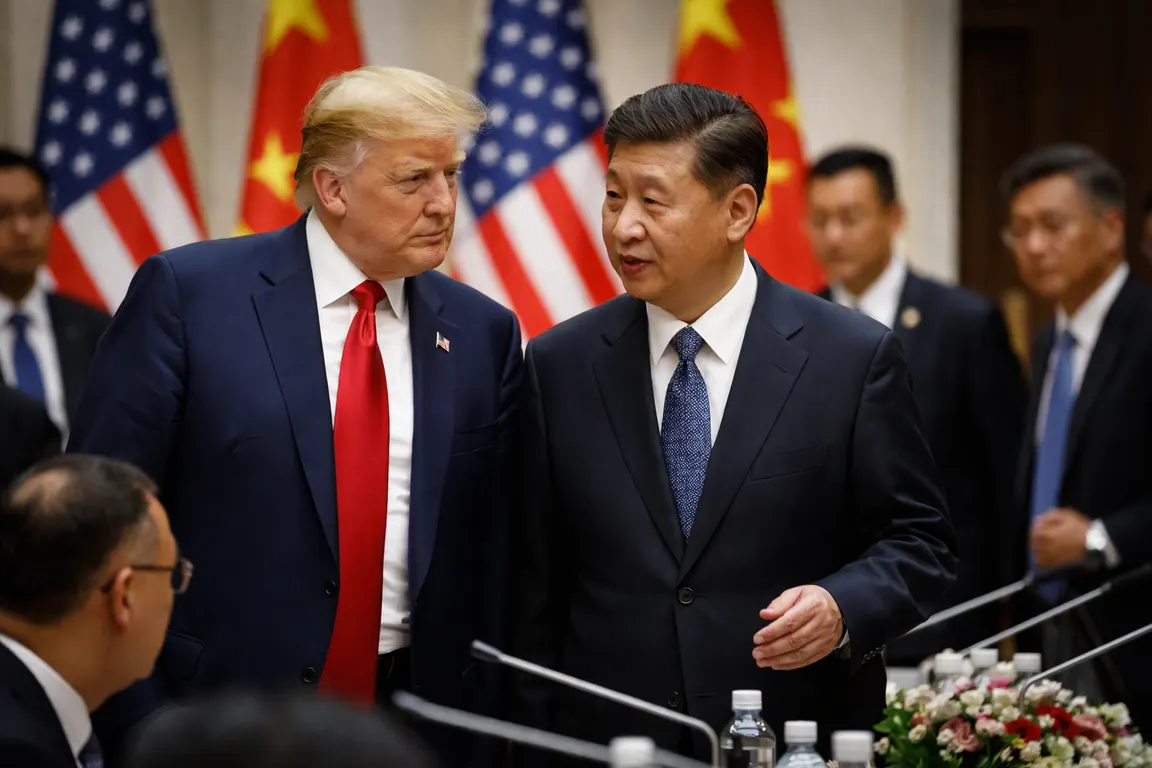
President Donald Trump and Chinese President Xi Jinping announced a two‑month extension of the existing U.S.-China tariff pause on Wednesday, moving the expiration from Nov. 10 to Jan. 10, and created a high‑level channel to discuss artificial‑intelligence safety and competition. The agreements were disclosed during Xi’s state visit, which began with a formal welcome at Joint Base Andrews.
The tariff extension keeps import duties on a slate of goods at zero, giving exporters on both sides of the Pacific short‑term certainty and stabilising supply‑chain costs for manufacturers and retailers. The AI channel establishes a mechanism for the United States and China to share concerns about rapid advances in machine‑learning systems that could affect national security, market competition and research funding.
Xi arrived on a 100‑foot red carpet at Andrews, greeted by Trump, First Lady Melania Trump, a military band and a flyover of two B‑1 bombers. Treasury Assistant Secretary for International Trade Scott Bessent used the ceremony to confirm the tariff extension and announced that he and his Chinese counterpart, He Lifeng, had agreed to set up the bilateral AI dialogue. The White House banquet that followed featured top U.S. tech executives, but no Chinese CEOs, underscoring the asymmetry of business representation.
Analysts say the extended pause will help firms finalize inventory decisions before the year‑end rush and may temper price pressures that have recently filtered into consumer markets. For technology companies, the AI channel could lay groundwork for coordinated standards on data sharing, algorithmic transparency and export controls, although the details of the mechanism remain vague.
Energy issues also entered the talks. President Trump said Iran would be on the agenda, linking the summit to broader geopolitical tensions that have already influenced global oil prices. While no joint statement on Iran emerged, the inclusion of the topic suggests the two powers may coordinate future sanctions or diplomatic moves, with downstream effects on gasoline prices and inflation.
The visit sparked partisan friction at home. Republican Senator Roger Wicker condemned the airport welcome, calling Xi an “oppressive dictator,” a remark that highlights the ongoing debate over diplomatic engagement versus national‑security risks.
The summit, only the third face‑to‑face meeting between Trump and Xi since the former’s 2021 inauguration, marked the first formal welcome of a foreign leader at Andrews since President John F. Kennedy’s 1962 visit. As the talks move into their final day, officials will work to formalise the AI communication channel and translate the tariff extension into guidance for customs agents.
Whether the United States and China can sustain this policy‑focused trajectory or whether broader strategic rivalry will reassert itself remains uncertain, but the outcomes will shape trade, technology and energy markets in the months ahead.