

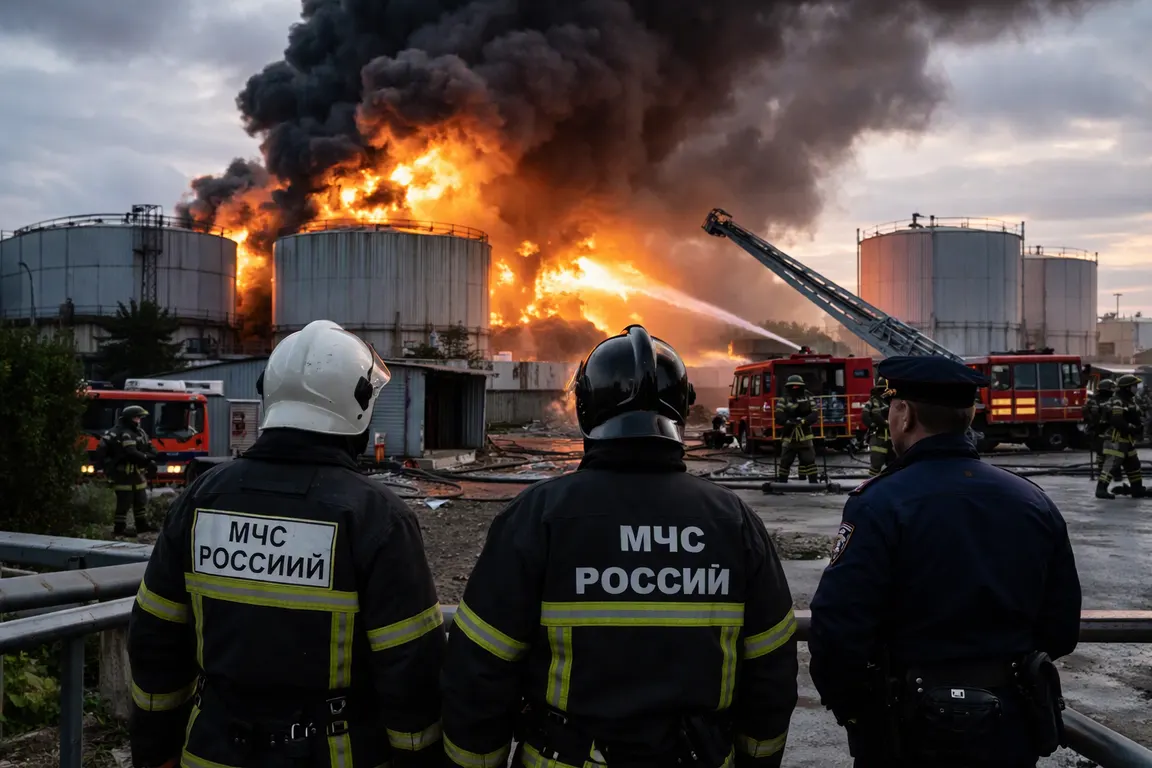
A coordinated Ukrainian drone swarm of more than a thousand unmanned aircraft struck the Petersburg Oil Terminal, the nearby Ruchi oil depot, an Ozon logistics centre and a VK data‑centre in St Petersburg early Sunday. The attacks caused fires, forced evacuations and killed at least one civilian.
Russian officials said the Defence Ministry shot down 1,015 drones across fifteen regions, Crimea and the Black Sea, though independent verification of that number is pending. The drones ignited multiple blazes at the oil terminal and the Ruchi depot, prompting firefighting crews to work through the night. Reports on injuries differ: the Manila Times cited five injuries, while the Guardian mentioned fifteen, but all sources agree that at least one person died.
The Petersburg Oil Terminal handles a large share of crude shipments to European markets, and the Ruchi depot stores additional volumes for onward transport. Damage to the facilities could temporarily curtail Russia’s export capacity, a development analysts say may tighten global oil supplies and lift benchmark prices. The strike also hit an Ozon logistics hub and a VK data‑centre, potentially disrupting e‑commerce deliveries and online services for thousands of users in the region.
The attack is the first large‑scale strike on Russia’s western oil hub since the United States‑brokered “energy cease‑fire” was announced in mid‑October. The truce, announced on 11 October, pledged that neither side would target energy infrastructure. Kyiv’s president, Volodymyr Zelenskyy, accused Moscow of violating the cease‑fire by striking Ukrainian power sites later that night, while Moscow blamed Kyiv for the St Petersburg raid. Both sides claim the other is breaching the agreement, leaving the truce’s practical effect in doubt.
Residents near the terminal reported evacuations as smoke and fire threatened nearby housing blocks. Emergency services treated the injured and began decontamination, but the full extent of damage to civilian infrastructure remains unclear. The divergent injury counts illustrate the difficulty of obtaining reliable data in the chaotic aftermath of large‑scale drone operations.
Market observers note that any interruption to Russian oil flow can reverberate through global supply chains. While Russia has alternative export routes, a loss of capacity at a major western hub could prompt short‑term price spikes, affecting fuel costs for consumers and margins for energy‑intensive industries worldwide.
The next steps will involve Russian authorities assessing damage to the terminal and depot, and independent observers verifying the claimed number of downed drones. International monitors may also revisit the status of the energy cease‑fire, seeking clearer mechanisms to verify compliance. Until those evaluations are completed, the risk of further escalations at energy sites remains a pressing concern for both regional populations and global markets.