

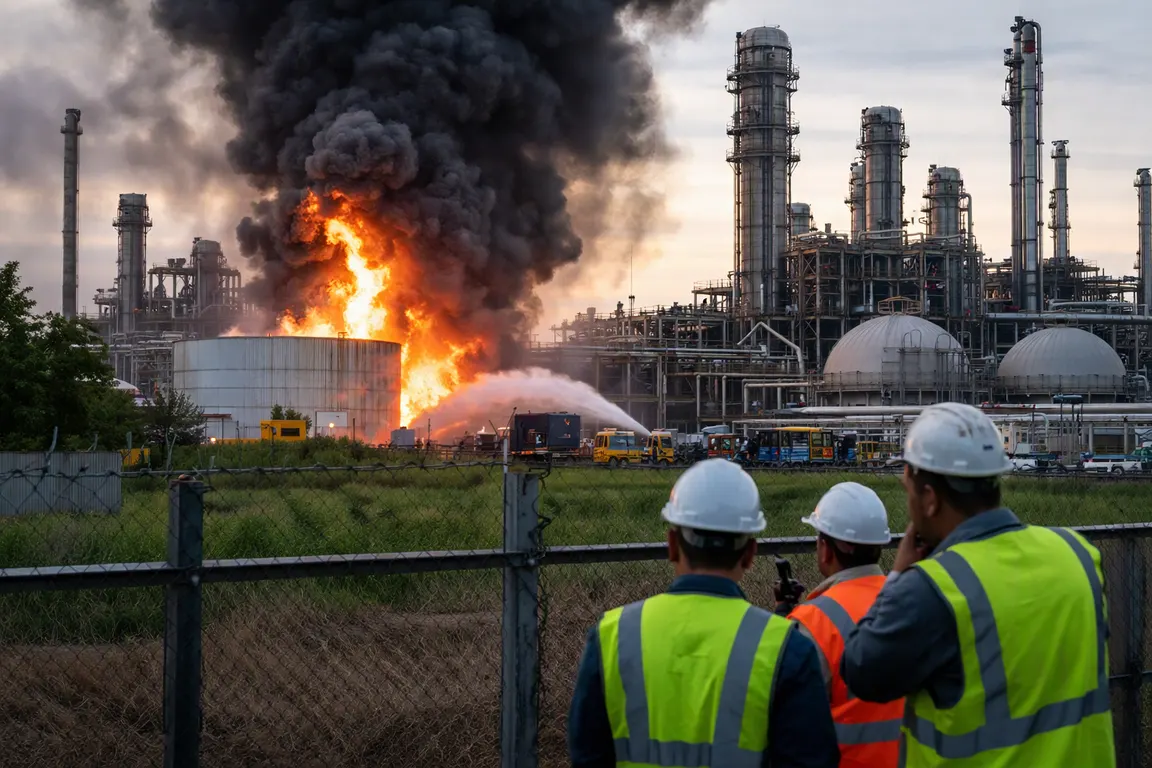
Ukraine said on Oct. 14 it will resume drone attacks on Russian oil refineries, ending a three‑day pause urged by the Trump administration. The move follows a large swarm of Ukrainian drones that struck central Ukraine on Oct. 13 and comes as U.S. diesel prices have risen above $6.50 a gallon.
Analysts say the renewed strikes could further cut Russian fuel output at a time when winter diesel demand is climbing and refining margins are already thin. Tighter supplies may push prices higher for motorists and freight operators in the United States and Europe and increase the risk of retaliatory attacks on Ukrainian infrastructure.
On Oct. 13 Moscow reported a “record swarm” of Ukrainian drones hitting infrastructure in central Ukraine, a claim echoed by The Guardian. The same day Russia accused Kyiv of targeting a refinery in Ryazan. The next day, President Volodymyr Zelenskyy told the Financial Times that Ukraine would resume attacks on Russian refineries, ending the pause requested by the United States. Al Jazeera confirmed the resumption after Zelenskyy’s statement.
The United States had repeatedly asked Kyiv to halt the refinery campaign, framing the request as part of an “energy cease‑fire.” No formal bilateral agreement existed, and after the three‑day pause the administration lifted the request, allowing Ukraine to act again.
U.S. diesel prices surged past $6.50 a gallon in the wake of the Oct. 13‑14 events, a level linked by commentators to the potential loss of Russian fuel supplies. The International Energy Agency warned on Oct. 13 that the global gasoil market will remain tight well into 2027, underscoring vulnerability as winter demand rises. Higher diesel costs affect trucking rates, food distribution and consumer prices in the United States, while European refiners risk reduced feedstock if Russian output is disrupted, potentially raising gasoline and diesel prices across the continent.
The escalation also raises questions about U.S. support to Kyiv. Some outlets have claimed that intelligence or satellite bandwidth—particularly the Starlink‑derived “Starshield” service—was curtailed during the pause, a claim the Trump administration has denied. No verifiable evidence of a sustained cut has emerged.
Political reactions have intensified. Elon Musk posted on X that it is “time for Ukraine to get a new leader,” reflecting criticism of Zelenskyy’s strategy. Former President Trump framed the cease‑fire collapse as a response to Ukrainian actions rather than a policy failure. RealClearPolitics linked high diesel prices to Trump’s broader “war of choice against Iran,” a narrative not corroborated by other sources.
For fuel‑dependent industries, the prospect of a renewed Russian refinery shock this winter prompts contingency planning. Companies are reviewing inventory buffers, alternative supply contracts and logistical adjustments to mitigate potential price spikes.
As winter approaches, observers will watch whether the renewed drone campaign materially reduces Russian diesel output and how quickly markets adjust. The balance between Ukraine’s strategic objectives and the broader economic impact on global diesel supplies remains an open question.