

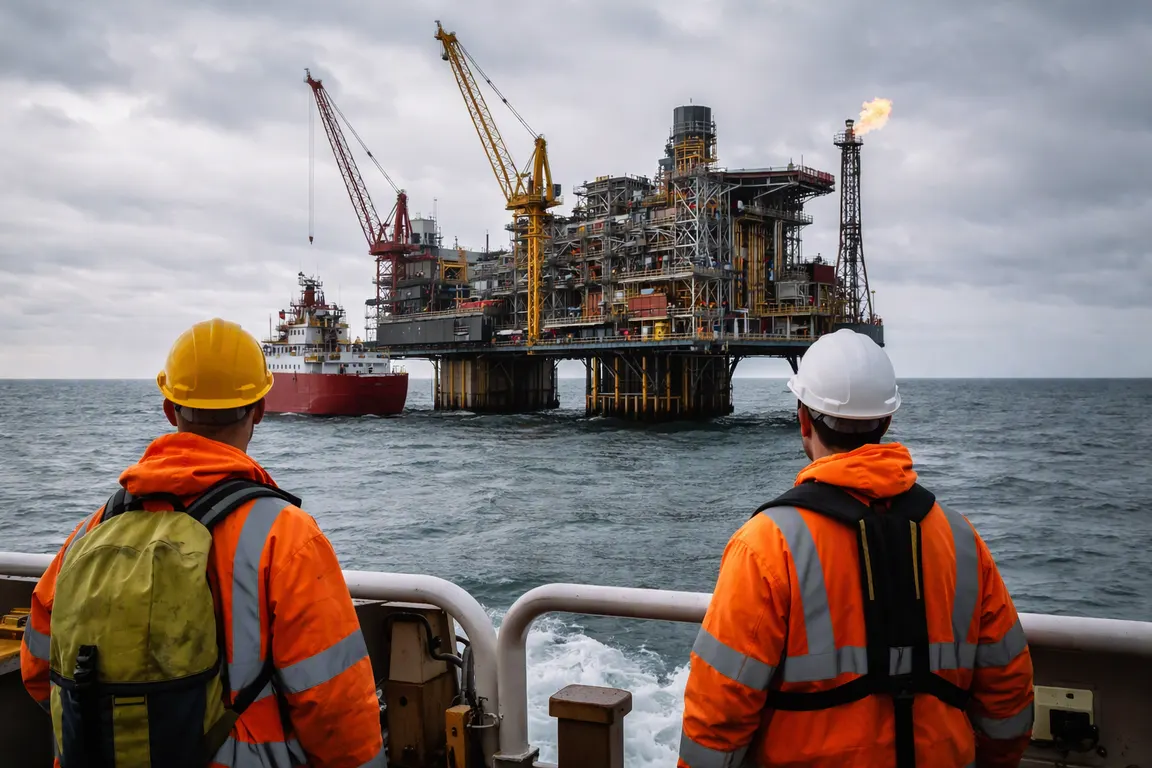
The Department for Business and Trade announced Thursday that the Jackdaw gasfield licence, for a field about 150 km east of the Scottish coast in the central North Sea, will allow production to start by the end of October 2026. The approval comes while a government moratorium on new oil and gas licences has been in place since May 2024.
Energy minister Grant Badenoch said the decision provides a "strategic buffer" for the UK’s energy system, arguing that additional domestic gas will ease household price pressure and reduce reliance on imports from politically unstable regions. Former business secretary Kemi Burnham defended the move as essential for maintaining offshore jobs and preserving expertise that could later be transferred to renewable projects.
Jackdaw will be the first new gas licence granted since the moratorium began. No detailed environmental impact assessment has been published, and the field’s expected output volume remains undisclosed, leaving the public without a clear picture of its emissions or safety measures.
Environmental groups and several Labour MPs protested outside the Department for Business and Trade, calling the approval incompatible with the UK’s legally binding net‑zero target for 2050. Al Jazeera reported that climate activists described the decision as a "step backwards" for Britain’s climate leadership. Critics argue that the licence directly contradicts the government’s own ban on new oil and gas projects, creating a policy inconsistency that could weaken confidence in the UK’s climate commitments.
Analysts expect the additional gas to modestly increase domestic supply and temper short‑term wholesale price spikes, but the lack of published data makes the economic benefit uncertain. Communities near existing offshore infrastructure could see more vessel traffic, with associated risks such as noise and potential spills, yet the government has not outlined specific mitigation plans.
The approval also highlights a split within the ruling party. Burnham’s defence reflects a traditional energy‑security stance, while Badenoch’s push to reverse the licence ban suggests a willingness to challenge the moratorium when supply concerns arise. The internal tension underscores the broader challenge of balancing immediate energy needs with long‑term climate goals.
The next step will be the release of a formal environmental impact report, which the government has yet to publish. Until that information is available, policymakers, industry stakeholders and the public will continue to debate whether the short‑term gains in gas supply justify any erosion of the UK’s net‑zero trajectory.