

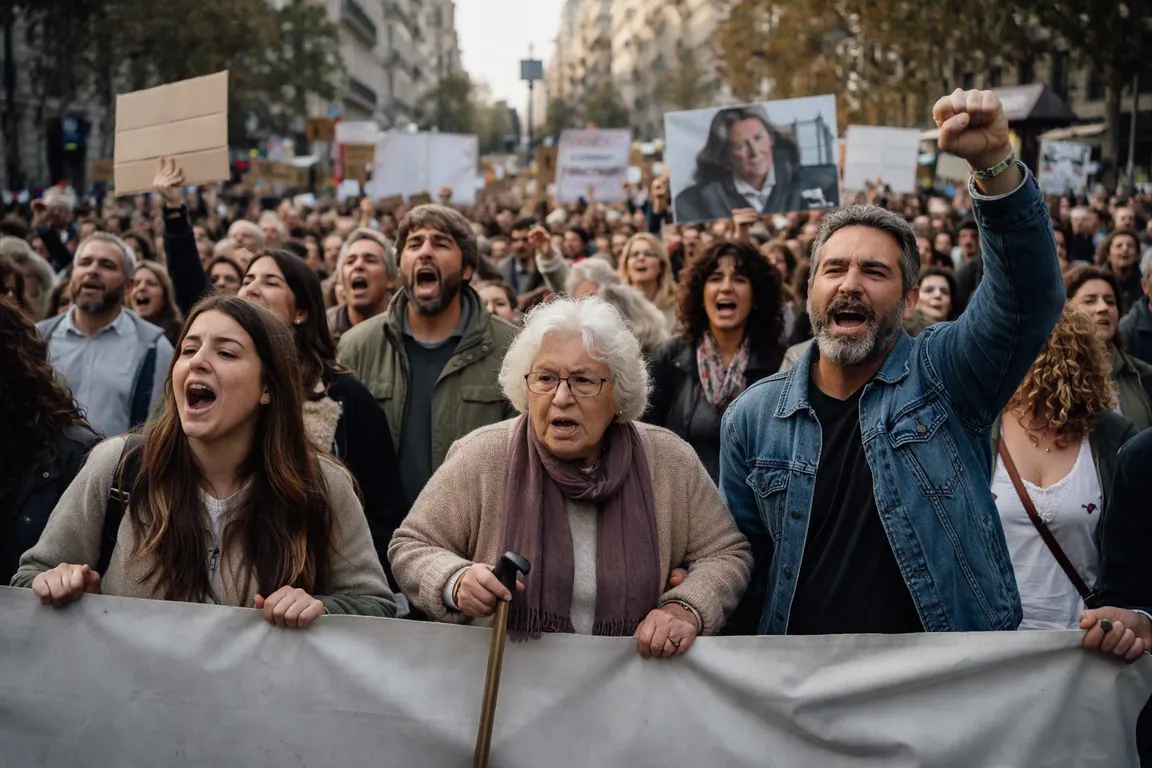
Tens of thousands took to the streets in Madrid and more than 50 cities Saturday after the Congress voted down two emergency housing decrees, sparking Spain housing protests. Demonstrators carried banners calling for a general strike and cited the recent eviction of an 87‑year‑old woman as a symbol of the crisis.
The rejected measures would have suspended evictions for a limited period and created a fast‑track process to convert vacant properties into affordable units. Opposition parties voted against both, arguing they infringed property rights and lacked clear funding. The exact vote count was not released, but the defeat stopped the proposals from becoming law.
On March 23, crowds gathered in Madrid’s Plaza de Callao, chanting for housing justice and displaying photographs of families displaced by recent evictions. Similar rallies erupted in Barcelona, Valencia, Seville and smaller towns, bringing the total number of coordinated actions to more than 50, according to the BBC. Organizers claim "tens of thousands" participated, though no official headcount is available.
The eviction of the 87‑year‑old woman, highlighted by The Guardian, became a focal point. She was removed from a modest flat after a landlord invoked a court order, sparking outrage over the vulnerability of elderly tenants. Protesters used her story to illustrate broader systemic failures and urged stronger tenant protections.
Opposition leaders framed their vote as a defense of legal certainty and market stability, warning that rushed legislation could deter investment and undermine property rights. At the same time, they acknowledged the urgency of Spain’s housing shortage and called for a comprehensive reform package that balances rent‑control measures with incentives for new construction.
For renters, the immediate consequence is the continuation of existing eviction processes. Legal experts note that without a temporary suspension, courts can proceed with enforcement actions, leaving many households at risk of losing their homes before the next rental cycle. Housing NGOs warn the lack of emergency relief could push more families into precarious conditions, especially in urban centers where rents have surged.
Politically, the vote has weakened confidence in the governing coalition, which now relies on a slim margin to pass legislation. BBC analysis suggests the stalemate may force Prime Minister Pedro Sánchez to consider a snap election to reset the parliamentary balance. An election could reshape the policy agenda and delay any new housing initiatives until a new majority is formed.
The protests have not resulted in injuries or arrests, and police reported no major safety incidents. Authorities said they will review the rejected measures and explore alternative avenues to address the housing emergency. Labor unions are preparing a coordinated strike for next week, keeping pressure on the government to act.
As Spain grapples with a deepening housing crisis and a fragile parliamentary landscape, the coming weeks will determine whether emergency legislation can be revived, whether a snap election will be called, and how quickly vulnerable renters will receive protection.