

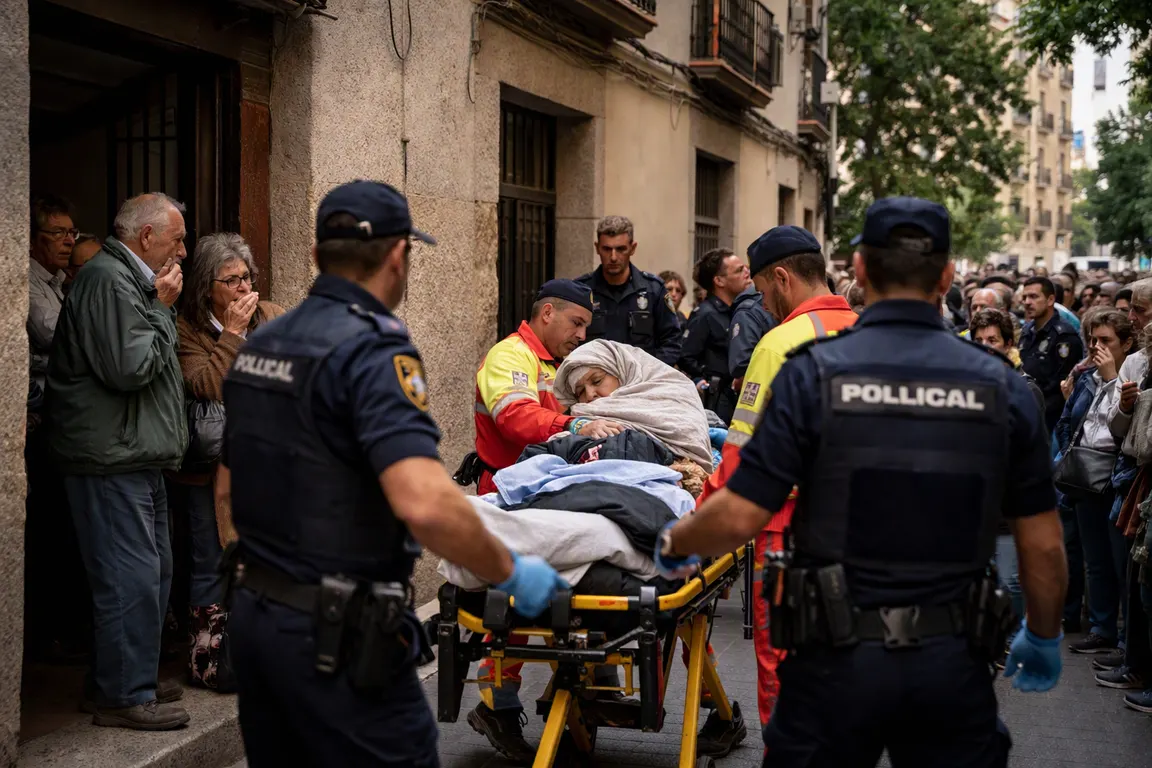
An 87‑year‑old Madrid resident died weeks after being forced from her home on a stretcher, reviving the housing eviction crisis debate in Spain as the country heads toward an early general election.
María del Carmen Abascal had lived in the same apartment since the 1950s. On 23 September 2024 police and social‑work officials entered her building, placed her on a stretcher and took her to a hospital as part of an eviction ordered after the landlord announced the property would be sold. The forced removal sparked protests in Madrid, Barcelona and other cities, with demonstrators citing her case as a symptom of a broader affordability crisis for elderly renters.
The protests have kept the issue in the public eye, but no government body has announced a formal review or investigation. International outlets, including the BBC, The Guardian and Al Jazeera, reported her death in mid‑October, noting that the exact date was not disclosed.
Legal experts say the eviction was carried out under Spain’s “desahucio” procedure, which allows landlords to terminate a tenancy once a court order is obtained, even for long‑term or senior occupants. Critics argue the law lacks sufficient safeguards for vulnerable tenants and provides no mandatory guarantee of alternative housing.
Since the September incident, tenant‑rights groups have put forward several proposals: a mandatory “right to stay” clause for renters over 65, a requirement that landlords offer comparable social housing before eviction, and a rapid‑response fund to cover emergency relocation costs. Multiple parties in the upcoming election have pledged legislation to tighten eviction timelines and increase penalties for landlords who fail to rehouse displaced tenants.
Local responses have been mixed. Madrid’s city council temporarily halted evictions in the district where Abascal lived, citing humanitarian concerns, while other municipalities have launched campaigns to inform renters of their rights. The national Ministry of Housing says it is monitoring the situation but has not committed to a formal inquiry.
The case reflects wider trends in Spain’s housing market: rents have risen more than 30 % in Madrid over the past five years, outpacing wage growth and squeezing low‑income households, while the stock of affordable units continues to shrink and the population ages.
As parties campaign on housing reform, the key question is whether political momentum will translate into concrete legislation or remain campaign rhetoric. Proposals such as a protected tenancy for seniors and a national eviction‑prevention fund are likely to be debated in parliament before the election later this year. Until then, Abascal’s death underscores the human cost of gaps in Spain’s housing policy.