

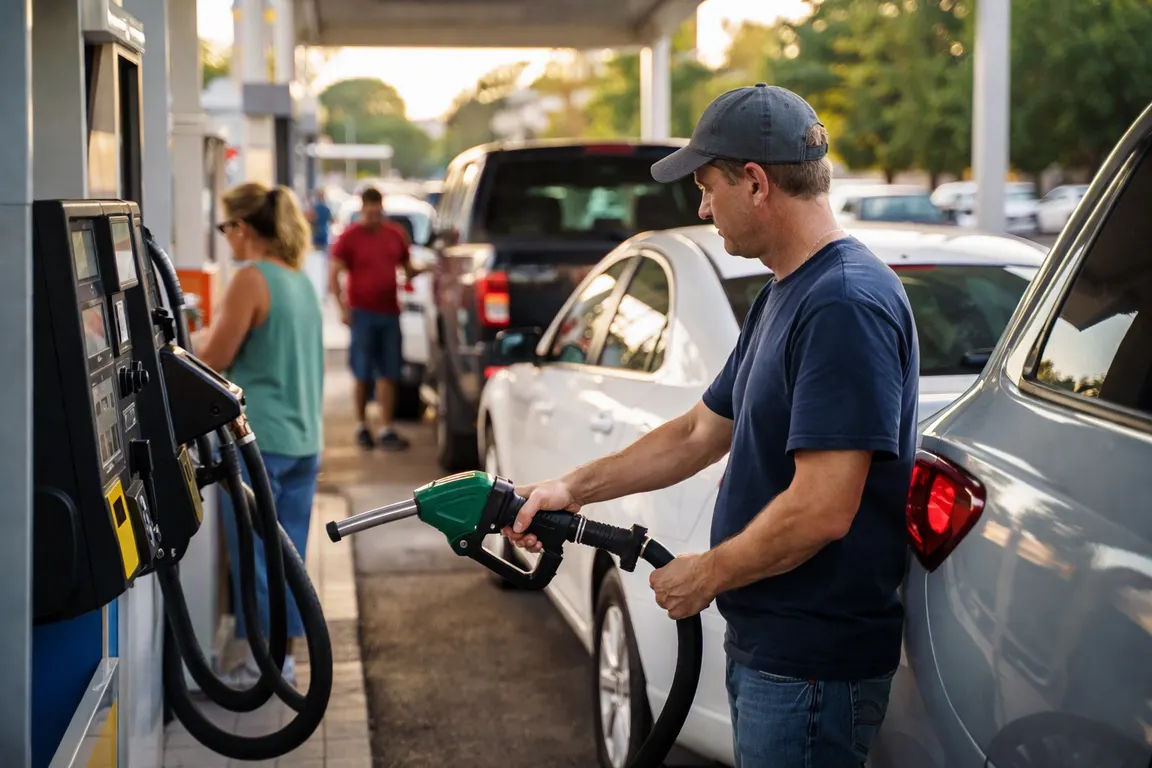
U.S. September retail sales rose 0.8% from August, beating the FactSet forecast of 0.3%, according to the Commerce Department. The gain was driven largely by a 6.4% jump in gasoline station sales, the largest category increase reported.
When gasoline sales are excluded, total retail sales grew only 0.2% month‑over‑month, highlighting a thin underlying demand base. The Consumer Price Index held steady at a 3.7% year‑over‑year rate in September and rose 0.6% from August, the strongest monthly gain in five months. Regular‑grade gasoline averaged $4.33 per gallon, inflating the headline retail figure while squeezing household budgets ahead of the holiday season.
The data send mixed signals to policymakers, retailers and investors. While consumers are still spending, the surge in fuel purchases appears to be substituting for discretionary buying. Bank of America credit‑card analytics show fuel spend up more than 20% year‑over‑year, yet total card spending per household rose just 0.2% month‑over‑month, down from a 1% gain in August. Several discretionary categories contracted in September: home improvement down 1.6%, department stores 1.1%, clothing 0.9%, furniture 0.5%, restaurants 0.4%, groceries 0.2% and online sales 0.1%.
Different outlets framed the numbers differently. The Manila Times and New York Post highlighted the 0.8% rise as evidence of consumer resilience, pointing to modest gains in department stores (1.6%), furniture and home‑furnishings (1.3%) and electronics (0.6%). ZeroHedge warned that the gasoline surge is crowding out other spending, noting the broader contraction in discretionary categories.
For households, higher pump prices directly reduce disposable income, leaving less room for holiday gifts, travel or home upgrades. Retailers, aware of tightening margins, may rely on promotions and flexible inventory management to sustain traffic. Early‑season discounts could become more aggressive if consumers continue to prioritize essentials over non‑essential items.
Policymakers will watch the CPI and retail data closely. Persistent energy inflation could keep the Federal Reserve on a restrictive path, while fiscal proposals to ease fuel costs may gain traction as the mid‑term election cycle approaches. Investors are already dissecting earnings reports from major retailers, looking for signs of margin pressure and for credit‑card spend trends that reveal whether the gasoline boost is a temporary anomaly or a longer‑term shift.
The key question is whether September’s uptick can translate into sustained holiday‑season strength. If discretionary categories keep contracting, retailers could face a shortfall in higher‑margin sales, prompting deeper discounts that would further compress profits. Monitoring gasoline price movements and any policy response to inflation will be essential for forecasting the next month’s retail landscape.