

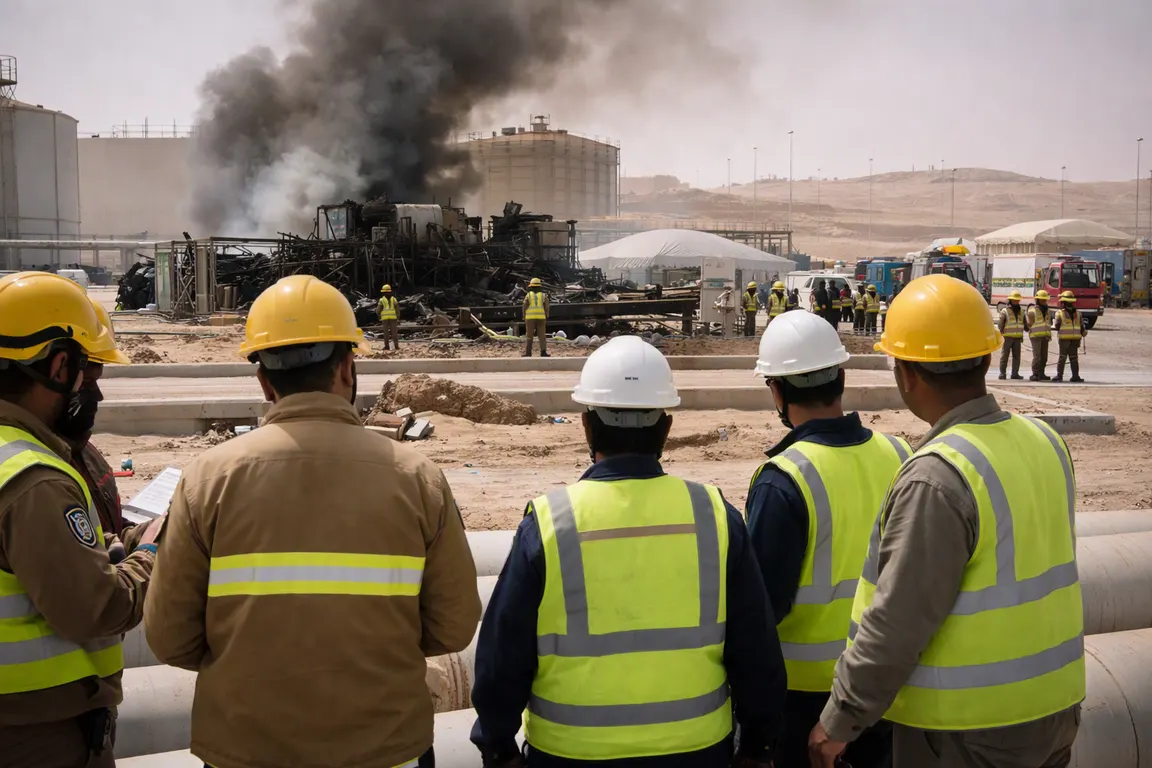
Saudi Arabia shut its 7‑million‑barrel‑per‑day East‑West crude pipeline on the morning of Sept. 10 after a series of drones destroyed a pumping station in the Riyadh‑Madinah corridor. The ministry called the closure precautionary and dispatched emergency teams to assess repairs.
The outage cuts Saudi export capacity roughly in half, lowering daily shipments to about 3 million barrels – the lowest level since early 2017. With maritime chokepoints already under pressure, the loss of an inland route that bypasses the Strait of Hormuz adds a new layer of uncertainty for markets, policymakers and consumers.
Satellite imagery released on Sept. 11 showed the pumping station reduced to rubble, confirming the damage reported by the Saudi Energy Ministry. Iraqi authorities opened an investigation after tracing the drones to launch sites inside Iraq, but have not identified the operators or motives. NBC linked the strike to the Iraqi launch site; Al Jazeera reported the investigation without naming responsible parties. Analysts note the broader Iranian strategic context, though no direct evidence ties the drones to Tehran.
The attack injured several Saudi oil‑field workers and raised environmental concerns. While no crude spill has been reported, a destroyed station increases the risk of leaks for nearby communities. With the pipeline offline, Saudi exporters must rely more heavily on maritime routes through the Hormuz and Bab al‑Mandeb straits, both of which have faced recent disruptions after Houthi rebels seized Mayun Island in the Bab al‑Mandeb.
Regional exporters such as the United Arab Emirates and Kuwait may capture a modest share of the shortfall, but the overall tightening of supply is already supporting higher crude prices in spot markets. Downstream sectors—from petrochemicals to transportation—could feel cost pressure within weeks, potentially passing higher energy costs to consumers.
Saudi officials outlined a three‑phase response: immediate safety checks, repair of the damaged station, and a review of pipeline security protocols. Emergency crews are working around the clock, but the ministry has not given a timeline for full resumption. The pace of Iraq’s investigation and any cross‑border security measures will influence how quickly the source of the drones is identified and how swiftly repairs proceed.
The incident illustrates how regional flashpoints can converge on global oil infrastructure. With its largest inland pipeline offline, the world’s top oil exporter faces a dual challenge: restoring critical capacity while navigating a security environment that now includes threats from both Iraq and the Red Sea theatre. The outcome of Iraq’s probe and the speed of repairs will determine whether the shutdown remains a brief disruption or signals a longer‑term shift in the geopolitics of energy supply.