

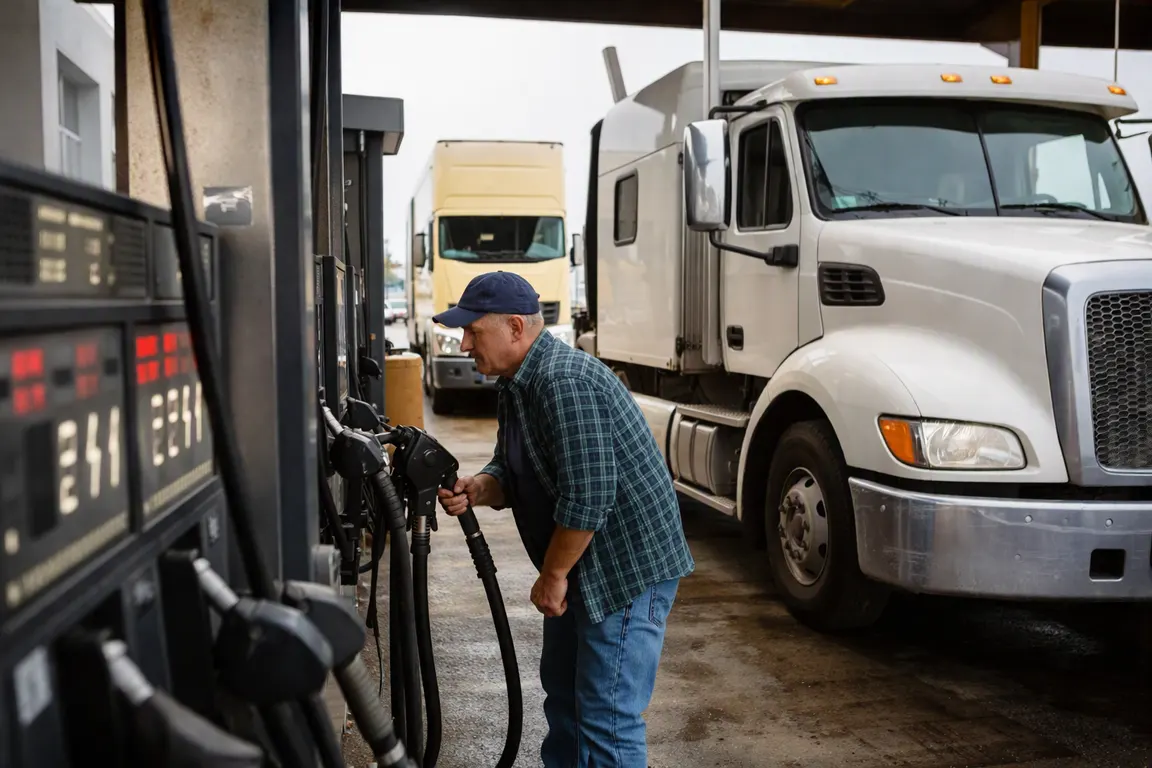
European diesel markets are feeling the pressure after Saudi Aramco announced a Saudi crude halt to Europe for October and Exxon Mobil’s 275,000‑barrel‑per‑day Joliet, Illinois refinery remains offline following a power failure.
Spot rates in the Great Lakes have risen to about $240 a barrel, while retail diesel in Europe is trading above $10 a gallon. The twin disruptions expose the impact of Europe’s reduced refining capacity and higher fuel taxes.
Saudi‑to‑Europe shipments averaged roughly 577,000 barrels per day in June, according to the International Energy Agency. Losing that volume removes a key feedstock for European refineries, which have seen capacity fall from about 15.3 million barrels per day in 2020 to 14.7 million barrels per day in 2024 – a decline of roughly 600,000 bpd. With the supply gap, refiners are scrambling for alternative crude, pushing global crude prices higher; Brent was near $103 a barrel on 18 September.
In the United States, the Joliet outage eliminates about 6 percent of Midwest refining capacity and 1.5 percent of national capacity. Although power was restored on 18 September, the plant has not resumed production, leaving a shortfall of 275,000 bpd of refined product. The Midwest diesel crack spread peaked at $112 a barrel, and retail diesel in the region has risen to a record $6.45 a gallon, according to the American Automobile Association.
Both shocks are rippling through supply chains. Trans‑Atlantic freight operators face higher bunker costs, while U.S. truckers and agricultural producers in Illinois, Indiana, Ohio, Wisconsin and Michigan confront tighter fuel availability and higher operating expenses. European farmers and logistics firms report tighter margins as diesel costs climb toward $9‑$11 a gallon in several markets.
The price spikes are not solely the result of the operational setbacks. Europe’s higher fuel taxes and the EU’s carbon‑pricing mechanisms – the Emissions Trading System and the Carbon Border Adjustment Mechanism – add a tax burden that can exceed $2 a gallon. By contrast, U.S. diesel prices lack comparable carbon levies, so the same supply shock translates into a smaller retail price increase.
Policy analysts say the crisis highlights the risk of a “just‑in‑time” fuel supply model built on declining domestic capacity. Over the past four years, European refiners have closed or converted plants to meet climate targets, reducing the buffer that could absorb short‑term supply shocks. The loss of Saudi crude, combined with the Joliet outage, is testing that buffer in real time.
Governments and industry now face short‑term choices. European officials could release strategic fuel reserves, negotiate temporary crude swaps, or ease certain fuel taxes. In the United States, the Department of Energy could accelerate releases from the Strategic Petroleum Reserve to offset the loss of domestic output while Exxon Mobil works to bring Joliet back online.
The immediate question is whether the combined shortfall can be bridged before diesel prices erode consumer purchasing power and strain essential sectors such as food production and construction. The answer will depend on how quickly refiners, governments and traders can mobilize alternative supplies while policymakers balance short‑term relief with longer‑term climate objectives.