

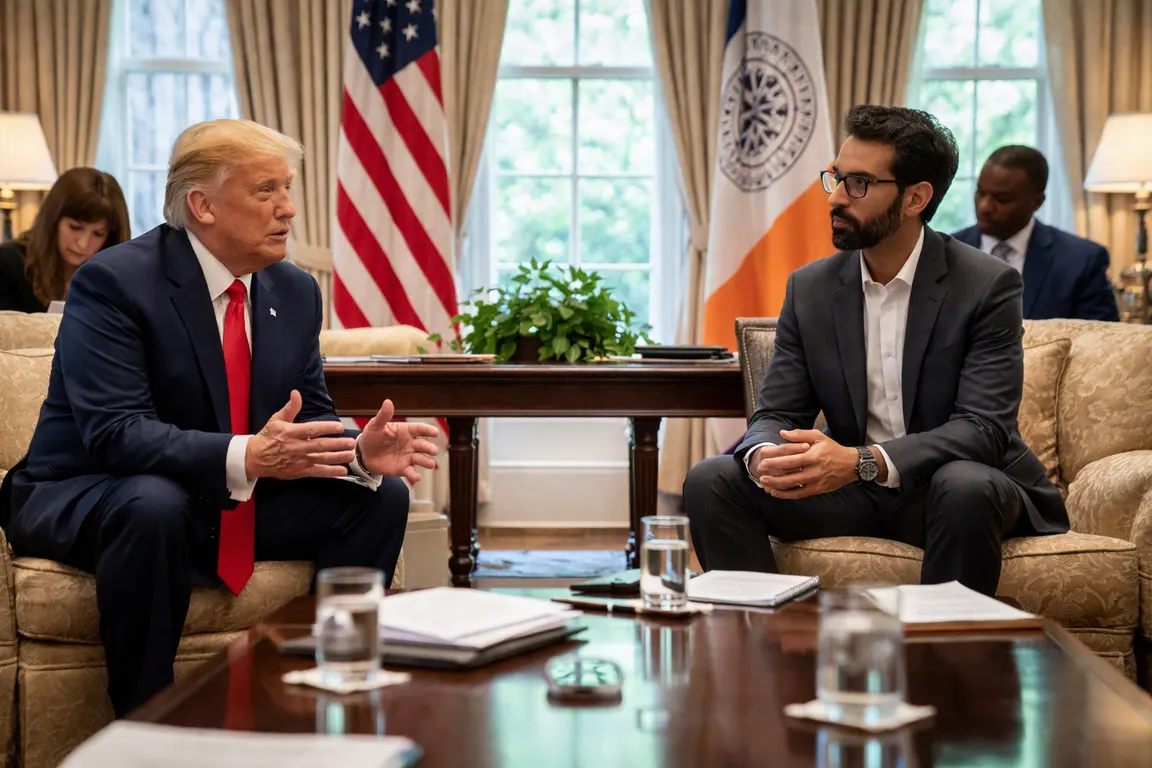
President Donald Trump met New York City Mayor Zohran Mamdani at Gracie Mansion on Monday, a day before the president’s address to the United Nations General Assembly. The hour‑long conversation covered a federal‑funded affordable‑housing proposal and the city’s immigration‑enforcement strategy, and concluded with a joint news conference in which Trump praised the newly elected mayor while Mamdani invited all reporters, directly challenging the White House’s recent ban on three news outlets.
The meeting comes as the administration courts swing voters ahead of the November midterm elections and the United Nations prepares to hear Trump’s foreign‑policy priorities. For New Yorkers, the talks could determine whether a $21 billion, 12,000‑unit New York housing plan moves from concept to construction, and whether the city’s immigration enforcement will align with the president’s push to end Temporary Protected Status for several immigrant groups.
The housing proposal, first raised in February 2024, envisions mixed‑income development that would add 12,000 affordable units across the city. The plan would require roughly $21 billion in federal dollars. No funding commitment was announced, but both officials said the dialogue marked a “concrete step” toward securing the resources needed to launch the project. City officials have warned that without federal participation the housing pipeline could stall, leaving thousands of low‑ and middle‑income residents without relief.
On immigration, Mayor Mamdani expressed “very strong opinions” about keeping New Yorkers safe and referenced Trump’s proposal to revoke Temporary Protected Status for certain groups. The mayor’s remarks suggested openness to tighter enforcement, though he stopped short of endorsing a full rollout of the president’s deportation agenda. No formal agreement was reached, leaving the scope of cooperation uncertain, but the public acknowledgment signals a potential shift from the adversarial tone that has characterized previous interactions.
Press access emerged as a secondary flashpoint. Mamdani told reporters that all media would be welcome at the joint news conference, a direct rebuke to Trump’s recent decision to bar CNN, MSNBC and Politico from White House briefings. By extending an open invitation, the mayor positioned his administration as a counter‑weight to the president’s media restrictions, a stance that could shape coverage of the upcoming UNGA speech and broader federal‑local relations.
Stakeholders could feel immediate impact. Local developers and construction firms stand to secure contracts worth billions if the housing plan advances, while immigrant communities watch closely for any policy shift that might affect their legal status. Residents of neighborhoods slated for the new units anticipate relief from the city’s chronic affordable‑housing shortage, though a timeline for groundbreaking remains undefined.
The meeting marks the third public encounter between Trump and Mamdani since the mayor’s November 2023 victory. Their evolving rapport—moving from Trump’s earlier “my little communist” comment to a public expression of hope that Mamdani will be “great”—reflects a strategic calculation to broaden the president’s appeal to urban voters while testing the limits of his media policy.
As Trump prepares to address the United Nations, the next steps will hinge on whether federal agencies move to allocate the $21 billion housing request and how New York City’s immigration enforcement aligns with the administration’s broader agenda. Both issues are likely to shape voter perceptions in the upcoming midterms, leaving policymakers, developers and community advocates watching closely for any concrete outcomes from the Gracie Mansion talks.