

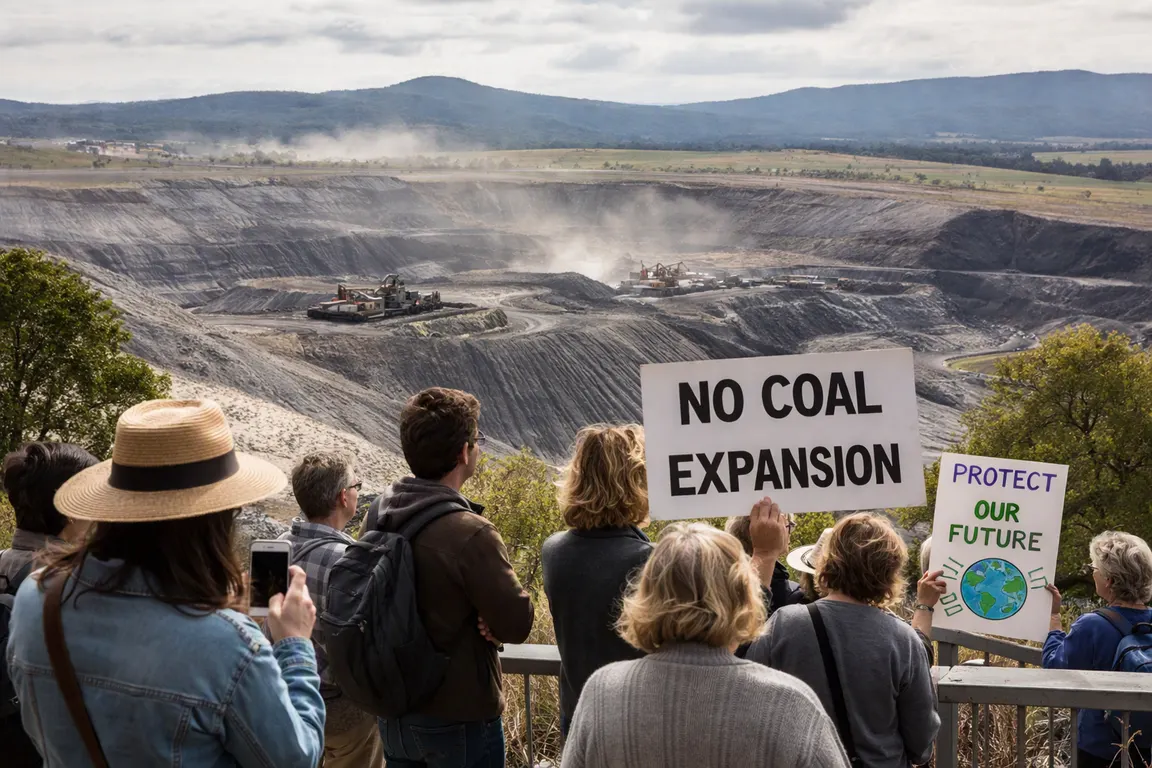
Australia’s High Court on Wednesday overturned the approval for Mach Energy’s Mount Pleasant coal expansion in the Hunter Valley, finding that the New South Wales planning commission failed to assess greenhouse‑gas emissions as required by state law.
The ruling forces regulators nationwide to incorporate climate‑damage assessments into fossil‑fuel project approvals, a shift that could reshape the outlook for Australia’s coal industry and future infrastructure decisions.
Mach Energy had sought to extend the open‑cut mine’s life to 2048, adding more than two decades of operation. The extension was granted by state planning bodies, but activists Wendy Wales and Tony Lonergan challenged the decision in state court, arguing that the approval ignored the statutory limit that emissions be considered “to the greatest extent practicable.” Lead counsel Anita O’Hart contended that the commission’s assessment omitted the required emissions‑impact analysis.
A majority of the High Court agreed, holding that the omission breached statutory duties. The court struck down the approval and set a binding precedent for future fossil‑fuel projects. The judgment does not order the mine’s immediate closure; instead, it requires a fresh assessment that includes a rigorous emissions‑impact test before any further approvals can be issued.
Mach Energy issued a statement expressing disappointment and saying it will explore “all available options” to keep the mine operating. The company has not indicated whether it will seek a rehearing or pursue alternative regulatory pathways. Shareholders now face uncertainty as the ruling could affect the mine’s profitability and broader investment in Australian coal assets.
Local residents and Indigenous groups in the Hunter Valley welcomed the decision, citing stronger environmental safeguards and a legal tool to protect community health. Mine workers, however, confront short‑term job insecurity while the company evaluates its options. The mine supports hundreds of direct jobs and a larger supply chain, making the outcome a focal point for the regional economy.
Legal analysts note that the court’s reasoning hinges on the statutory requirement that planning authorities consider emissions “to the greatest extent practicable.” By treating that clause as a substantive condition, the court has effectively inserted climate accountability into Australian planning law. Future applications for new coal mines or expansions will now need to demonstrate that any residual emissions are limited as far as possible, or risk being invalidated.
The precedent could ripple through Australia’s coal‑export strategy. Export‑oriented projects, such as new ports or rail links, are likely to face stricter climate‑impact scrutiny, potentially influencing foreign investment decisions. Internationally, the judgment aligns Australia more closely with its Paris Agreement commitments, though policymakers have not yet signaled whether legislative reforms will follow.
The ruling does not end coal mining in Australia, but it creates a legal benchmark that may tighten regulatory oversight. Mach Energy may amend its expansion plan, negotiate emission‑reduction measures, or appeal further. Meanwhile, government and industry bodies are expected to review existing approvals to ensure compliance with the new standard.
The next critical step is the preparation of a revised emissions assessment for Mount Pleasant. Whether that assessment meets the High Court’s standard, and how quickly a new decision is reached, will determine the mine’s operational future and set the tone for Australia’s broader approach to fossil‑fuel development.