

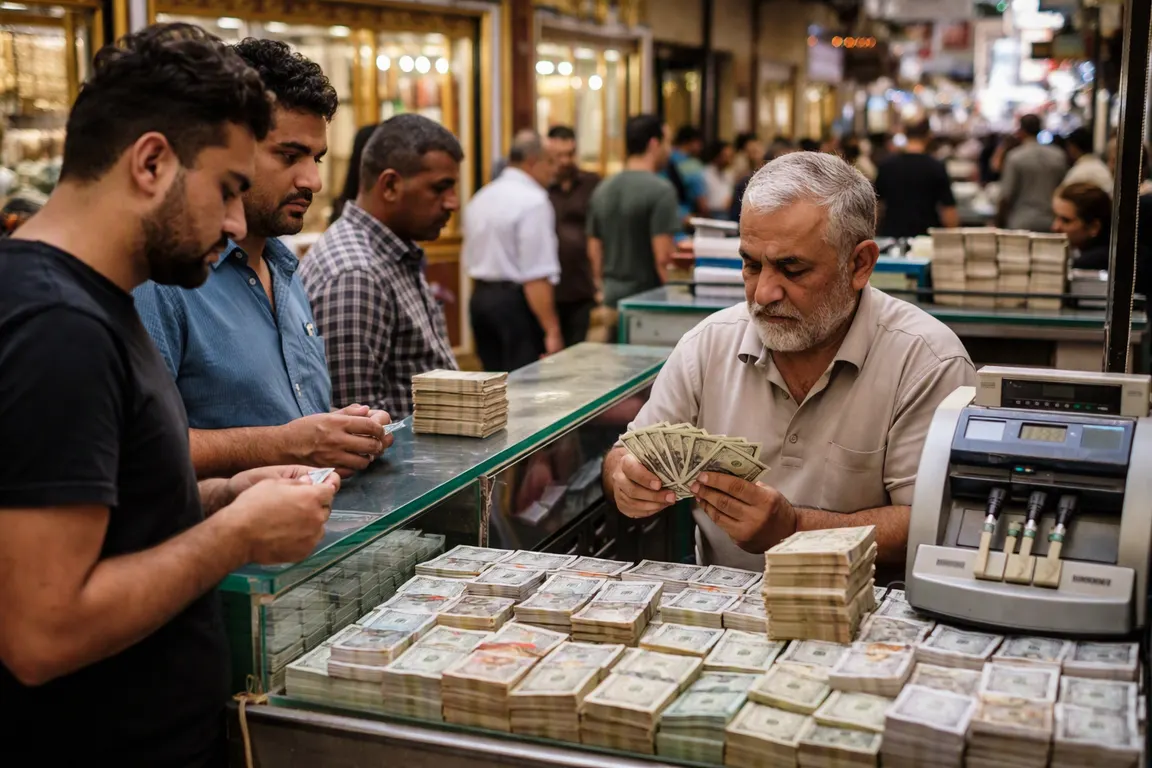
Baghdad raised the official exchange rate to 1,520 dinar per dollar on Oct. 7, a move aimed at protecting a $5 billion monthly public‑sector payroll after oil earnings fell by roughly $80 billion since the war began in February. The weaker dinar is expected to save the government $650‑$700 million a month, but it also cuts real wages for civil servants by about 13 percent and pushes staple food prices up by roughly 25 percent.
The official rate now lags the parallel market, where the dinar trades near 1,685 per dollar and some traders expect it could reach 1,800. This underscores pressure on foreign‑exchange reserves that have fallen from $100 billion to $80 billion between February and August, according to ZeroHedge.
The devaluation comes amid a broader disruption to Gulf oil logistics. The United States‑Israel‑Iran conflict has choked traffic through the Strait of Hormuz, forcing exporters to rely on costly ship‑to‑ship transfers and alternate routes. Standard Chartered reports that total Gulf exports rebounded to about 16.5 million barrels per day in September, but only 60 percent of that volume crossed Hormuz, down from 83 percent before the conflict. A temporary Saudi pipeline outage also shifted shipments to east‑west transfers.
Higher freight and security costs associated with ship‑to‑ship operations are keeping oil prices above levels that would have prevailed if barrels moved unimpeded. Brent futures are projected to settle near $85 a barrel by year‑end, down from $120 earlier in the year, according to ZeroHedge.
Iraq’s fiscal strain is echoed across the region. The World Bank notes that Asian economies that subsidize fuel imports have seen foreign‑exchange reserves fall between 15 and 40 percent since the war’s onset, limiting their ability to absorb further price shocks and adding pressure to domestic inflation.
In Iraq, merchants report market paralysis as import costs rise and supply chains stall, while public‑sector workers face lower purchasing power and higher living costs. Analysts differ on the root cause of the altered oil flow pattern. Standard Chartered describes it as a logistical adaptation to a disrupted chokepoint, whereas ZeroHedge links Iraq’s currency move directly to the shortfall in export earnings. Both agree the underlying supply shock remains unresolved and that regional fiscal stability hinges on restoring unimpeded oil flows through Hormuz or finding cheaper rerouting options.
Iraq’s central bank has not released an official assessment of the devaluation’s budget impact, leaving policymakers to rely on analyst estimates. The next critical step will be the government’s response to growing public discontent and the need to replenish dwindling reserves. Observers will watch for further adjustments to the official rate, additional market interventions, or coordinated regional measures to lower logistical costs and stabilize oil‑related revenues.