

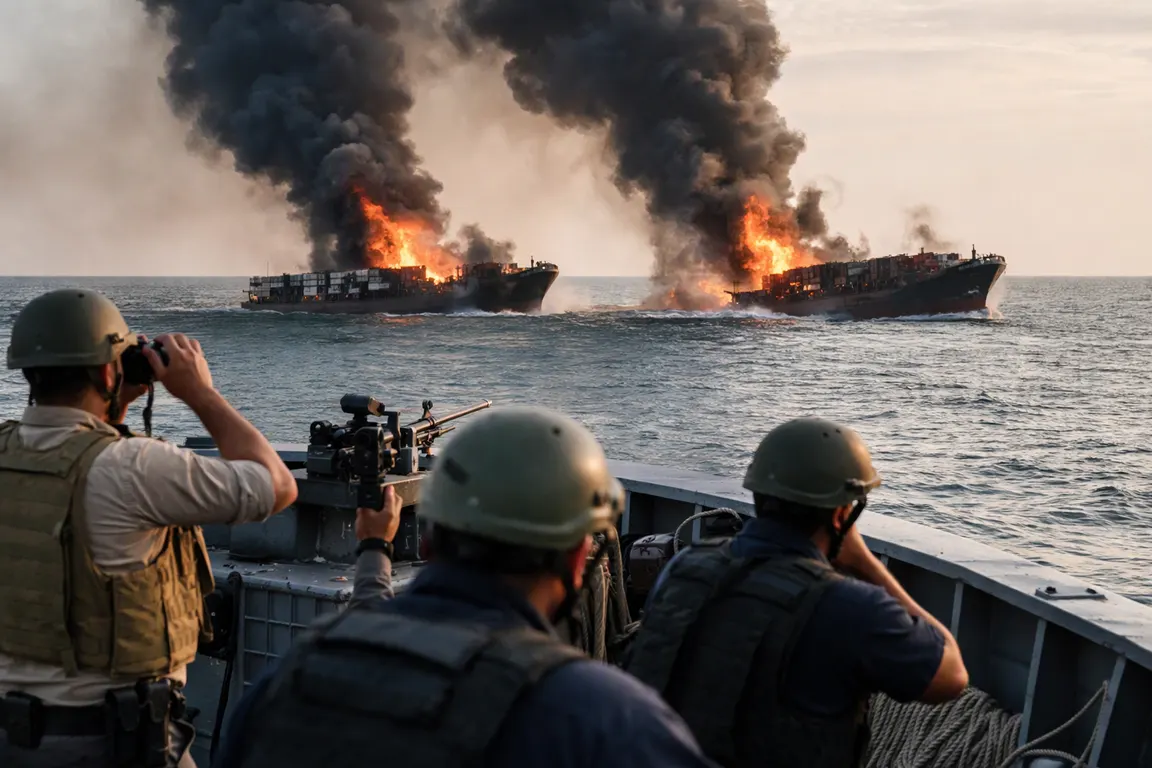
Iranian missile strikes Strait of Hormuz sank two container vessels on Oct. 14, 2026, after a series of attacks that have damaged at least a dozen ships in the past ten days. The sinkings represent the most serious escalation of maritime violence in the waterway since the 2019 tanker assaults.
The vessels—a 7,800‑TEU container ship and a 5,200‑TEU feeder—were reported by the Wall Street Journal and the Guardian to have taken on water after being hit by missiles launched from IRGC‑controlled sites. Iranian state media released footage of a burning ship it called “illegal,” showing an explosion and the vessel sinking with roughly 2,500 containers aboard. Crew members from both ships were injured; the exact number of casualties is still being confirmed.
The attacks come as the U.S. Navy announced a record‑high escort operation, moving an unprecedented number of tankers through the strait during the same period. Analysts warn that the convergence of Iranian strikes and U.S. escort missions could tighten global oil supplies and push prices higher in the weeks leading up to the U.S. midterm elections.
Between Oct. 5 and Oct. 11, the UK Maritime Trade Operations logged at least 12 attacks on vessels transiting the strait, including six assaults on a single Sunday. Other reports cite higher numbers – 18 ships hit from Oct. 1‑11 and as many as 24 foreign vessels targeted in the month – reflecting the difficulty of confirming incidents in the congested corridor.
Iranian officials frame the campaign as retaliation against what they call U.S. “smuggling” of Iranian oil via ship‑to‑ship transfers, a claim that has not been independently verified. The United States highlighted the success of its escort missions, saying they kept oil flowing despite the attacks.
The Strait of Hormuz carries roughly 20 % of global oil trade, so any sustained disruption can reverberate through energy markets. Al Jazeera reported a modest dip in oil flow after the recent attacks, and market analysts warned that continued strikes could trigger price spikes and force insurers to raise premiums for Gulf routes. Higher freight costs would likely be passed on to consumers, adding to inflation pressures worldwide.
Regional economies that depend on transit fees also face revenue shortfalls if the waterway narrows further. Local port authorities have begun contingency planning, including rerouting some cargo through alternative passages such as the Bab el‑Mandeb, though those routes add transit time and cost.
U.S. naval forces have responded by deploying additional destroyers and patrol aircraft to the area, and the Pentagon confirmed that the escort count for the week of Oct. 12‑18 set a new record. While the United States has not announced direct retaliation, diplomatic channels remain active. Iranian foreign‑ministry spokespeople warned of “more intense” operations if the United States continues to “interfere” with Iranian maritime interests.
The situation remains fluid. International observers await independent verification of the sinkings, the condition of the crews, and the environmental impact of any oil or hazardous‑material spillage. The United Nations maritime security office is urging both sides to exercise restraint and prioritize the safety of commercial shipping. The next steps – whether through diplomatic engagement, further naval escorts, or escalated Iranian strikes – will shape oil‑market dynamics and regional stability in the crucial weeks ahead.