

Hurricane Isaias Threatens Gulf Coast, Halts Oil Production
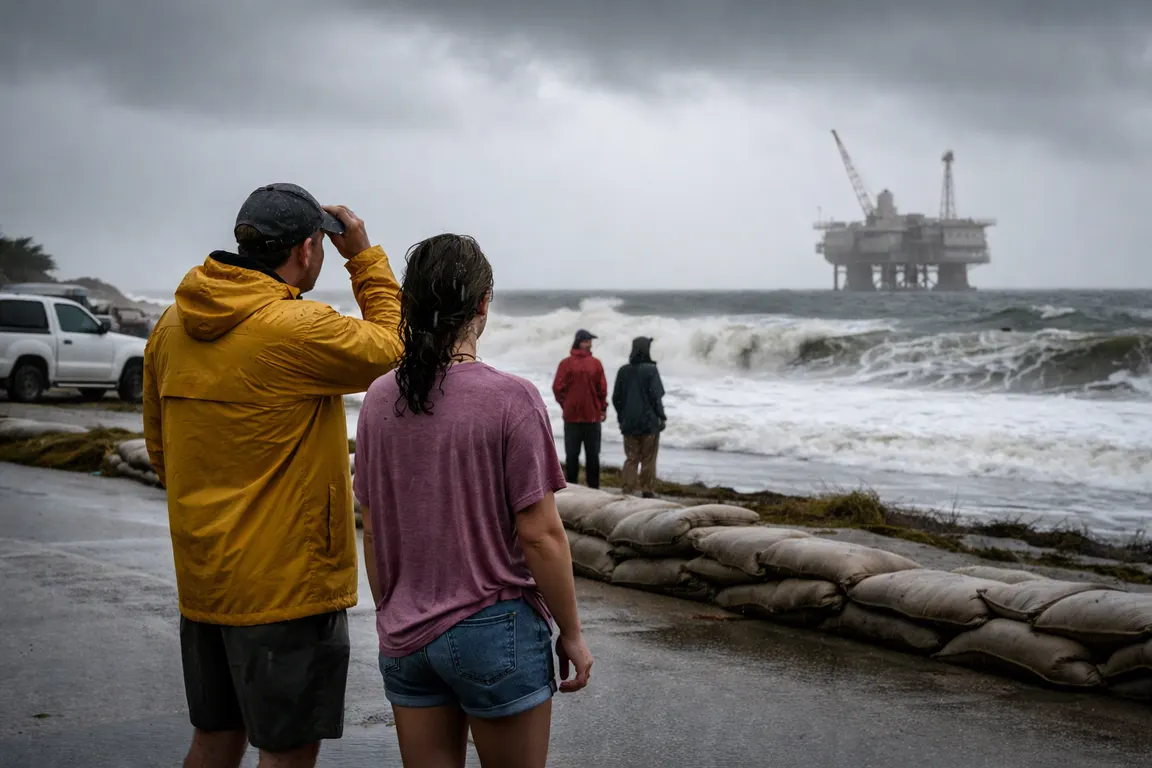
The National Hurricane Center upgraded Hurricane Isaias to a Category 3 storm early Friday, reporting sustained winds of 120 mph (195 km/h). Hurricane Isaias Gulf Coast impacts are expected to be severe as the storm heads for landfall late Friday night near the Alabama‑Florida border.
Isaias is the first Atlantic hurricane of the delayed 2026 season, and its arrival coincides with the shutdown of roughly 63 % of Gulf‑of‑Mexico oil output—about 1.3 million barrels per day—and 57 % of natural‑gas production. The simultaneous loss of fuel supplies and the need for widespread evacuations places public safety and energy security at the forefront of national concerns.
The storm surge is projected to reach 7 ft (2.1 m) with wave heights up to 30 ft (9.1 m) from the mouth of the Mississippi River to Suwannee, Florida. States of emergency have been declared in Alabama, Florida, Mississippi and Georgia, and mandatory evacuations are in effect for several Florida counties. Officials warn coastal communities could face power outages lasting days after landfall.
The Marine Minerals Administration confirmed the temporary suspension of about 1.3 million barrels per day of oil and more than half of Gulf‑of‑Mexico gas output. The loss removes a sizable portion of the nation’s fuel supply at a time when global markets are already strained by geopolitical tensions. Energy analysts expect gasoline and diesel prices to rise as refineries scramble for feedstock.
Meteorologists attribute Isaias’s unusually late formation to a strong El Niño that altered Atlantic wind‑shear patterns, a factor noted by the Manila Times. Federal coordination is under way; Department of Homeland Security Secretary Markwayne Mullin confirmed a joint response effort involving FEMA, the Coast Guard and the Department of Energy.
Residents along the projected path are preparing for life‑threatening storm surge, flooding and extended power loss. Shelters have opened in every affected state, and evacuation routes are being cleared for tens of thousands of motorists. Offshore platform crews are being evacuated under the direction of the Bureau of Safety and Environmental Enforcement, further delaying any attempt to resume production.
The convergence of a major hurricane and a large‑scale energy shutdown highlights the vulnerability of a region that serves as both a population hub and a critical energy corridor. While protecting lives remains the immediate priority, the broader economic ripple effects could be felt nationwide as fuel supplies tighten and prices climb.
Authorities will continue to monitor Isaias’s exact landfall point, which could shift between the Alabama‑Florida line, the Mississippi coast or the Florida Panhandle. Forecast updates are expected throughout the night, and officials have urged residents to follow evacuation orders, secure generators and stock emergency supplies. Damage assessments and decisions on when offshore production can safely restart will likely extend well into the week after landfall.