

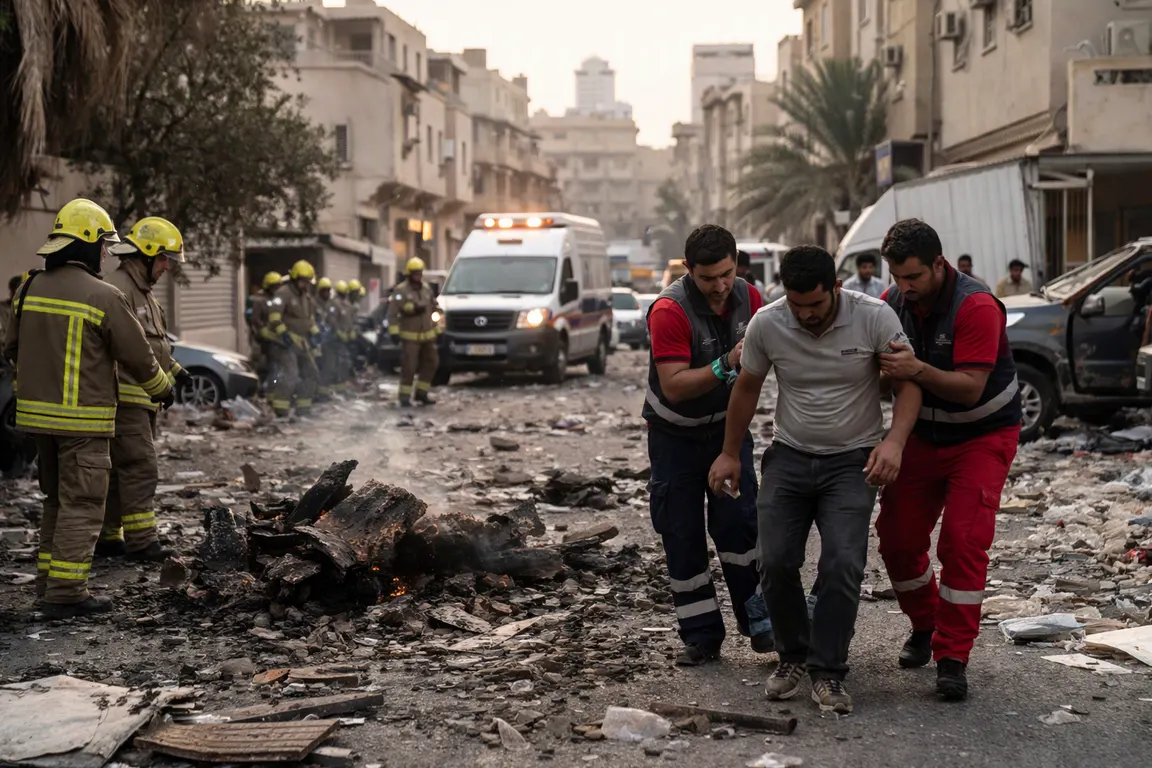
Two Houthi‑launched cruise missiles were shot down over Riyadh on Oct. 13, marking the first interceptions above the Saudi capital in weeks. Debris injured four civilians and damaged fifteen homes, prompting a nationwide aerial‑threat alert.
Saudi civil‑defence officials said the four wounded – two women, a man and a child – were hit by falling fragments in residential districts. Residents reported loud explosions and bright missile trails, and fifteen houses suffered roof and window damage.
The same day the coalition reported intercepting two ballistic missiles aimed at Riyadh, and a further ballistic missile was neutralised on Oct. 14. Witnesses again described a brief flash and loud blasts across the sky.
Air travel was immediately affected. Flightradar24 logged about 1,500 flight cancellations at Saudi airports on Oct. 11‑12, and King Khalid International Airport saw 98% of scheduled flights cancelled on Sunday. Airlines from thirteen countries suspended service, hurting tourism revenue and passenger mobility.
In the energy sector, a Houthi missile struck an Aramco administrative building in Dhahran on Oct. 12, igniting a limited fire but causing no casualties. Although the building was not a production site, the incident underscored the vulnerability of Saudi oil infrastructure to aerial attacks.
Saudi authorities responded with layered air‑defence measures. The Royal Saudi Air Force deployed Patriot and other interceptor systems around the capital, and the coalition reported a 90% interception success rate for missiles targeting Riyadh this week. Civil‑defence activated shelter protocols in affected neighborhoods and urged residents to stay indoors during alerts.
The International Monetary Fund warned that repeated disruptions could have “negative spillovers for everybody, everywhere.” Saudi Arabia produces roughly 10% of global oil, and any sustained interruption at Aramco facilities or transport hubs could tighten markets and lift prices. IMF Managing Director Kristalina Georgieva cautioned that even short‑term outages could ripple through supply chains worldwide.
Diplomatic efforts remain limited. Iran’s foreign minister offered to mediate a cease‑fire, but Houthi leaders rejected the proposal, saying they would continue leveraging military pressure for political gains. The United States continues to provide intelligence support to the coalition but has not announced new sanctions or direct military action.
The next test will be whether Saudi air‑defence can maintain its high interception rate while protecting civilians and keeping oil exports flowing. As missile alerts become a regular feature of Riyadh’s night sky, residents are forced to treat their neighborhoods as de‑facto front‑line shelters, and markets watch closely for signs that the conflict could spill over into global energy supplies.