

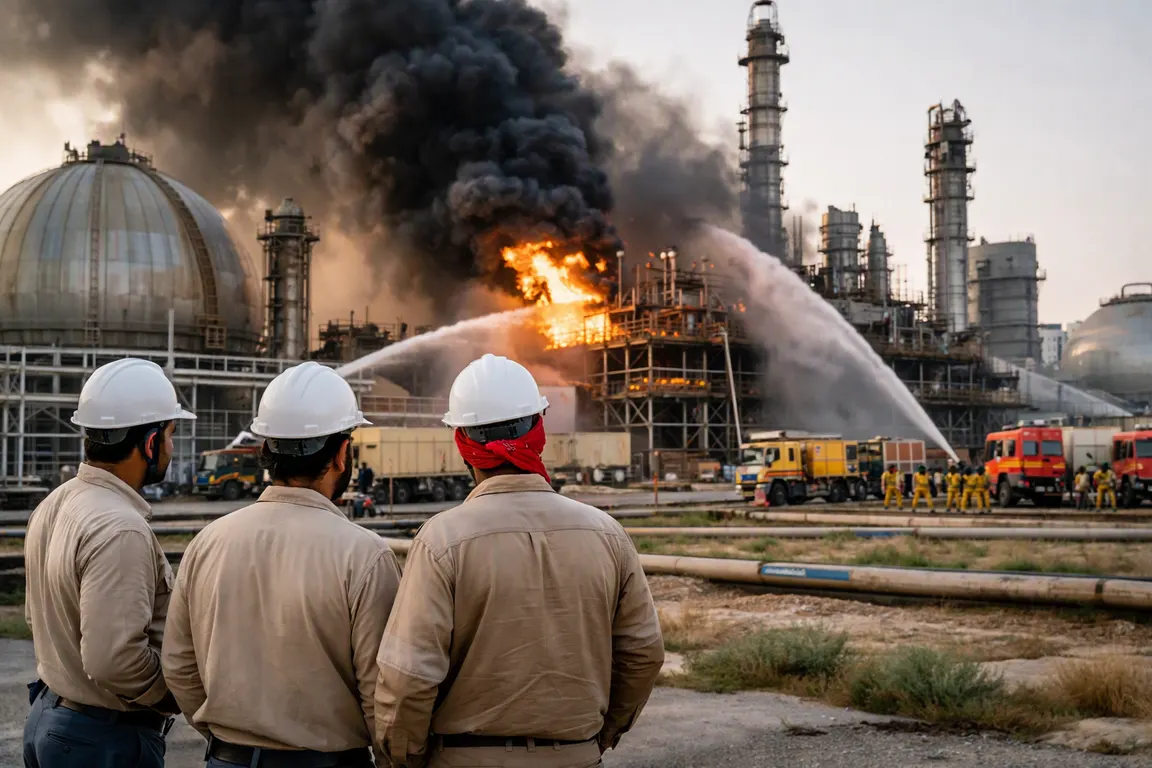
Saudi Arabia said a series of drone and missile strikes attributed to Yemen’s Iran‑aligned Houthi movement forced temporary shutdowns at oil‑processing facilities in the kingdom’s southern producing region, pushing Brent crude to just under $100 a barrel.
The attacks hit processing units and export terminals at the Ras Tanura and Juaymah complexes, prompting operators to halt the affected units for safety checks. The Houthi group claimed responsibility, saying the actions were intended to pressure Saudi allies.
By mid‑afternoon, benchmark Brent had risen to $99.8 per barrel, a level not seen since early summer, according to market data. Traders cited the Saudi outage as the primary catalyst, while concurrent attacks on ships and refineries elsewhere in the Middle East have also tightened global supply.
In the United Kingdom, month‑ahead gas futures climbed about one percent to 184 pence per therm, the highest level since June, as regulators warned that limited storage could leave the country vulnerable to price spikes when heating demand peaks this winter.
The broader market reaction is already evident. Higher crude prices tend to lift gasoline costs at the pump and increase freight charges for imported goods. Airlines and shipping firms, which benchmark fuel costs to Brent, could see operating expenses rise sharply, and refineries that depend on steady Saudi crude supplies may face feedstock shortages if the shutdown extends.
Saudi Aramco said it is conducting rapid inspections and expects to resume normal output within days, though it gave no specific timeline. European energy ministries are urging utilities to accelerate gas‑storage filling, and several major oil traders have announced temporary inventory draws to cushion short‑term volatility.
Analysts note that while Brent is hovering near the psychological $100 barrier, the duration of the supply gap remains uncertain. The upcoming weekly inventory reports from the International Energy Agency will be watched closely for signs that the disruptions are deepening or receding.
The situation underscores the interconnectedness of regional conflicts and global energy markets, with potential repercussions for consumer prices, inflation pressures and central‑bank policy as winter approaches.