

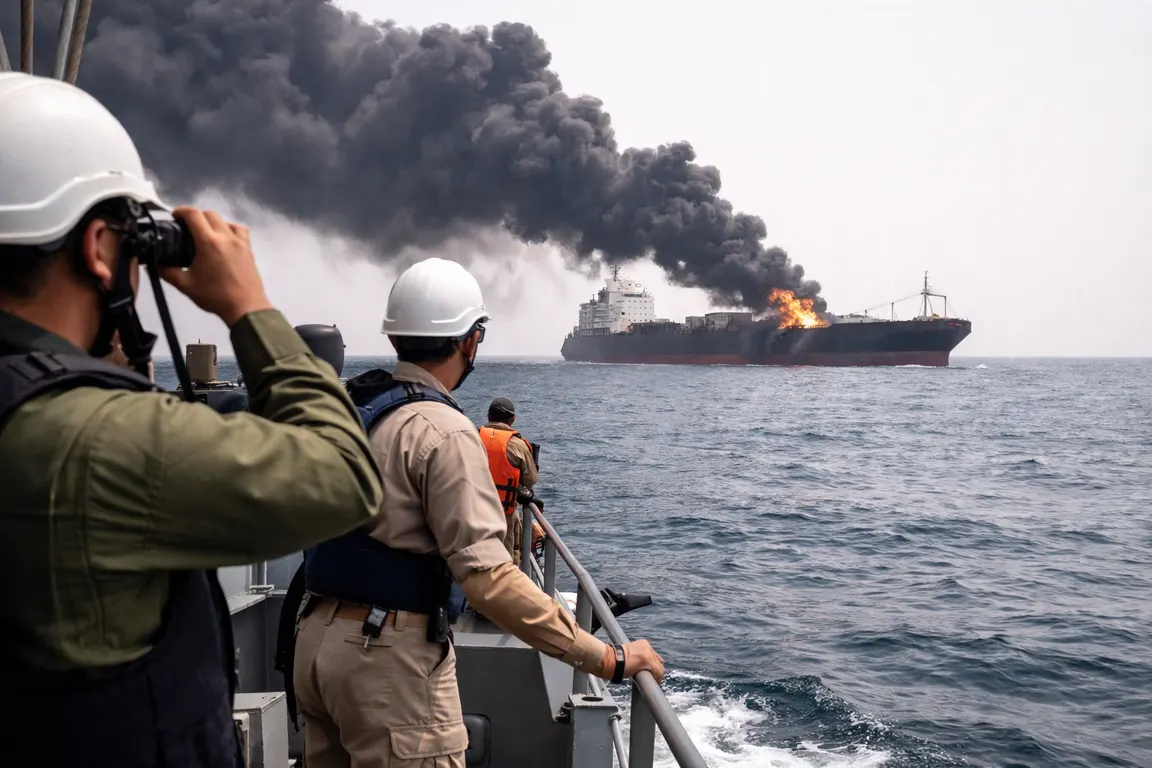
A Very Large Crude Carrier was hit by a drone on Sept. 29, followed by a crude tanker and an LNG tanker struck by unidentified projectiles, the UK Maritime Trade Operations agency said. The incidents occurred as Iran’s Islamic Revolutionary Guard Corps warned that the Hormuz corridor faces "daily military conflict" and the United States, through Qatari mediators, delivered a vague counter‑proposal to Tehran on Sept. 30. The Hormuz oil price rise pushed Brent crude to about $103 a barrel and kept U.S. futures flat ahead of the core PCE report, while Treasury yields hovered near 30‑year highs.
The convergence of renewed maritime risk and a stalled diplomatic track matters because it reshapes crude‑oil supply expectations at a moment when markets are already sensitive to macro‑economic data. Investors and policymakers now have to weigh the immediate threat to the world’s most critical oil chokepoint against the uncertain prospects of a negotiated de‑escalation that could restore smoother shipping flows.
The U.S. counter‑proposal, presented to Iranian Foreign Minister Abbas Araghchi by Qatari officials, has not been disclosed in detail. Tehran called the offer a "win‑win" solution, but Al Jazeera noted that it provides no specifics on sanctions relief, security guarantees or navigation protocols. Axios quoted U.S. officials as saying the talks have made "little progress" and warned that the risk of renewed combat remains high.
UKMTO said the VLCC was struck by a drone on its starboard side, the crude tanker suffered a port‑side impact and the LNG vessel was hit by an unknown projectile. Insurance firms have already signaled higher premiums for Hormuz transits, reflecting the increased probability of damage or loss. For Qatar, which routes a significant share of its $24 billion LNG export revenue through the strait, the disruption translates into immediate revenue shortfalls and broader economic strain.
From a market perspective, the attacks have contributed to a modest but noticeable rise in oil prices. Brent’s climb to $103 a barrel represents a 14 % gain month‑to‑date, and WTI remains above $90, despite the incidents. Analysts attribute the movement to both the security shock and expectations of a slower supply recovery as the region’s output rebounds from earlier disruptions. However, the extent to which the strikes alone are driving the rally remains debated, with some traders pointing to broader supply‑demand dynamics and upcoming U.S. core PCE data as equally influential.
The diplomatic deadlock also raises questions about a renewed U.S. combat operation. Former President Donald Trump, according to Axios, is reportedly weighing a major strike after the mid‑term elections, a scenario that could further destabilize the region and push oil prices higher. Such a move would likely force a reassessment of navigation safety protocols, increase insurance costs and could compel oil‑importing nations like China and European Union members to seek alternative supply routes, at least temporarily.
As investors watch Treasury yields linger near 5.6 % on the 30‑year benchmark, the market’s next inflection point may come from the core PCE report due later this week and any Fed commentary that follows. A stronger‑than‑expected inflation reading could reinforce expectations of tighter monetary policy, amplifying the impact of geopolitical risk on commodity prices.
The immediate next step is unclear. Tehran has said it will review the U.S. proposal, while Washington officials have not confirmed any concrete response to the tanker attacks. The lack of a transparent diplomatic roadmap leaves shippers, insurers and oil‑dependent economies in a holding pattern, awaiting either a breakthrough in negotiations or a further escalation that could close the strait to commercial traffic.