

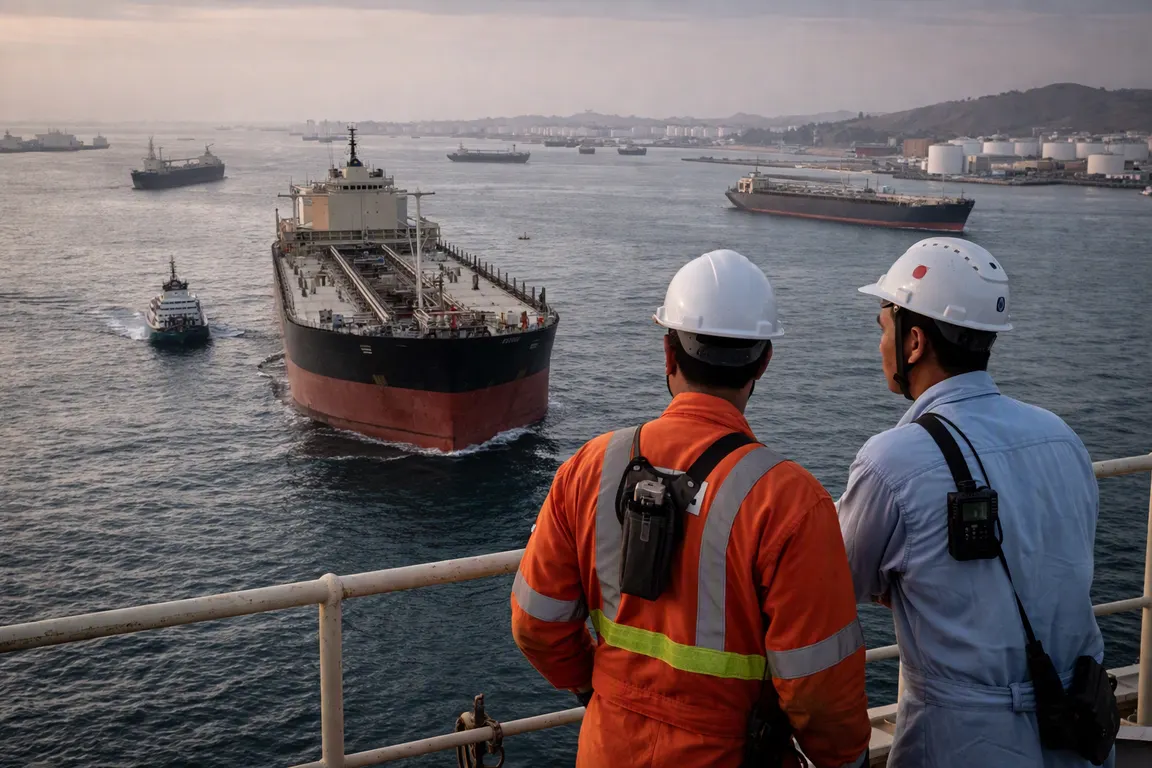
The Hormuz closure freight costs have driven VLCC freight rates and war‑risk insurance premiums to unprecedented levels, prompting Japan and India to reassess how they secure crude oil. The shutdown of the Strait of Hormuz on Feb. 28, 2026 has pushed the cost of moving a barrel from Ras Tanura to India from $0.85 to $4.34 in August – a 411 % jump – and raised insurance for a single passage from roughly $250,000 to as much as $10 million.
U.S. CENTCOM strikes have degraded Iran’s mobile radar and mine networks, while the U.S. International Development Finance Corporation has funded a revolving $20 billion re‑insurance facility to keep vessels moving. In Japan, Economy Minister Ryosei Akazawa announced that September oil imports will be about 80 % of the 2025 monthly average, down from August’s full‑month level. The government will not tap its strategic reserves again after the March 2026 release of 80 million barrels – roughly 50 days of demand – because added logistics costs would erode any price advantage. The longer Suez‑Canal route now adds roughly 55 days to a voyage that once took 23 days through Bab el‑Mandeb, inflating inventory costs for refiners.
India faces a sharper cost shock. The country’s Q2 2026 crude import bill was 60 % higher than a year earlier, and July’s bill rose 41 % year‑on‑year, largely because freight and insurance now dominate the landed cost of oil. Importers have absorbed the higher expense, but downstream industries warn of rising input costs that could feed inflation and strain fiscal balances. The figures, supplied by the Financial Express, have not been independently verified, leaving some uncertainty about the exact magnitude of the freight‑rate surge.
Both nations highlight gaps in publicly available shipping data. U.S. officials claim more than a thousand commercial vessels have been escorted through the danger zone, yet commercial trackers report lower numbers, suggesting limited transparency on traffic volumes. Japan’s statements about “progress in securing alternative supplies” lack detail on volume or cost, while India’s reliance on a single data source makes the true scale of the logistics shock difficult to confirm.
The broader implication is that oil‑market volatility now stems as much from logistics bottlenecks as from supply‑demand fundamentals. Shipping firms and insurers are shouldering dramatically higher operating costs, which will likely be passed downstream to refiners and consumers. For Japan, the calculus will hinge on whether alternative supplies can be sourced at a competitive total cost; for India, sustained freight and insurance premiums may force a long‑term re‑evaluation of crude‑sourcing strategies.
As the United States continues to degrade Iran’s detection capabilities and the $20 billion re‑insurance pool remains in place, the next test will be whether elevated freight and insurance rates stabilize or keep climbing. The outcome will shape how Asian economies balance strategic reserves, diversify supply routes, and manage the financial burden of a waterway turned into a $10 million insurance tag.