

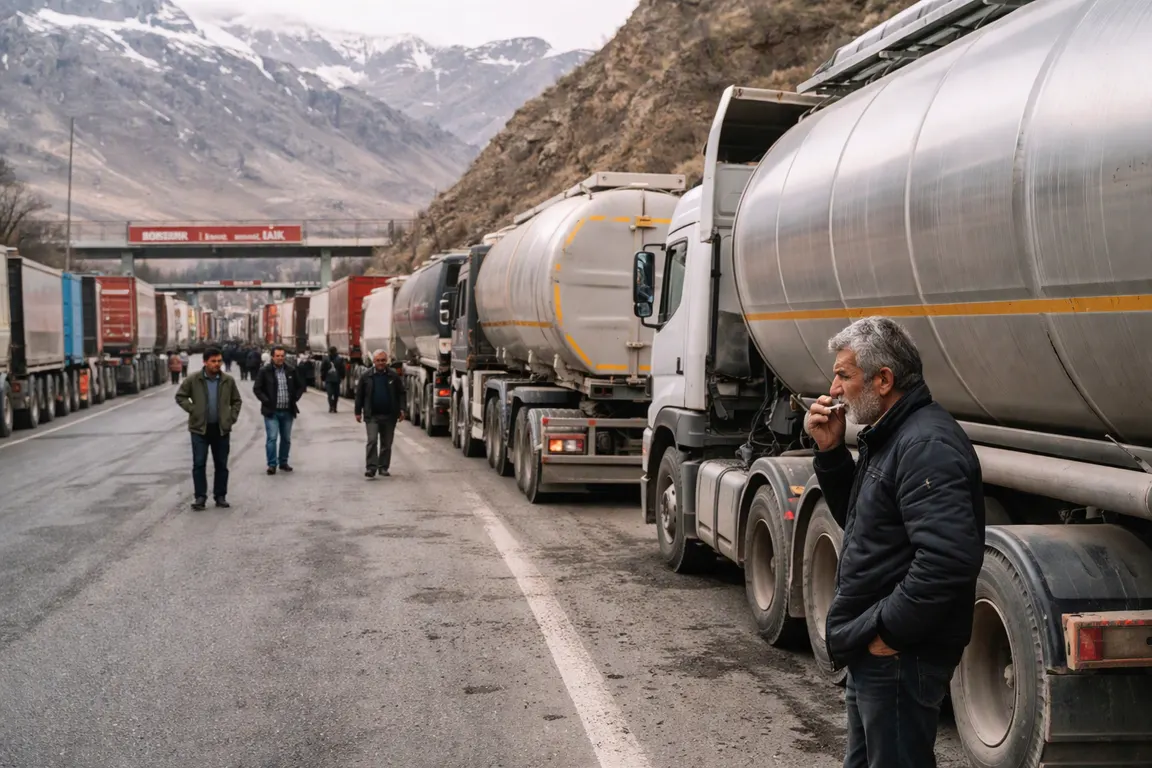
A surge of trucks waiting at Turkey’s Gürbulak crossing has turned the border into a bottleneck, with wait times now reaching up to 25 days. The Gürbulak border truck backlog follows the U.S. naval blockade of Iranian ports in late February, which forced Iran to shift most of its imports and exports onto overland routes through Turkey and Pakistan.
Turkish customs data show the queue grew from roughly 200 trucks in early March to about 1,200 by early September. Drivers say earnings have been cut in half and fuel costs are up 25 percent as cargo sits idle for weeks. Makeshift camps have sprung up along the highway, raising health and sanitation concerns.
Iranian President Masoud Pezeshkian urged a rapid expansion of overland trade routes in a televised address last month, saying the country must “keep the lifelines open” despite the naval pressure. Turkish officials responded by adding extra lanes and new X‑ray scanners at Gürbulak, claiming the changes will cut processing time from 30 to 22 days. Independent verification of those figures is still pending.
The border delay matters for the global oil market. Gulf exporters have diverted roughly 15 million barrels per day of pre‑war flow to alternative routes. About 8 million barrels now travel via a mix of pipelines, ship‑to‑ship transfers in the Arabian Sea, and a detour through the Suez Canal. Spot charter rates for the Hormuz “dark shuttle” transfers peaked at $1 million per day on 11 September – roughly $26 per barrel – far above the usual $30,000‑$50,000 daily rates that had anchored the market.
Compounding the pressure, Saudi Arabia’s East‑West pipeline suffered a sabotage attack in early September, forcing a temporary shutdown and pushing supertankers back into the costly Hormuz shuttle system. The incident highlights the fragility of the makeshift logistics chain.
Turkish logistics firms are scrambling to expand warehousing and customs capacity, while Pakistani border points prepare for higher volumes of Iranian goods. For Gulf states, the added transport premium squeezes refinery margins and could translate into higher pump prices for consumers in Europe and Asia.
Turkish officials say the lane expansion will be completed by late October, but analysts warn that without broader regional coordination the backlog could persist. Questions remain about the sustainability of the current work‑arounds if the naval blockade continues or if further attacks disrupt pipelines and sea lanes. For now, Iran’s roads remain open, but the flood of trucks threatens to choke the flow of both goods and oil, leaving markets to absorb the added cost.