

EU opens talks on Canada associate membership amid US
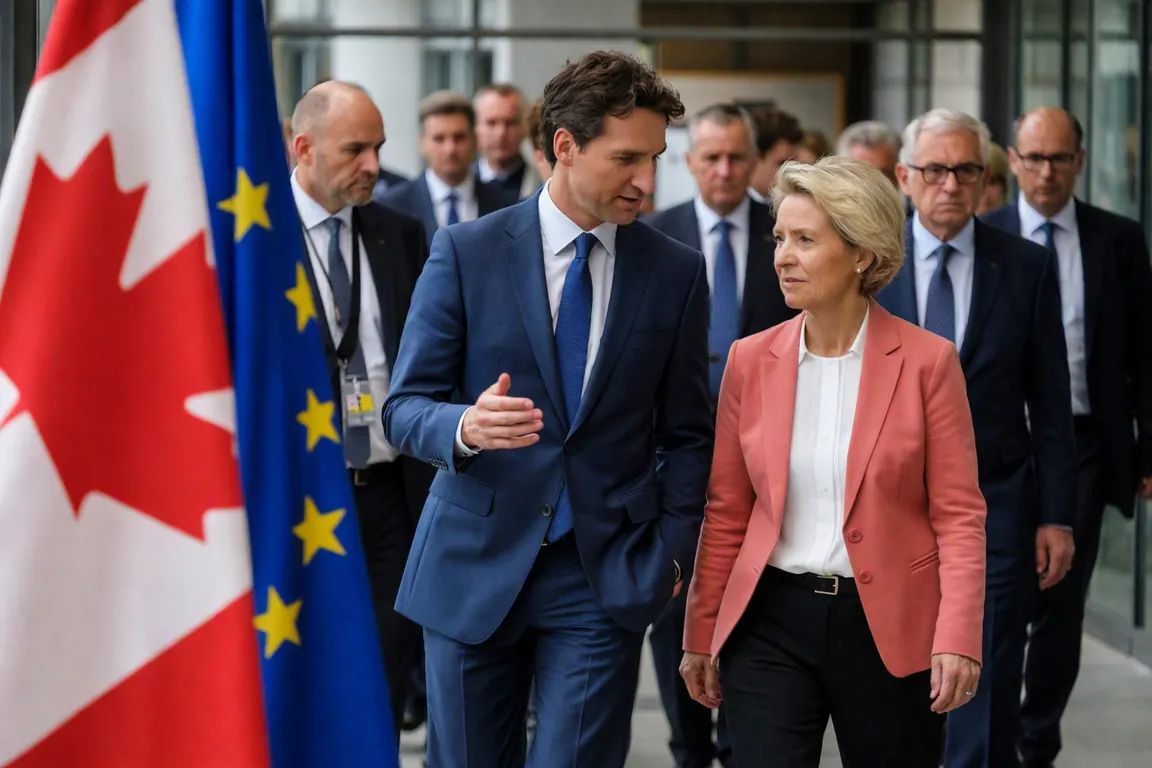
The European Commission announced on March 1 that it will open exploratory talks on EU Canada associate membership. The move comes as the United States has raised tariffs on Canadian steel, aluminum and other products and has publicly floated the idea of annexing Canada.
Associate membership would give Canada preferential access to the EU single market and a framework for regulatory alignment, while the bloc would gain a reliable source of raw materials and high‑tech goods. The exact legal and economic rights of the status have not been defined.
Commission President Ursula von der Leyen made the announcement during a meeting with a senior Canadian official, identified by some reports as former Bank of England governor Mark Carney. Prime Minister Justin Trudeau was not quoted, underscoring the informal nature of the early dialogue and leaving it unclear which Canadian office will lead negotiations.
The overture follows trade frictions that began in 2023 when the Trump administration imposed a 25 percent tariff on Canadian steel and a 10 percent tariff on aluminum, citing national‑security concerns. The tariffs have hurt Canadian exporters, especially in the automotive sector, which relies on integrated supply chains that cross the U.S.–Canada border. At the same time, Trump’s rhetoric about making Canada the 51st state has heightened political anxiety in Ottawa.
Canadian officials have spoken of a “unique alliance” with the EU to diversify export markets. If associate status is secured, Canadian agricultural producers could gain easier access to European consumers, and energy firms could find new channels for liquefied natural gas and renewable‑technology exports. Sectors that remain tightly linked to the U.S. market—such as automotive parts, aerospace components and certain farm products—could face adjustment costs if regulatory standards diverge.
For European businesses, deeper ties with Canada could reduce supply‑chain vulnerabilities exposed by recent geopolitical shocks. Canadian investment in EU renewable‑energy projects and high‑tech startups could rise, and EU firms may benefit from preferential treatment in Canadian procurement. However, the lack of a defined legal framework leaves open questions about dispute‑resolution mechanisms, standards harmonisation and the depth of market access for Canadian firms.
U.S. industry groups have warned that a shift in Canadian trade flows toward Europe could increase competition for American manufacturers, especially in automotive and aerospace sectors already pressured by Chinese imports. Washington is likely to monitor the development closely, as any formal EU‑Canada partnership could affect future tariff negotiations and broader strategic calculations.
The next steps involve informal talks between EU officials and Canadian representatives, followed by a possible formal negotiation mandate from both sides. Analysts expect the EU to outline a set of criteria for associate status before substantive concessions are discussed, but no timeline has been set. Until a concrete agreement is signed, the proposal remains a signal of Brussels’ willingness to deepen ties with a key democratic partner while offering Canada an alternative to a deteriorating U.S. relationship.