

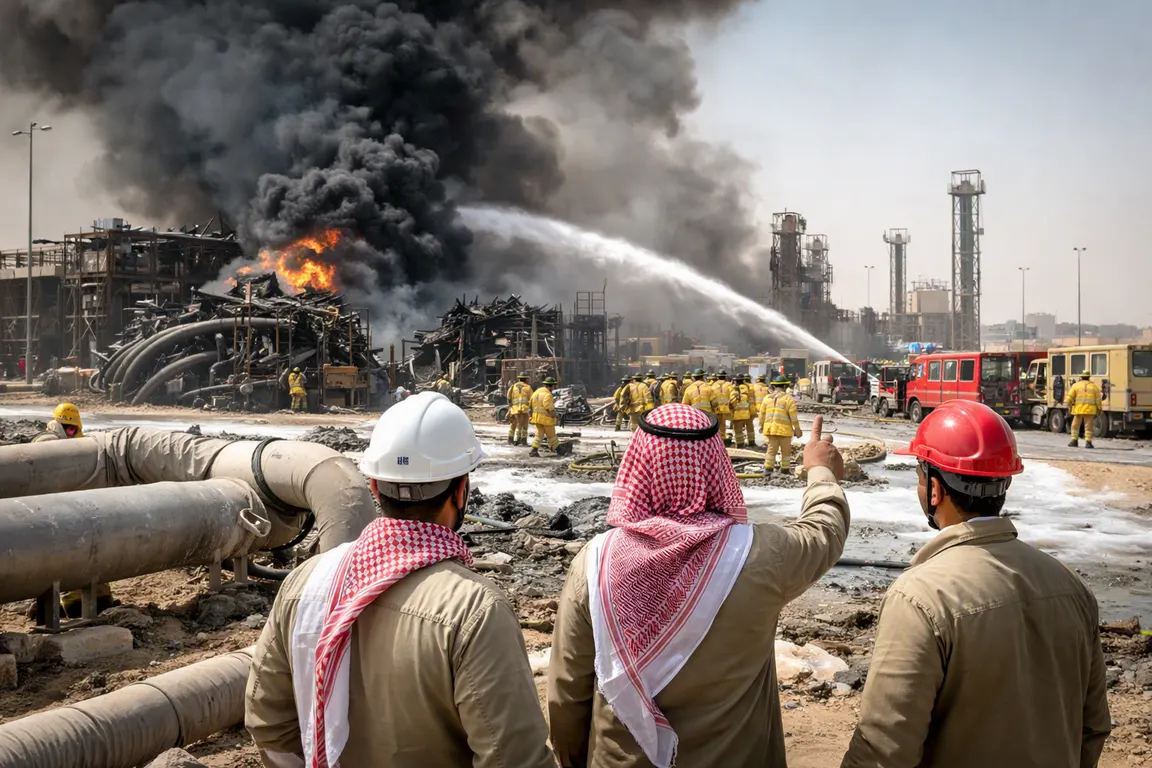
A Saudi East-West pipeline drone attack on September 9 destroyed a pumping station on the 1,200‑kilometer line, forcing Riyadh to cancel September crude cargoes bound for Europe and to reroute the remaining volume through the Strait of Hormuz under U.S. naval escort.
High‑resolution satellite images taken between Sept. 9 and 14 show the damaged station. The pipeline, which normally moves about 4 million barrels a day to export terminals on the Red Sea and the Gulf, is now operating at a fraction of capacity. Saudi officials notified European refiners on Sept. 12‑14 that all September‑loading cargoes would be cancelled.
Before the strike, roughly 1 million barrels per day already passed through Hormuz, while the bulk of Saudi exports used the Red Sea route via Yanbu. With the East‑West line offline, an additional 3 million‑plus barrels must now transit the narrow Hormuz corridor. U.S. Energy Secretary Chris Wright said the impact could be mitigated “very soon,” but the Associated Press estimates repairs will take three to five weeks. Saudi authorities have not disclosed the full extent of the damage, and Bloomberg’s figures on increased Hormuz shipments rely on unnamed sources.
European diesel markets reacted sharply. Prices tracked by CNBC rose to $9‑$11 per gallon, Brent crude hovered around $105 a barrel, and U.S. diesel crack spreads approached $110 a barrel. The surge adds pressure to motorists, freight operators and refiners already coping with low gas inventories and tight supply chains. Tanker freight rates from Saudi Gulf ports to China topped $1 million at the end of September, reflecting higher shipping costs tied to the reroute.
U.S. warships now escort Saudi tankers through Hormuz, a waterway that has historically been a flashpoint for geopolitical tension. The escort is intended to deter interference, but it does not eliminate the risk of further incidents that could disrupt flows.
In the short term, European refiners will need to draw down inventories or source alternative feedstock, potentially from the United States or Russia, to keep diesel plants running. Logistics firms face higher freight expenses that are likely to be passed on to consumers, intensifying the cost burden on a market already strained by inflation.
Looking ahead, the outage raises questions about the resilience of global energy trade routes. If repairs extend beyond the projected five‑week window, Saudi Arabia may have to expand export capacity at Yanbu or negotiate temporary agreements with other Gulf producers. The incident also underscores the vulnerability of single‑point infrastructure to drone attacks, prompting calls for greater redundancy in oil transport corridors.
Saudi officials are expected to issue an update on repair progress in the coming days. The assessment will determine whether the pipeline can resume operations before the end of the month or if the Hormuz detour will become the default export path for the foreseeable future.