

BRICS trade summit in New Delhi focuses on tariffs, energy
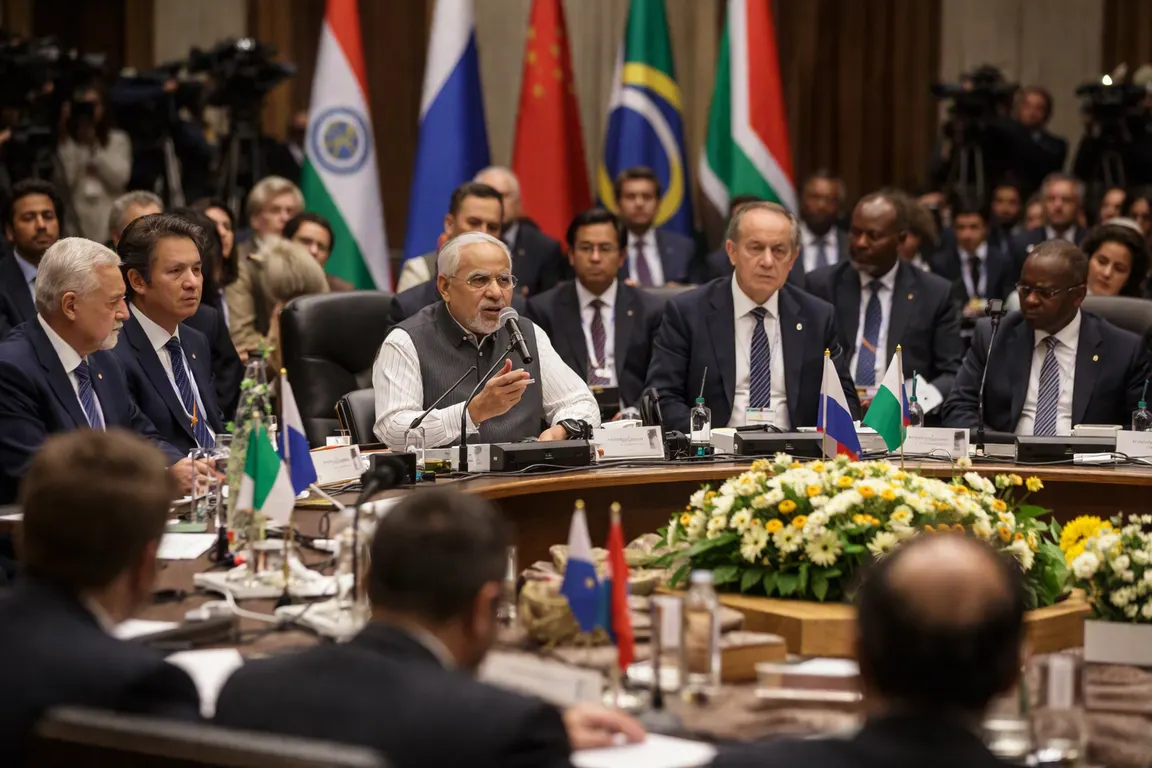
NEW DELHI — Heads of the BRICS bloc — China, Russia, India, Brazil and South Africa — gathered Thursday for the first BRICS trade summit hosted by India. The agenda focused on tariffs, trade settlement mechanisms and energy security as the group confronts the fallout from the Russia‑Ukraine war and expanding U.S. economic measures.
The leaders arrived amid heightened geopolitical tension. Russian President Vladimir Putin, Chinese President Xi Jinping and Indian Prime Minister Narendra Modi were joined by Brazil’s president and South Africa’s president. All entered the talks aware that recent U.S. tariffs and sanctions are reshaping market access for many developing economies.
In the opening session officials said the bloc wants to reduce reliance on Western‑controlled financial systems and explore alternative trade‑settlement mechanisms. While no formal agreements were announced, delegates discussed expanding the use of local currencies in bilateral trade, a step that could lower transaction costs for firms operating across BRICS markets.
Energy security was a second priority. Representatives stressed the need for diversified supply chains as the Ukraine conflict and tensions in the Middle East strain global oil and gas flows. They urged cooperation on joint investments in renewable and conventional energy projects to buffer member economies from external shocks.
Analysts note that the summit’s focus on tariffs reflects a broader strategy to shield member economies from punitive measures. By harmonising import duties and creating joint investment funds, the bloc hopes to cushion domestic industries from price spikes caused by sanctions. For businesses that rely on BRICS markets, such coordination could translate into more predictable trade rules, though concrete proposals remain pending.
Consumers could feel indirect effects. If the group succeeds in establishing alternative payment corridors, the cost of imported goods may stabilize, easing inflationary pressures linked to volatile energy prices. Conversely, failure to reach consensus could leave members exposed to continued U.S. tariff regimes, with downstream price implications for everyday commodities.
The summit’s outcomes are expected to feed into upcoming multilateral forums, including the United Nations and the World Trade Organization, where BRICS nations have signaled an intent to advocate for a more multipolar trade architecture. Observers are watching for language that could signal a formal challenge to U.S. sanctions policy, though none has appeared in the public record so far.
As talks continue through the week, the central question remains whether the BRICS leaders will emerge with a unified set of policy tools or see divergent national interests dilute the bloc’s collective bargaining power. The answer will shape not only the economic calculus of the participating countries but also the broader geopolitical balance as the world grapples with ongoing wars and an increasingly assertive U.S. economic stance.