

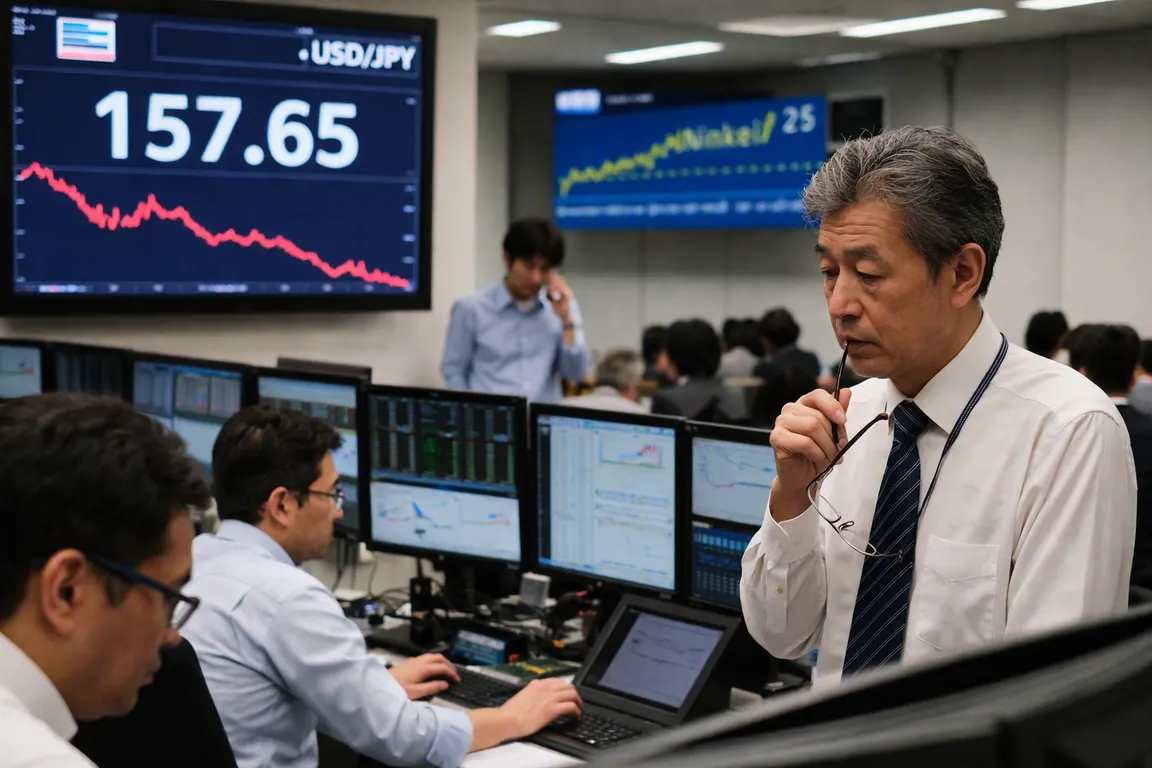
The Bank of Japan rate hike to 1.25% on Wednesday marked the central bank’s first increase since December 2022 and the highest short‑term policy rate since 1995. Within minutes the yen fell past ¥157 to the dollar, the 10‑year Japanese Government Bond (JGB) yield slipped, and the Nikkei 225 rose about 1.5%.
The move was aimed at anchoring inflation that has been pushed higher by global price pressures, but the market reaction ran counter to the textbook expectation that a higher policy rate strengthens a currency. A weaker yen reshapes capital flows between Japan and the United States, alters cost structures for exporters and import‑dependent firms, and raises questions about how quickly the BoJ will continue to tighten.
The decision follows more than a year of the policy rate held at 1.0%. In the March meeting, board members voted to raise the rate to 1.25%, a level that brings Japan closer to the tightening cycles of the U.S. Federal Reserve and the European Central Bank. The Guardian linked the shift to worldwide inflation drivers, including geopolitical tensions, while the Wall Street Journal noted that two board members warned future hikes could come more slowly than previously signaled.
The immediate market response was swift. The yen, which had been trading near ¥155 per dollar, breached ¥157, its weakest level in more than a decade. At the same time, the benchmark 10‑year JGB yield fell, though exact numbers were not disclosed in the reports. The equity market reacted positively; the Nikkei 225 climbed roughly 1.5% on the day, reflecting a “script flip” in which bonds fell and stocks rose – a pattern more typical of a risk‑on environment.
For Japan’s export‑oriented manufacturers, a weaker yen raises the price of imported inputs, squeezing margins unless firms can pass costs onto overseas buyers. Conversely, companies that rely on imported raw materials or consumer goods benefit from cheaper foreign purchases, and Japanese households see lower prices for imported products. The broader impact on inflation is mixed: a soft yen can feed through to higher consumer prices, potentially offsetting the BoJ’s anti‑inflation goal, while lower bond yields suggest investors are pricing in a more cautious monetary path.
Board members signaled that any further rate moves may be paced more gradually, diverging from the more aggressive tightening seen in the United States. If the BoJ adopts a measured approach, the interest‑rate differential that currently favours the dollar could persist, keeping capital flowing into U.S. assets and maintaining pressure on the yen.
Looking ahead, market participants will watch for the BoJ’s next policy meeting and any guidance on the timing of additional hikes. Analysts will monitor whether the yen stabilises, if JGB yields continue to drift lower, and how the Nikkei responds as investors reassess risk‑return calculations. The interaction between Japan’s monetary policy and global rate dynamics will shape capital allocation decisions for institutional investors and everyday businesses in the months to come.