

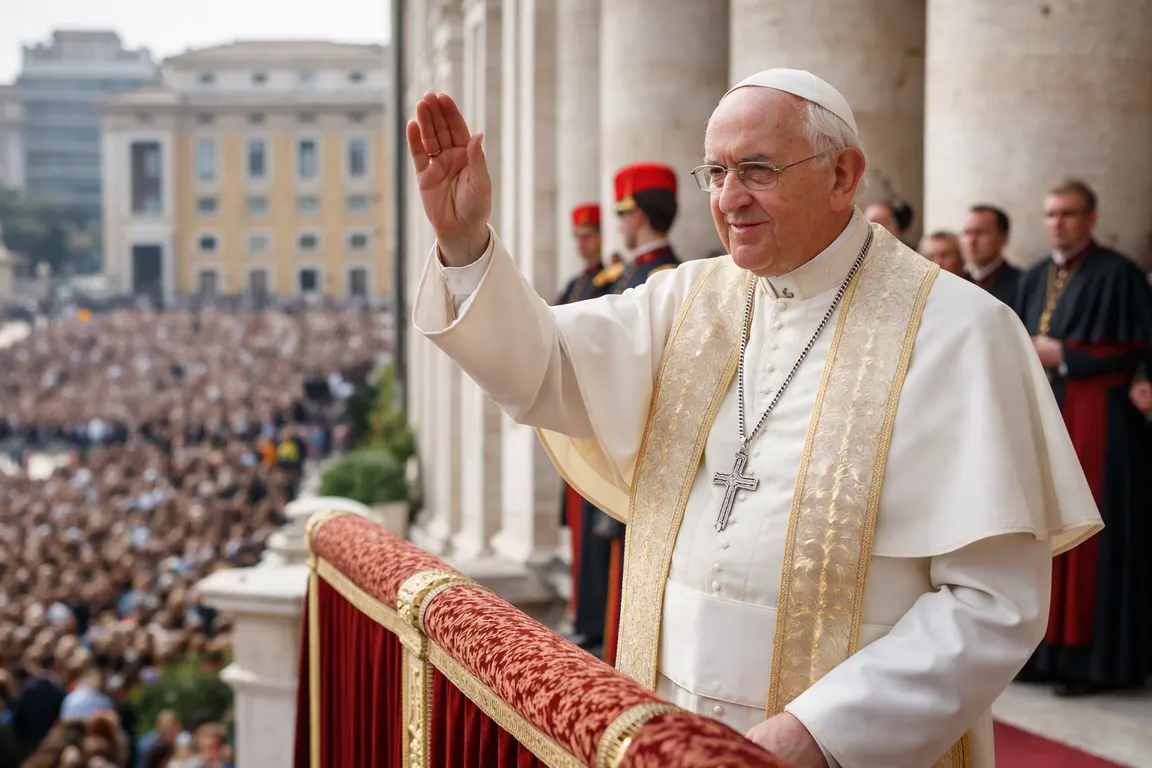
The Vatican confirmed on Friday that Pope Francis II, who has taken the name Pope Leo, has recovered sufficiently after lung‑cancer surgery to resume public duties. He is scheduled to appear publicly on Sunday, Oct. 20, and preparations are under way for his November pilgrimage to Uruguay, Argentina and Peru.
The pope’s health is a matter of global significance for the Catholic Church, which serves roughly 1.4 billion believers. A visible improvement and a forthcoming public appearance provide the first concrete gauge of his ability to fulfill his responsibilities while recuperating.
On Oct. 13, Pope Leo underwent a lobectomy at Rome’s Gemelli Hospital after a routine exam revealed a lung nodule. Pathology identified adenocarcinoma, the most common form of lung cancer. Gemelli surgeons, led by Dr. Stefano Margaritora and chief medical officer Dr. Luigi Carbone, issued a statement on Oct. 18 saying the pontiff’s post‑operative recovery “allows him to carry out normal daily activities unaided.” The statement noted that the pope had already celebrated Mass and distributed Communion in a chapel set up within the hospital, a detail reported by the Manila Times.
Vatican communications released the first post‑operative photographs of the pope on Oct. 19, confirming his visible improvement. The agency announced that Leo will appear publicly on Sunday and that a live Angelus could be broadcast from his hospital room, pending his condition. Cardinal Pietro Parolin, the Vatican secretary of state, said any future adjustments to the pope’s schedule will be guided by medical advice, emphasizing reliance on professional assessment rather than speculation.
The same day the Holy See published a list of journalists accredited for the Nov. 6‑17 trip, indicating that the itinerary remains on schedule. The pilgrimage, the first for Pope Leo, will visit Uruguay, Argentina and Peru—countries that together host more than 150 million Catholics. Vatican officials describe the tour as a test of institutional continuity for a pontificate still in its early months and expect it to reinforce diplomatic ties and address regional concerns such as migration and climate change.
Catholics worldwide have responded with prayers and messages of support, many noting the pope’s willingness to continue his ministry despite surgery. Online platforms have seen a surge in devotional posts, and parish networks in the three South‑American nations are preparing special liturgies to coincide with the pope’s arrival. Media outlets are allocating resources for on‑the‑ground coverage, and the accreditation list has helped newsrooms finalize travel logistics and budgets.
The Vatican’s decision to cease daily “woke‑up” health updates, as reported by the Manila Times, marks a shift toward a more measured communication strategy. By limiting routine health bulletins, the Holy See aims to focus public attention on substantive milestones such as the Sunday appearance and the upcoming Angelus, rather than on minute‑by‑minute clinical details.
As Sunday approaches, the world will watch whether the pope can lead the Angelus from his hospital room and whether the November itinerary proceeds without alteration. Vatican officials say they will continue to monitor his condition closely and will issue further guidance if medical circumstances change.