

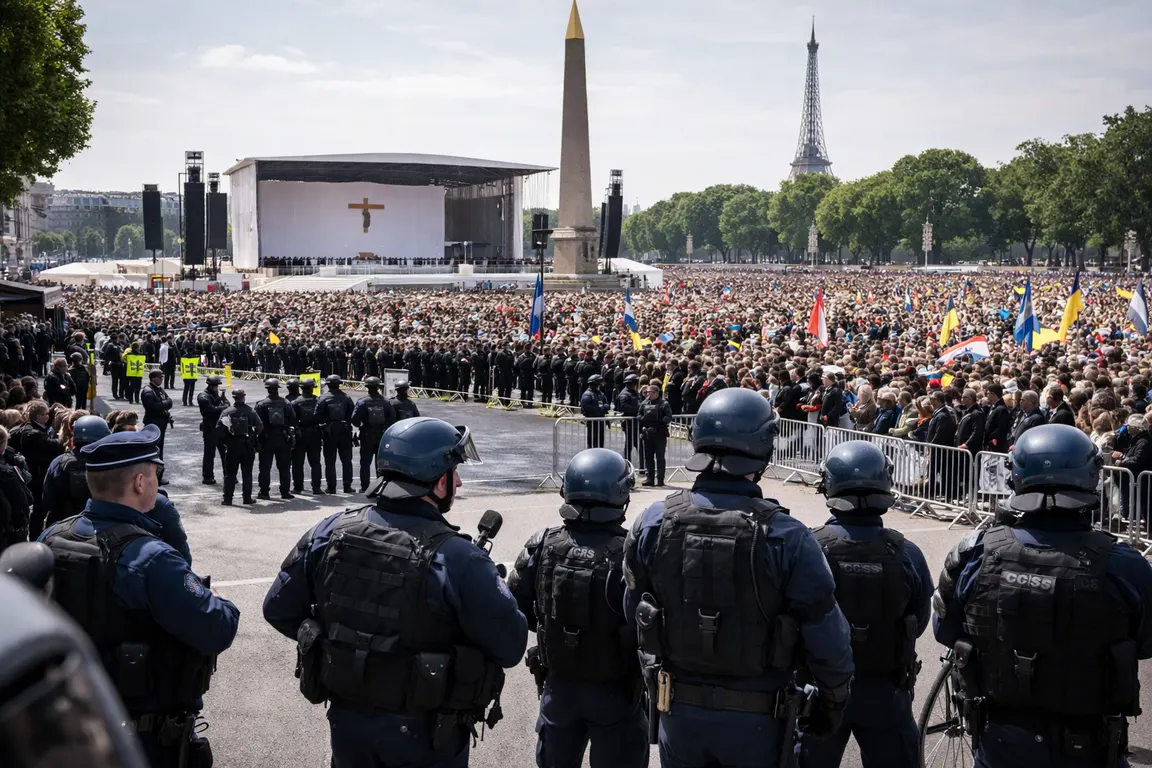
On Saturday, May 26, an estimated 700,000 people gathered on Place de la Concorde for Pope Francis II’s open‑air Mass, prompting Paris to launch its largest public‑safety and transport operation in recent memory. The effort, dubbed a Paris papal mass security deployment, tested the city’s police, transit and health services and offered a rare look at how a European capital handles a sudden surge of visitors.
Authorities deployed roughly 10,000 police officers, including specialised crowd‑control units, and set up temporary medical stations along the mile‑long procession route from the Champs‑Élysées to the Concorde. Metro, RER and bus services ran at increased frequency, while several stations near the venue were temporarily closed to regulate flow. The coordinated effort kept the Mass "peaceful and orderly," according to the BBC, and no major safety incidents were reported.
The influx strained the transport network. Road closures along the parade route forced commuters onto alternate arteries, adding up to 30 minutes to travel times in some districts. The RER A line, a key commuter corridor, added extra trains and extended platform dwell times to accommodate the surge. Residents reported crowded platforms and delayed services, prompting the Île‑de‑France mobilité authority to issue real‑time alerts via its app and social media.
Economic benefits were immediate. Hotels near the city centre saw occupancy rise about 30 %, and restaurants around the Concorde reported a 25 % sales boost over the two‑day papal visit, according to industry groups. Ticket sales for a separate 80,000‑seat stadium event aimed at Catholic youth sold out in under an hour, underscoring strong public interest. However, the tourism board has not released official data, so the full fiscal impact remains unclear.
A key challenge was the lack of independent crowd‑size verification. Vatican and BBC reports converge on the 700,000 figure, but third‑party counts are absent, and police numbers for medical staff and auxiliary volunteers have not been publicly confirmed. This information gap complicates assessments of whether the deployment was proportionate.
Paris has experience handling large gatherings, from the 1998 World Cup to the 2024 Olympic Games. Compared with those events, the papal Mass required a faster mobilisation because the itinerary was announced only weeks in advance. The city’s ability to coordinate police, transport and health services on short notice demonstrates operational flexibility, yet it also highlights vulnerabilities in real‑time crowd estimation and inter‑agency data sharing.
Officials say post‑event reports will analyse transit performance, incident response times and economic indicators to refine contingency plans. Whether the lessons will lead to permanent upgrades—such as expanded station capacity or a standing inter‑agency command centre—remains to be seen, but the papal Mass has already served as a live laboratory for testing Paris’ urban resilience.